January 2024 in “Journal of Biosciences and Medicines” This study reviewed current and investigational treatments for alopecia areata, finding that novel therapies can improve patients' quality of life, though more research is needed to explore the genetic causes and develop targeted treatments.
 December 2023 in “Gugje bogeon mi-yong haghoeji”
 In this study, researchers observed that aroma oil-enhanced scalp scaling significantly improved scalp conditions over 8 weeks, marked by increased water and oil content, reduced keratin and surface value, and higher satisfaction in hair-related outcomes compared to the control group.
 December 2023 in “Bulletin of the Medical Institute of Continuing Education”
 In this study, a hair serum containing Angelica Dahurica extract applied daily for six months was reported to reduce hair loss and improve hair growth and quality in 15 volunteers with androgenic alopecia.
 September 2023 in “Medicine”
 In this case report, a 41-year-old man with moderate androgenic alopecia showed an increase in hair density and improvements in hair characteristics after using Zimmer aqueous spray containing Zimmer herbal extract powder for 3 months, suggesting its potential as an alternative treatment for hair loss.
September 2023 in “British Journal of Dermatology” In this study, researchers found that patients with severe alopecia areata show varied regrowth timelines with baricitinib, and those with the most severe cases may still experience delayed but eventual improvement.
 August 2023 in “Journal of Cosmetic Dermatology”
 In this study, injecting two different concentrations of botulinum toxin A was found to be safe and effective for treating androgenetic alopecia in Egyptian men and women, with improvements in hair grade and vellus hair density observed over six months.
 August 2023 in “Veterinary Record Case Reports”
 This case report highlights the successful treatment of degenerative mucinotic mural folliculitis in a 1.5-year-old indoor cat using high-dose ciclosporin, resulting in the resolution of alopecia and improved general condition over a 10-month period.
July 2023 in “Nature Immunology” CD8+ virtual memory T cells may cause hair loss in alopecia areata.
 June 2023 in “Hanguk ingeurie hakoeji”
 This study found that consuming a fermented protein mixture for 60 days may increase hair density in healthy adults, although it did not significantly change other scalp or hair conditions like thickness, pore condition, or blood vessel exposure.
 June 2023 in “Dermatology and therapy”
 This literature review highlights challenges in managing alopecia areata in the Middle East and Africa, noting significant regional gaps in data, treatment guidelines, and public awareness that impede patient care and emphasize the need for improved support and resources.

This study found that GoogLeNet outperformed other CNN models in accurately identifying the type of folliculitis.
 May 2023 in “Health science reports”
 This review discusses the harmful effects of coloring shampoos containing trihydroxybenzene on the scalp-skin barrier and emphasizes the need for safer ingredient selection to prevent side effects.
May 2023 in “The Journal of Immunology” In this study, treatment with IL-2C to expand Tregs effectively halted hair loss progression in a murine model of alopecia areata.
 April 2023 in “International Journal of Research in Dermatology”
 The researchers reviewed multiple studies and found that baricitinib, a JAK inhibitor, generally improved the condition of patients with severe alopecia areata, with minimal side effects.
 April 2023 in “The journal of investigative dermatology/Journal of investigative dermatology”
 The researchers observed that vitiligo-affected skin shows a selective depletion of NTRK2+ melanocyte subpopulations with progenitor features, which may contribute to poor treatment responses.
 April 2023 in “Medizinische Genetik”
 This review summarizes recent genetic findings in alopecia areata research and their implications for developing new treatments, without reporting new clinical results.
 March 2023 in “Asian journal of beauty & cosmetology”
 This study found that applying a keratin solution improved tensile strength, reduced absorbance, and increased gloss in damaged hair compared to untreated hair.
 March 2023 in “International journal of integrated medical research”
 This article discusses keratosis pilaris, a common skin condition often considered a normal variant, and reviews its associations, progression, and available treatments without reporting new clinical results.
 February 2023 in “Pakistan Journal of Medical and Health Sciences”
 This study found a variety of dermatological conditions in pregnant women, with Striae Gravidarum being the most prevalent at 48.1%, followed by Linea Nigra at 45.9%.
 January 2023 in “International Journal of Homoeopathic Sciences”
 This case report describes a 14-year-old girl with alopecia areata who experienced hair restoration following homeopathic treatment aimed at balancing her immune system over a 6-month follow-up.
 December 2022 in “Rossijskij žurnal kožnyh i veneričeskih boleznej”
 This source highlights that the incidence of alopecia areata is increasing among children, and while corticosteroids and Janus kinase inhibitors show potential effectiveness and safety, they remain unapproved by the FDA for pediatric use.
 December 2022 in “European journal of internal medicine”
 This case report details an instance of acute kidney injury associated with increased oxalate levels likely due to systemic absorption of glycolic acid from hair straightening agents, exacerbated by untreated psoriasis.
 November 2022 in “Journal of Education, Health and Sport”
 This review discusses the current understanding of the skin microbiome's potential influence on alopecia areata and emphasizes the need for further study, reporting no new experimental results.

This article suggests that alopecia areata may be an early skin manifestation of hereditary hemochromatosis in individuals predisposed to autoimmunity, recommending iron status evaluation during AA diagnosis; it reports no new clinical results.
 June 2022 in “C&EN global enterprise”
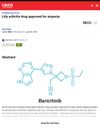
 This source notes that Olumiant (baricitinib), a rheumatoid arthritis drug by Eli Lilly and Company, has been approved as the first systemic treatment for severe alopecia areata.
 April 2022 in “Journal of Cosmetic Dermatology”
 In this study, 98 days of using Trimax-360 Serum, a botanical-based treatment, significantly improved hair density, thickness, and growth rate in adults with mild to moderate alopecia, with no adverse effects reported.
 March 2022 in “Journal of South Asian Association of Pediatric Dentistry”
 This case report discusses dental considerations and management strategies for a 7-year-old girl with Ichthyosis Vulgaris; it presents no new clinical results and suggests early preventive therapies.
 March 2022 in “Research Square (Research Square)”
 This case report describes a 15-year-old girl with Alopecia Universalis and psychiatric conditions experiencing hair regrowth after self-medicating with cannabis, suggesting it may have therapeutic potential.
November 2021 in “Journal of Regenerative Biology and Medicine” This article discusses alopecia areata, an inflammatory hair loss condition with largely unexplored causes, but provides no new research findings.
October 2021 in “Book Publisher International (a part of SCIENCEDOMAIN International)” This study explored a new treatment for Alopecia Areata, combining high negative pressure microdermabrasion with intralesional steroid injections, and compared its effects to steroid injections alone, although the abstract does not report specific outcomes.