January 2024 in “Molecules/Molecules online/Molecules annual” In this study, researchers identified eight compounds in Suaeda glauca and reported that its extract may improve hair loss by affecting VEGF, IGF-1 expression, and Wnt/β-catenin signaling, especially compound 4, in human cell models.
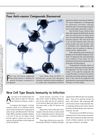 December 2011 in “Asia-Pacific biotech news”
 This collection of research news highlights various scientific advancements, including discoveries in anti-cancer compounds, new cell types that boost immunity, and a potential Parkinson's breakthrough in Australia, among others from China, India, Korea, Singapore, and Thailand.
 January 1974 in “Nippon Nōgei Kagakukaishi/Nihon Nougei Kagakkaishi”
 In this study, L-methionine and L-serine application was observed to have the most significant effect on hair weight and root length, followed by acetyl L-methionine and L-serine, while glutathione inhibited growth.
 15 citations
,
February 2018 in “Journal of Cosmetic and Laser Therapy”
15 citations
,
February 2018 in “Journal of Cosmetic and Laser Therapy” This study observed hair regrowth and increased density in four cases of androgenetic alopecia treated with a non-ablative erbium glass fractional laser and topical finasteride, with no significant side effects reported.
 5 citations
,
February 2022 in “Acta Biomaterialia”
5 citations
,
February 2022 in “Acta Biomaterialia” This review highlights the potential of nanotechnology-based formulations in hair care and treatment, emphasizing how these innovative materials can enhance the stability, efficacy, and safety of active compounds while addressing the limitations of conventional formulations.
 January 2025 in “Advanced Materials Interfaces”
 This study observed that tannic acid significantly reduced hair shedding by 56.2% over seven days in human participants when used as a coating for controlled release of active compounds to hair follicles.
 44 citations
,
March 2016 in “Frontiers in cellular neuroscience”
44 citations
,
March 2016 in “Frontiers in cellular neuroscience” In this study using zebrafish, four bisbenzylisoquinoline derivatives were found to protect hair cells from aminoglycoside-induced damage without reducing antibiotic efficacy, potentially leading to therapies for patients undergoing such treatments.
 2 citations
,
August 2016 in “Química Nova”
2 citations
,
August 2016 in “Química Nova” This study concluded that chitosan nanoparticles loaded with minoxidil effectively target hair follicles and reduce dermal exposure compared to iontophoresis, despite similar drug delivery potential to the follicles.
 December 2024 in “Biomedical & Pharmacology Journal”
 In this study, researchers developed and assessed two polyherbal hair tonic formulations, finding that Hair Tonic A containing 10% white tea extract improved hair thickness, manageability, and anti-frizz properties, particularly for blonde and black hair, while demonstrating greater stability compared to Hair Tonic B.
 October 2020 in “Journal of bio innovation”
 In this study, DanEra, an herbal hair tonic from Pomegranate and Beetroot extracts, showed equivalent effectiveness to the standard drug Ketoconazole in microbiological tests and provided significant relief from severe dandruff in all volunteers within 10 days.
 37 citations
,
January 2002 in “British journal of dermatology/British journal of dermatology, Supplement”
37 citations
,
January 2002 in “British journal of dermatology/British journal of dermatology, Supplement” This study found that procyanidin B-2 may promote hair growth by reducing expression and inhibiting translocation of PKC isozymes in murine hair epithelial cells.
 5 citations
,
September 2020 in “Molecules”
5 citations
,
September 2020 in “Molecules” In this study, extracts from three Polynesian plants—Bidens pilosa, Calophyllum inophyllum, and Fagraea berteroana—were found to increase dermal papilla cell proliferation and modulate hair growth-related gene expression, suggesting potential for stimulating hair growth.
 4 citations
,
April 1955 in “Textile Research Journal”
4 citations
,
April 1955 in “Textile Research Journal” This study found that the extent of reducing agents' effects on hair fibers was linked to the electrode potential of the reagents used.
 1 citations
,
June 2020 in “Journal of AOAC INTERNATIONAL”
1 citations
,
June 2020 in “Journal of AOAC INTERNATIONAL” This study reports that two novel chromatographic methods demonstrated high sensitivity and selectivity for determining aminexil, niacinamide, and pyridoxine HCl in a laboratory-prepared mixture and hair tonic preparation.
 June 2026 in “International Journal of Drug Delivery Technology”
 In this study, researchers developed a polyherbal hair growth oil using botanical substances and base oils like coconut and castor oil, finding it to be stable, non-irritating, and suggesting potential hair-growing properties through mechanisms such as scalp blood flow improvement and anti-inflammatory effects.
 January 2025 in “International Journal of Biology Pharmacy and Allied Sciences”
 This study introduces a polyherbal hair removal cream, reporting its effectiveness in inhibiting hair growth while minimizing skin irritation across various skin types, suggesting a natural alternative to traditional hair removal methods.
 January 2025 in “bioRxiv (Cold Spring Harbor Laboratory)”
 This study found that rhamnose can restore hair-inducing gene expression in dermal papilla cells and accelerate hair follicle regeneration by promoting the hair cycle into the anagen phase, suggesting its potential therapeutic application for alopecia treatment.
 May 2022 in “Pharmacognosy journal”
 This review examined moringa seed oil's potential to combat alopecia, reporting that its phytosterol and fatty acid compounds may block dihydrotestosterone formation and support healthy hair growth.
 January 2025 in “International Journal of Pharmacognosy and Life Science”
 In this review, researchers highlighted the potential benefits of using herbal remedies, such as Aloe vera, Bhringraj, Neem, Tea tree oil, Amla, and Hibiscus, for treating various hair problems like dandruff, scalp infections, and premature greying, suggesting natural alternatives to traditional hair treatments.
 370 citations
,
September 1999 in “The New England Journal of Medicine”
370 citations
,
September 1999 in “The New England Journal of Medicine” This article discusses the treatment of androgenetic alopecia and alopecia areata with finasteride and minoxidil but reports no new clinical results.
 88 citations
,
July 2019 in “International Journal of Molecular Sciences”
88 citations
,
July 2019 in “International Journal of Molecular Sciences” In this study of patients with Androgenic Alopecia, micro-grafts containing HD-AFSCs resulted in significantly improved hair density and follicle count over 11 months compared to a saline solution, suggesting a potential alternative therapy for hair regrowth.
 79 citations
,
March 1999 in “The journal of investigative dermatology/Journal of investigative dermatology”
79 citations
,
March 1999 in “The journal of investigative dermatology/Journal of investigative dermatology” This study found that procyanidin oligomers, particularly dimers and trimers, significantly promoted hair growth in mice and hair epithelial cell cultures, suggesting potential use as hair growth agents.
 76 citations
,
February 2015 in “Industrial Crops and Products”
76 citations
,
February 2015 in “Industrial Crops and Products” This study identified over 40 phytochemical compounds in the leaves and flowers of Bituminaria bituminosa, predominantly glycosylated flavonoids from apigenin, using advanced chromatographic techniques.
46 citations
,
October 2023 in “Science Advances” In this study, researchers used 3D bioprinting to successfully create engineered skin tissues with hair follicle-like structures, potentially enhancing skin grafts and safety testing for chemical compounds by more closely mimicking natural skin complexity.
 19 citations
,
January 2010 in “International Journal of Ayurveda Research”
19 citations
,
January 2010 in “International Journal of Ayurveda Research” In this study, topical application of Tectona grandis seed extracts on albino mice significantly accelerated hair growth initiation time and increased the percentage of hair follicles in the anagenic phase compared to the standard minoxidil treatment.
 17 citations
,
April 2017 in “International Journal of Biological Macromolecules”
17 citations
,
April 2017 in “International Journal of Biological Macromolecules” This study found that alginate beads containing monoolein demonstrated promising potential for managing wet wounds by better absorbing excess exudate and delivering adenosine locally, favoring drug localization in damaged porcine skin compared to an aqueous solution without affecting skin viability.
 14 citations
,
April 2021 in “Biology”
14 citations
,
April 2021 in “Biology” This study found that ethanol extract of Tubtim Chumphae rice bran downregulates SRD5A gene expression, similarly to finasteride, suggesting potential use as an anti-hair loss product.
 14 citations
,
December 2011 in “Archives of Dermatological Research”
14 citations
,
December 2011 in “Archives of Dermatological Research” This study found that phyto-vesicles of ß-sitosterol showed better absorption and improved activity for treating androgenetic alopecia in rats compared to the compound and its complex.
 13 citations
,
January 2017 in “Chemical & Pharmaceutical Bulletin”
13 citations
,
January 2017 in “Chemical & Pharmaceutical Bulletin” This study found that a synthetic avicequinone C analogue, 5e, was significantly more potent in inhibiting steroid 5α-reductase type 1 activity in human keratinocytes compared to the original isolated compound.
 10 citations
,
April 2013 in “Journal of Investigative Dermatology”
10 citations
,
April 2013 in “Journal of Investigative Dermatology” This study found that ovine dermal papilla cells exhibit robust aggregation in culture, offering a model to investigate the regulation of hair follicle dermal papilla size.