9 citations
,
December 2022 in “Genes” This study conducted a genome-wide analysis in Tianzhu white yaks, identifying differential genes associated with hair growth between long-haired and normal-haired individuals.
21 citations
,
July 2024 in “Journal of Investigative Dermatology” This study used single-cell RNA-sequencing data from mouse skin to reveal that fibroblasts show high transcriptional plasticity during wound healing, forming transient microniches early on and stratifying scar tissue into distinct molecular layers over time.
226 citations
,
May 2004 in “Journal of Biological Chemistry” This study identified collagen XXII as a novel extracellular matrix protein specifically present at tissue junctions, where it functions as a cell adhesion ligand for skin epithelial cells and fibroblasts.
 1 citations
,
October 2017 in “Circulation”
1 citations
,
October 2017 in “Circulation” The researchers reported that introduction of SOX9 in ischemic heart tissues is linked to cardiac fibrosis, marking it as a potential target for future therapeutic strategies.
 September 2019 in “Journal of Investigative Dermatology”
 This study found that co-culturing dermal papilla cells in a 3D structure with adipose-derived stem cells may enhance the expression of hair inductivity markers compared to 2D cultures.
 September 2019 in “Journal of Investigative Dermatology”
 This study introduced a reproducible human model using 3D-SeboSkin technology to study hidradenitis suppurativa, allowing better maintenance of skin integrity and replication of biomarker expression patterns compared to traditional skin cultures, suggesting its value for further research.
34 citations
,
September 2010 in “Clinical and Experimental Dermatology” This study identified a new heterozygous mutation in the connexin 26 gene (c.263C>T; p.Ala88Val) in a premature neonate with KID syndrome, who later died from complications.
 116 citations
,
September 2020 in “Nature Communications”
116 citations
,
September 2020 in “Nature Communications” This study reports previously unrecognized cellular complexity in growing mouse incisors, suggesting species-specific differences in cell dynamics between mouse and human teeth related to growth and differentiation.
 7 citations
,
October 2018 in “BMC genomics”
7 citations
,
October 2018 in “BMC genomics” This study reveals that β-catenin and retinoic acid are key regulators in the gene networks controlling the fate of skin appendages, such as scales and feathers.
In this study assessing post-menopausal Asian women, distinct shifts in Malassezia species prevalence on the skin were linked to increased inflammation and impaired skin barrier function, potentially driving disorders like psoriasis and seborrheic dermatitis.
 October 2007 in “Clinical Biochemistry”
 This study identified a new genotype, V281+I172N/V281L, linked to non-classical 21-hydroxylase deficiency, suggesting it should be considered in genetic panels for the condition.
 308 citations
,
September 2010 in “Nucleic acids research”
308 citations
,
September 2010 in “Nucleic acids research” This study found that induced expression of mir-302 can reprogram human hair follicle cells into induced pluripotent stem cells through a novel epigenetic mechanism involving global demethylation.
 301 citations
,
February 2019 in “Nature Communications”
301 citations
,
February 2019 in “Nature Communications” In this study, researchers found that wound healing in mouse skin recruits diverse fibroblasts, including myeloid-derived cells, which contribute to regenerating adipocytes.
 271 citations
,
May 2019 in “Cells”
271 citations
,
May 2019 in “Cells” This review discusses the therapeutic potential of MSC-derived secretomes for treating degenerative and inflammatory diseases, reporting no new clinical results but highlighting their proposed mechanisms and advantages over direct MSC transplantation.
 256 citations
,
October 2013 in “Proceedings of the National Academy of Sciences of the United States of America”
256 citations
,
October 2013 in “Proceedings of the National Academy of Sciences of the United States of America” This study found that altering cell culture conditions to form three-dimensional papilla spheroids can restore the ability of human dermal papilla cells to induce hair growth in adult skin.
 225 citations
,
April 2018 in “Journal of Investigative Dermatology”
225 citations
,
April 2018 in “Journal of Investigative Dermatology” Two main types of fibroblasts with unique functions and additional subtypes were identified in human skin.
 160 citations
,
January 2017 in “Development”
160 citations
,
January 2017 in “Development” This study found that hypertrophic chondrocytes at the fracture callus border may convert to osteoblasts, influenced by vasculature and pluripotency gene expression.
 145 citations
,
November 2018 in “Nature Communications”
145 citations
,
November 2018 in “Nature Communications” This study found that activating the Sonic hedgehog pathway in scarring wounds can remodel the dermis to promote hair follicle regeneration, highlighting a potential new approach to enhance healing.
 124 citations
,
June 2020 in “Cell Stem Cell”
124 citations
,
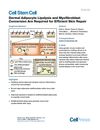
June 2020 in “Cell Stem Cell” This study found that in mice, dermal adipocytes initiate inflammation and aid repair after skin injury by releasing lipids, suggesting a role in managing inflammatory diseases and impaired wound healing.
 91 citations
,
March 2011 in “Stem Cell Reviews and Reports”
91 citations
,
March 2011 in “Stem Cell Reviews and Reports” This article describes protocols for isolating and expanding human epidermal neural crest stem cells and discusses their potential for cell-based therapies in regenerative medicine, but reports no new clinical results.
 66 citations
,
May 2021 in “Science Advances”
66 citations
,
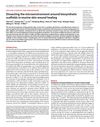
May 2021 in “Science Advances” In this study, researchers found that electrospun membranes with aligned surface topography advanced the immune response towards an adaptive stage and highlighted the role of T cells in hair follicle regeneration in mice, showcasing the intricate interactions between immune and skin cells.
 59 citations
,
June 2023 in “Nature Aging”
59 citations
,
June 2023 in “Nature Aging” This study observed that in aged mouse skin, there was an increase in IL-17-expressing T helper cells, γδ T cells, and innate lymphoid cells, and blocking IL-17 signaling reduced skin inflammation and delayed age-related changes, suggesting it as a potential target to mitigate skin aging.
 55 citations
,
September 2014 in “Development”
55 citations
,
September 2014 in “Development” In this study, mouse sweat gland development relied on a regulatory sequence initiated by Wnt/β-catenin signaling, and disruptions in Wnt, Eda, or Shh pathways led to distinct developmental failures.
 36 citations
,
June 2021 in “Experimental & Molecular Medicine”
36 citations
,
June 2021 in “Experimental & Molecular Medicine” This study found that mechanical stress activates a WISP-1/Hedgehog signaling axis that contributes to ligamentum flavum hypertrophy and fibrosis, identifying Hedgehog signaling as a potential therapeutic target.
 36 citations
,
January 2021 in “Scientific Reports”
36 citations
,
January 2021 in “Scientific Reports” This study identified key genes and signaling pathways involved in the growth phases of Pashmina goat hair follicles, highlighting the role of several gene families and transcription factors in fiber quality and growth regulation.
 35 citations
,
May 2021 in “Nature communications”
35 citations
,
May 2021 in “Nature communications” This study found that basement membrane components and structures in mouse hair follicles are highly specialized for specific inter-tissue interactions, with laminin α5 playing a crucial role in hair cycle regulation and anchoring.
 25 citations
,
June 2018 in “Journal of The American Academy of Dermatology”
25 citations
,
June 2018 in “Journal of The American Academy of Dermatology” This study identified upregulation of genes linked to fibroproliferative disorders, such as platelet-derived growth factor and collagen genes, in patients with central centrifugal cicatricial alopecia, suggesting potential therapeutic targets.
 25 citations
,
September 2014 in “Biological Research”
25 citations
,
September 2014 in “Biological Research” This study found that arctiin, a compound from Arctium lappa, demonstrated protective effects against oxidative stress-induced dysfunction in human hair dermal papilla cells, suggesting potential therapeutic use for alopecia.
 25 citations
,
March 2012 in “Journal of Dermatological Science”
25 citations
,
March 2012 in “Journal of Dermatological Science” This review discusses genome-wide association studies in dermatology, noting that variants linked to risk for 10 skin complex diseases have been identified, with potential implications for diagnostics and management; it reports no new clinical results.
 24 citations
,
May 2019 in “PLOS ONE”
24 citations
,
May 2019 in “PLOS ONE” In this study, researchers observed that African spiny mice, Acomys cahirinus, are capable of regenerating skeletal muscle in dermal wound sites, unlike common mice, Mus musculus.