26 citations
,
February 2022 in “Annals of Palliative Medicine” This study found that ultra-pulse CO2 fractional laser treatment improved skin smoothness and total skin lesion scores more effectively in patients with depressed acne scars compared to other treatments.
 26 citations
,
May 2017 in “Lasers in Medical Science”
26 citations
,
May 2017 in “Lasers in Medical Science” This study found that combining ablative fractional CO₂ laser therapy with hair growth factors significantly increased hair density in men with androgenetic alopecia compared to using growth factors alone.
24 citations
,
January 2013 in “Lasers in medical science” This study found that fractional ultrapulse CO2 laser resurfacing effectively enhanced upper eyelid crease and brow position in patients with low and moderate dermatochalasis, with only mild side effects reported.
20 citations
,
January 2001 in “Journal of Cutaneous Laser Therapy” This study found that wound healing after CO(2) laser resurfacing is faster with occlusive dressings, as they enhance cell migration from hair follicles, compared to untreated skin, which showed delayed re-epithelialization.
 13 citations
,
October 2019 in “Journal of lasers in medical sciences”
13 citations
,
October 2019 in “Journal of lasers in medical sciences” This study found that the cytokine-mediated signaling pathway is the primary pathway disrupted in skin after CO2 laser surgery.
 8 citations
,
April 2024 in “Cureus”
8 citations
,
April 2024 in “Cureus” This review compares the CO2 and Er:YAG laser treatments for acne scars, noting that while CO2 lasers offer deeper tissue penetration for severe scars, Er:YAG lasers pose a lower risk of post-inflammatory hyperpigmentation, and recommends personalizing treatments and considering combination therapies.
8 citations
,
February 2022 in “Dermatologic Therapy” This study found that both fractional CO2 laser and cryotherapy were effective and safe treatments for alopecia areata, with the CO2 laser showing somewhat better results.
 8 citations
,
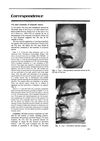
January 1989 in “Journal of The American Academy of Dermatology”
8 citations
,
January 1989 in “Journal of The American Academy of Dermatology” This report suggests that CO2 laser treatment may be an effective alternative for removing traumatic tattoos caused by firearms, based on two successful patient cases.
6 citations
,
October 2023 in “Clinical Cosmetic and Investigational Dermatology” This study found that combining ultrapulsed fractional CO2 laser with bovine basic fibroblast growth factor significantly improved acne scars more effectively and safely compared to laser therapy alone.
 3 citations
,
March 2019 in “Chinese Medical Journal”
3 citations
,
March 2019 in “Chinese Medical Journal” In this study using mice, fractional CO2 laser therapy promoted hair regrowth by inducing moderate inflammation, enhancing VEGF-mediated angiogenesis, and activating the Wnt10b signaling pathway.
 3 citations
,
August 1995 in “Journal of Clinical Laser Medicine & Surgery”
3 citations
,
August 1995 in “Journal of Clinical Laser Medicine & Surgery” Using a CO₂ laser for hair transplants improves the surgery and may become important in future hair restoration.
2 citations
,
October 2021 in “QJM” This study found that both CO2 laser combined with topical methotrexate and calcipotriol plus betamethasone treatments improved nail psoriasis similarly, but some symptoms showed no improvement.
 1 citations
,
April 2025 in “JOJ Dermatology & Cosmetics”
1 citations
,
April 2025 in “JOJ Dermatology & Cosmetics” In this study, researchers evaluated the efficacy of a collagen booster used alongside CO2 fractional laser treatment for skin aging, finding that the combination treatment affected the vascularization and healing process of the skin on a healthy adult's forearm.
 1 citations
,
January 2024 in “Journal of Cutaneous and Aesthetic Surgery”
1 citations
,
January 2024 in “Journal of Cutaneous and Aesthetic Surgery” This study found that treating patchy alopecia areata with fractional CO2 laser and topical triamcinolone acetonide was more effective and safer than intralesional triamcinolone, despite higher initial discomfort, as it resulted in greater patient satisfaction and fewer adverse effects like skin atrophy.
 1 citations
,
July 2015 in “European Journal of Dermatology”
1 citations
,
July 2015 in “European Journal of Dermatology” This article discusses timed exposure settings with ablative lasers for treating benign dermal tumors and highlights their potential to reduce treatment time and scarring risk, but it reports no new clinical results.
1 citations
,
September 2001 in “Dermatologic Surgery” This study found that adding a low-power CO2 laser to Er:YAG laser improves hemostasis in hair transplantation without significantly affecting hair counts or increasing thermal damage.

In this study involving 13 patients with vitiligo-associated leukotrichia, minimal hair repigmentation was observed following treatment with fractional CO₂ laser and topical betamethasone, though the method was well tolerated, highlighting the need for further research to optimize treatment parameters.
February 2026 in “Journal of drug targeting” This study found that combining laser ablation with nanoparticulate drug formulations effectively enhanced the skin and follicular delivery of hydrophilic drugs like minoxidil and minocycline in preclinical models.
December 2025 in “Eurasian Journal of Scientific and Multidisciplinary Research” In this clinical trial involving 60 patients, the Fractional CO2 laser was found to be more effective in achieving significant hair regrowth in alopecia areata compared to intralesional corticosteroid injections, with a 30% absolute improvement and reduced treatment failure rates.
 April 2025 in “Archives of Dermatological Research”
 In this study, the combination of CO2 fractional laser therapy with Bimatoprost 0.03% was found to be more effective in promoting hair regrowth in Alopecia Areata patients than laser therapy alone, with higher response rates and minimal adverse effects reported.
 January 2025 in “Lasers in Medical Science”
 In this reported case, a 13-year-old boy with alopecia areata experienced complete lesion resolution and varied hair regrowth across different laser treatment parameters after three months of combined oral prednisone, topical ointment, and CO2 fractional laser therapy.
October 2024 in “Zagazig University Medical Journal” This clinical trial found that transdermal delivery of 5-Fluorouracil using fractional CO2 laser resulted in a significantly better treatment response in alopecia areata patients compared to intralesional injections of the same drug, with a greater reduction in the Severity of Alopecia Tool Score.
September 2024 in “Journal of the American Academy of Dermatology” Subcision is the most efficient, cost-effective, and safest treatment for post-acne boxcar scarring in skin of color.
April 2024 in “Al-Azhar International Medical Journal /Al-Azhar International Medical Journal” This study at Al-Azhar University Hospitals found that combining a fractional CO2 laser or microneedling with topical 5-Fluorouracil (5-FU) is more effective and safe for treating vitiligo than using either treatment alone, offering a new therapeutic option for patients.
 June 2023 in “Dermatology and Therapy”
 This study found that for patients with moderate-to-severe chronic hand eczema, combining fractional CO2 laser with halometasone cream was more effective than using halometasone cream alone, with a higher treatment success rate and fewer relapses, though skin pigmentation was a common side effect.
 April 2023 in “Research Square (Research Square)”
 The researchers reported that combining stromal vascular fraction (SVF) with fractional CO2 laser treatment significantly improved burn scar outcomes and patient satisfaction compared to using the laser alone.
This article discusses the effects of ablative carbon dioxide laser treatment for skin rejuvenation, noting it requires only a single treatment but involves more complex postoperative management, without reporting new clinical outcomes.
This abstract discusses the mechanism and effects of ablative carbon dioxide laser treatment for skin tightening, reporting no new clinical results but noting the need for involved postoperative management.
 June 1999 in “Proceedings of SPIE”
 The study suggests that CO₂ laser creates hair transplant channels with significantly less lateral thermal damage than Ho:YAG laser in the human scalp.
 28 citations
,
November 2020 in “Fluid Phase Equilibria”
28 citations
,
November 2020 in “Fluid Phase Equilibria” In this study, researchers measured the solubility of Minoxidil in supercritical CO₂ under various temperature and pressure conditions and created models to estimate solubility based on different predictive approaches.