2 citations
,
January 2023 in “Biomedicines” This study found that using a combination of ablative CO₂ fractional laser and fetal fibroblast transplantation significantly reduced scarring in mice, with long-term sphere-forming cultured fibroblasts producing scar appearances closest to normal skin.
1 citations
,
November 2018 in “immuneACCESS” This study found that in alopecia areata, treatment with the oral JAK-inhibitor tofacitinib decreased clonally expanded CD8⁺ T cells in the scalp, but many expanded clones did not completely disappear, potentially leading to relapse after stopping treatment.
December 2025 in “Materials Technology” In this laboratory study, researchers developed a genipin-stabilized asymmetric PLA/gelatin scaffold that mimics skin architecture, supports fibroblast proliferation, and closes scratches effectively, suggesting its potential for epidermal-dermal regeneration and applications in sensing or drug delivery.
 July 2025 in “International Journal of Dermatology Venereology and Leprosy Sciences”
 This review assessed the role of scalp hair Survivin protein in individuals with premature graying, exploring its potential involvement in graying-related processes and highlighting its overexpression in autoimmune diseases that may influence the survival of specific immune cell clones.
January 2009 in “China Practical Medicine” This study found that several genes, including capping protein, palladin, VEGF, and HSPC-related clones, might cooperatively influence the aggregation, proliferation, and cycle control of dermal papilla cells, potentially affecting hair follicle behavior.
 February 2026 in “IOP Conference Series Earth and Environmental Science”
 This study identified specific morphological characteristics and kinship relationships among 27 candlenut genotypes in Karo Regency, North Sumatra, highlighting variations in stem, leaf, flower, fruit, and kernel traits, with the closest relationship between MTB1 and MTB2 genotypes.
 January 2025 in “Journal of Veterinary Medical Science”
 In this study, researchers observed that genetically identical cloned dogs, when exposed to different environments like an airport and a police station for two years, exhibited significant differences in toxic mineral concentrations and intestinal microbiota composition, suggesting that environment influences physiological traits even among clones.
322 citations
,
October 2006 in “British Journal of Clinical Pharmacology” This article reviews the history and challenges of warfarin use and suggests that monitoring genetic and environmental factors could improve individualized dosing and safety, but no new results are reported.
 98 citations
,
June 2001 in “Journal of biological chemistry/The Journal of biological chemistry”
98 citations
,
June 2001 in “Journal of biological chemistry/The Journal of biological chemistry” This study identified a cluster of genes on chromosome 17 related to hair keratin-associated proteins, including 37 genes forming seven multigene families, localized in the hair shaft's upper cortex.
52 citations
,
October 1995 in “Experimental Cell Research” Human hair keratin genes hHa2 and hHb1 are located on chromosomes 17 and 12.
 14 citations
,
October 2000 in “Genomics”
14 citations
,
October 2000 in “Genomics” This study demonstrated that dermal papilla cells are molecularly distinct from fibroblasts and identified many novel molecules, including a new member of the CTGF protein family.
1 citations
,
November 2025 in “Stem Cell Research & Therapy” This study developed immortalized human hair follicle-derived mesenchymal-like stromal cells (iHF-MSCs) as a consistent source of therapeutic secretome, reporting their superior immunomodulatory and regenerative performance, potentially advancing cell-free therapies for inflammation and tissue repair.
1 citations
,
January 1996 This review discusses the rhizobia-legume interaction, focusing on infection thread formation and its relation to root hair and pollen tube growth, and reports no new experimental results; the authors call for more studies on early nodulins' role.
January 2007 in “Journal of Inner Mongolia University” This study achieved successful cloning of the ovine keratin associated protein 6-1 gene, which may facilitate future research on transgenic animals and hair follicle gene regulation.
 721 citations
,
October 2011 in “Nature”
721 citations
,
October 2011 in “Nature” Different types of long-lasting stem cells are responsible for the growth and upkeep of the mammary gland.
 129 citations
,
May 2015 in “Cell Stem Cell”
129 citations
,
May 2015 in “Cell Stem Cell” This review discusses recent findings on the plasticity and regulation of epithelial stem cells and reports no new experimental results.
 73 citations
,
August 2011 in “Stem Cell Research”
73 citations
,
August 2011 in “Stem Cell Research” This study found that human hair follicle-derived mesenchymal stem cells can differentiate into myogenic, osteogenic, adipogenic, and chondrogenic lineages, although this potential decreases over time and varies by lineage.
13 citations
,
January 2023 in “Annual Review of Cancer Biology” This study suggests that cancer risk may be influenced by the balance of pro- and anti-oncogenic mutants in normal tissues rather than by the total number of mutations.
11 citations
,
July 2014 in “Journal of The Royal Society Interface” This study demonstrates that modeling clone size independently of time offers analytical advantages for understanding cell distribution and mutation frequency in epithelial progenitors, extending applications beyond neutral models.
9 citations
,
April 1999 in “Mammalian Genome” This study reports that the acidic and basic keratin gene clusters in dogs are located on chromosomes CFA9 and CFA27, respectively, similar to genetic arrangements in humans and mice.
8 citations
,
January 2014 in “PubMed” This study demonstrated that dermal papilla cells were more efficiently reprogrammed into induced pluripotent stem cells than dermal fibroblasts, suggesting their potential as a source for iPS cells.
 8 citations
,
May 2004 in “Textile Research Journal”
8 citations
,
May 2004 in “Textile Research Journal” This study reports promising preliminary results for using monoclonal antibodies to identify cashmere fibers, highlighting observed immunological differences from wool keratins.
6 citations
,
February 2024 in “JAAD International” ChatGPT is preferred for creating dermatology patient handouts, but all models can be useful with oversight.
6 citations
,
January 2014 in “Genetics and Molecular Research” This study constructed a hair follicle-specific expression vector for IGFBP-5 in Inner Mongolia Cashmere goat cells, allowing for future functional genetic analyses and potential use in nuclear transfer.
 5 citations
,
January 2021 in “iScience”
5 citations
,
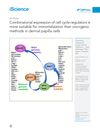
January 2021 in “iScience” Using a combination of specific cell cycle regulators is better for safely keeping hair root cells alive indefinitely compared to cancer-related methods.
4 citations
,
September 1971 in “Crop Science” This study found that leachate from crownvetch seeds drastically inhibited the growth of shoots and roots in various plant species, despite the osmotic pressure being too low to account for these effects.
2 citations
,
January 2019 in “Methods in molecular biology” This protocol demonstrates that pharmacological inhibition of TGF-β signaling can enhance the proliferative capacity of mouse and human keratinocytes, facilitating their use in skin research and graft preparation.
1 citations
,
October 1988 in “Clinics in Dermatology” Scientists identified and cloned specific keratin proteins in mouse hair.
 June 2026 in “Zenodo (CERN European Organization for Nuclear Research)”
 This study formulated a polyherbal hair oil containing natural ingredients like Amla and Neem, evaluating it for properties such as pH, stability, and skin irritation, and found it showed satisfactory physical appearance, stability, and enhanced conditioning without irritation.
 June 2026 in “Zenodo (CERN European Organization for Nuclear Research)”
 This study reported that a polyherbal hair oil formulation using natural ingredients like Amla, Neem, and hibiscus showed good stability, acceptable pH, and no skin irritation while enhancing hair conditioning properties.