 April 2023 in “Journal of Investigative Dermatology”
 This study found that patients with Stevens-Johnson syndrome and toxic epidermal necrolysis exhibit lower levels and activity of DNase1, impairing NET degradation, and suggests DNase1 administration as a potential treatment.
104 citations
,
January 2022 in “Materials Today Bio” This study explored the development of zinc-incorporated gelatin-based hydrogels, which demonstrated strong antibacterial properties and supported skin cell health, ultimately improving the healing process of S. aureus-infected full-thickness wounds, showing promise as wound dressings for infected wounds.
2 citations
,
June 2008 in “University of Zagreb University Computing Centre (SRCE)” This case report details a cat with sterile neutrophilic dermatitis that improved with cessation of previous medications and local povidone iodine therapy.
 April 2023 in “The journal of investigative dermatology/Journal of investigative dermatology”
 This study suggests that tissue transglutaminase (TG2) may play a role in sebum production by regulating autophagy in sebaceous glands, offering potential targets for dermatological interventions.
 December 2023 in “Indian Journal of Canine Practice”
 In this case report, a 3-year-old beagle with recurrent skin lesions and alopecia due to a methicillin-resistant Staphylococcus aureus infection showed significant improvement within 10 days and complete resolution after a 28-day treatment with oral linezolid, alongside fungal infection management.
9 citations
,
July 2007 in “Journal of Investigative Dermatology” This study found that exposure to 12-O-tetradecanoyl-phorbol-13-acetate in mouse skin caused changes in claudin expression and localization, indicating disruption and eventual recovery of the epidermal barrier.
March 2025 in “International Journal of Trichology” This case report describes a 38-year-old woman who experienced significant hair loss known as anagen effluvium after accidentally ingesting Gloriosa superba tubers, a plant commonly found in tropical regions with high colchicine content.

This study utilized a mouse model of traumatic brain injury to reveal that acute neurotrauma triggers widespread lipid metabolism reprogramming and storage lipid accumulation in microglial and monocyte populations, leading to lysosomal dysfunction, inhibited autophagy, and exacerbated inflammation through a pathological feedback loop.
119 citations
,
May 1987 in “The Journal of Dermatologic Surgery and Oncology” This study found that pigmentation following sclerotherapy is likely caused by hemosiderin deposition from red blood cells rather than post-inflammatory hyperpigmentation, with most cases resolving spontaneously within 6–24 months.
4 citations
,
December 2023 in “Clinical Cosmetic and Investigational Dermatology” This study found that in people with leprosy sequelae, ulcers on the lower limbs exhibited decreased microbial diversity and reduced abundance of specific bacteria compared to normal skin, with skin metabolites closely linked to these microbial changes.
October 2017 in “The American Journal of Gastroenterology” This case report details a 71-year-old man diagnosed with Cronkhite-Canada Syndrome, highlighting the importance of early diagnosis and endoscopic evaluation due to the disease's progressive nature and significant mortality risk.
11 citations
,
January 2009 in “World Journal of Gastroenterology” This study reports the first documented case of Cronkhite-Canada syndrome in a patient with myelodysplastic syndrome, where corticosteroids dramatically improved the patient's condition.
 14 citations
,
December 2007 in “Pediatric allergy and immunology”
14 citations
,
December 2007 in “Pediatric allergy and immunology” In this study, researchers found that mast cells in Erythema Toxicum lesions in newborns are actively involved in the immune response around hair follicles, but do not express the antimicrobial peptide LL-37.
1 citations
,
January 2015 in “MOspace Institutional Repository (University of Missouri)” This study found that applying 120L ha-1 yr-1 of SCD Probiotics to soil significantly increased soil microbial biomass and enzyme activity compared to lower doses and control, but showed no impact on auxin production.
 April 2016 in “Journal of The American Academy of Dermatology”
 A woman's skin symptoms led to a diagnosis of systemic AL amyloidosis, but she died from sepsis shortly after.
July 2026 in “bioRxiv (Cold Spring Harbor Laboratory)” In this study, researchers observed that TCDD exposure in mice enhanced sebaceous gland differentiation and lipid production before causing seboatrophy, providing insights into the cellular events that may contribute to chloracne pathogenesis.
2 citations
,
July 2016 in “Veterinary dermatology” This study reports that hyperaesthetic leucotrichia primarily affects Arabian and American paint horses, occurring mainly in summer, with histological differences from erythema multiforme despite some shared features.
November 2025 in “Probiotics and Antimicrobial Proteins” 1 citations
,
June 2011 in “대한구강악안면외과학회지” This case study reports an epidermoid cyst diagnosis in a woman who developed swelling in the left parotid gland following botulinum toxin injection in the left masseter muscles.
26 citations
,
January 1983 in “PubMed” This study reports that despite normal cystine incorporation into hair follicles, trichothiodystrophy patients have decreased cystine levels in hair shafts, contradicting the hypothesis of defective transport in hair follicles.
 16 citations
,
January 2023 in “Acta Biomaterialia”
16 citations
,
January 2023 in “Acta Biomaterialia” This study reported that a new bioinspired injectable hydrogel, CQCS@gel, showed promise as a multifunctional wound dressing by achieving rapid hemostasis and promoting the healing of infected skin wounds in both in vitro and in vivo tests.
 1 citations
,
January 2023 in “European Journal of Research in Dentistry”
1 citations
,
January 2023 in “European Journal of Research in Dentistry” This study found that topical application of tideglusib in a bacterial cellulose-based hydrogel showed positive effects on the healing of palatal wounds in rats.
 2 citations
,
January 2018
2 citations
,
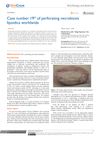
January 2018 This article reports the first case of perforating necrobiosis lipoidica in Colombia and the 19th case worldwide in diabetic patients.
1 citations
,
September 2025 in “Physiologia” This study found that systemic ovalbumin–aluminum sensitization followed by cutaneous challenge in mice induced thermal hyperalgesia, increased spinal cord gliosis, and sprouting of nociceptive fibers, along with elevated mast cell and nerve profile densities in the skin compared to controls.
8 citations
,
January 2025 in “Gels” This study developed cilostazol-loaded formulations for nose-to-brain delivery, finding that these formulations improved cilostazol's bioavailability by enhancing solubility, absorption, and permeability, achieving nearly 100% drug release in vitro within 2 hours.
22 citations
,
November 2008 in “The journal of investigative dermatology/Journal of investigative dermatology” This study observed that cathepsin L and transglutaminase 3 colocalize in the human hair bulb and nail matrix, suggesting their involvement in terminal differentiation within these epidermal appendages.
27 citations
,
December 1999 in “American Journal of Dermatopathology” This case report presents a patient with necrobiosis lipoidica exhibiting transepithelial elimination of cholesterol crystals through hair follicles, a finding previously associated with necrobiotic xanthogranuloma.
 February 2024 in “International Journal of Dermatology”
 This study outlines a rare case of cryptococcoid Sweet syndrome linked to hydralazine use and previous cocaine exposure, emphasizing the importance of recognizing unique histopathological features such as multiple positive autoantibodies and mucosal involvement to ensure timely diagnosis and treatment.
December 2024 in “PubMed” July 2026 in “International Journal of Veterinary Sciences and Animal Husbandry” This case report highlights the successful treatment of a sheep with ovine bacterial dermatitis, emphasizing the importance of laboratory confirmation and antimicrobial susceptibility-guided therapy, which led to complete clinical recovery within three weeks.