 11 citations
,
September 2020 in “OncoTargets and Therapy”
11 citations
,
September 2020 in “OncoTargets and Therapy” This study found that testosterone may promote glioblastoma progression by being converted into dihydrotestosterone, which enhances cell proliferation, migration, and invasion in GBM cell lines.
 9 citations
,
January 2020
9 citations
,
January 2020 This case series observed that macular changes from popper use can resolve completely after cessation, even in individuals with chronic use.
 8 citations
,
February 2022 in “Journal of Clinical Medicine Research”
8 citations
,
February 2022 in “Journal of Clinical Medicine Research” This review discusses the development of the MATH+ treatment protocol for COVID-19 patients, detailing its scientific and clinical rationale, but reports no new experimental findings.
 4 citations
,
January 2017 in “Biological & pharmaceutical bulletin”
4 citations
,
January 2017 in “Biological & pharmaceutical bulletin” This study found that inhibiting arachidonate 12-lipoxygenase (ALOX12) may enhance hair cuticle maturation by increasing S100A3 protein citrullination and promoting cuticular differentiation in isolated human hair follicles.
 2 citations
,
April 2023 in “Pharmacognosy Journal”
2 citations
,
April 2023 in “Pharmacognosy Journal” This study found that bio fabricated herbal silver nanoparticles from Blumea lacera extracts demonstrated significant antibacterial activity against Staphylococcus aureus and Escherichia coli, and notable anti-inflammatory effects, though their antioxidant capacity was insignificant compared to the extract.
 October 2025 in “HAL (Le Centre pour la Communication Scientifique Directe)”
 This research observed that, in domestic cats like Maine Coon and Rex breeds, a "piebald" coat color pattern is likely influenced by the Silver locus, although the specific mutations involved are yet to be published.
 April 2024 in “arXiv (Cornell University)”
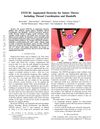
 In this study, the researchers developed an advanced robotic system called STITCH for performing suture tasks, which completed an average of 2.93 sutures autonomously and 4.47 sutures with human intervention in physical trials.
 April 2021 in “Journal of Law Public Policies and Human Sciences”
 In this note, editors discuss the reproduction of medical content by Dr. Paul E. Marik, related to standardized coronavirus treatments, emphasizing that the materials appear effective and cautioning readers to consult their doctors for guidance.
 June 2020 in “Journal of Dermatological Treatment”
 This source outlines the potential effects of treatments commonly used in trichology on SARS-CoV-2 infection and offers a guide for managing trichological patients during the COVID-19 era, addressing the challenges of safely visiting and treating patients.
 January 2020 in “Der Pharmacia Lettre”
 This review discusses natural remedies and nanoparticle formulations for alopecia management and reports no new clinical results, emphasizing potential benefits of herbal treatments over synthetic therapies.
 June 2019 in “Poster presentations”
 This study found that low dose methotrexate did not increase hair loss in rheumatoid arthritis patients compared to healthy controls, and many patients even showed a reduction in hair fall over the short term.
 March 2025 in “Research Square (Research Square)”
 This study explored the potential of the lysate and lipoteichoic acid from Lactiplantibacillus plantarum APsulloc 331261 to improve scalp seborrheic dermatitis by modulating inflammatory and lipogenesis pathways in vitro, suggesting potential as a natural treatment option.
 1 citations
,
January 2020 in “Research Square (Research Square)”
1 citations
,
January 2020 in “Research Square (Research Square)” This study found that ethyl acetate extract of Musa × pardisiaca L. leaves showed anticancer activity against cervical carcinoma and malignant melanoma in vitro.
8 citations
,
January 2019 in “Journal of cosmetic dermatology” This study found that six sessions of a modified phenol peel effectively reduced hyperpigmentation in patients with Lichen Planus Pigmentosus, with 76% of treated individuals experiencing at least a 25% improvement, and no serious side effects reported.
September 2024 in “Sasambo Journal of Pharmacy” This study formulated and tested a pomegranate leaf shampoo with antifungal properties, identifying an optimal composition of 5.5% SLS and 15.5% cocamide DEA, showing good foam stability, appropriate pH, and viscosity in lab tests.
 February 2026 in “International Journal of Molecular Sciences”
 This study investigated the photoprotective properties of Brazilian pepper tree extract against UV-induced damage in skin cells, reporting that it enhanced expression of genes relevant to skin health and showed superior activity compared to standard antioxidants.
 April 2021 in “Current Topics in Nutraceutical Research”
 This study found that citron seed oil promotes hair regrowth in a C57BL/6 mouse model by enhancing the transition to the growth phase, increasing hair follicle features and skin thickness, and inducing specific protein expressions that support hair regeneration.
 April 2018 in “Journal of Investigative Dermatology”
 This study found that Mentha suaveolens aqueous extract activated Nrf-2 and increased detoxifying enzyme expression in keratinocytes, providing protection against oxidative stress without cytotoxicity.
4 citations
,
October 2025 in “Molecules” This study concluded that extracts from fermented pumpkin peel and pulp, processed with Lactobacillus strains and kombucha, may serve as multifunctional cosmetic ingredients, offering antioxidant protection, anti-aging, and skin regeneration benefits by demonstrating cytoprotective effects and reducing inflammatory cytokines in cell assays.
 10 citations
,
March 2015 in “American journal of primatology”
10 citations
,
March 2015 in “American journal of primatology” This study found that ringtailed lemurs consuming leucaena in Berenty absorb mimosine, which causes alopecia without affecting body condition or organ toxicity; this may increase infant mortality due to alopecic mothers.
 2 citations
,
January 2017 in “Plant”
2 citations
,
January 2017 in “Plant” This study found that in vitro extracts of Glycyrrhiza glabra root are strong antioxidants, particularly in ethanolic form, and contain secondary metabolites, but only showed mild antibacterial activity.
15 citations
,
June 2023 in “Journal of Microbiology and Biotechnology” In this study, researchers found that an ethyl acetate extract of the green microalga Scenedesmus deserticola significantly increased the viability of human dermal fibroblasts by over 20% compared to a control and identified a potent anti-UV compound, loliolide, through further fractionation.
 3 citations
,
October 2024 in “International Journal of Advanced Research in Science Communication and Technology”
3 citations
,
October 2024 in “International Journal of Advanced Research in Science Communication and Technology” In this study, lemon grass hair oil was formulated using various herbs and evaluated on parameters such as viscosity, saponification value, and pH to explore its potential for general hair application.
 October 2025 in “Jurnal Medisains Kesehatan”
 This experimental study found that leaf extracts from Averrhoa bilimbi and Muntingia calabura significantly inhibited the growth of Staphylococcus aureus, with M. calabura demonstrating stronger antibacterial activity, suggesting potential for acne treatment.
7 citations
,
January 2022 in “Brazilian Journal of Biology” This study found that a shampoo formulation using mangabeira leaf extract without sodium lauryl sulfate showed promising antioxidant activity and improved foam quality.
1 citations
,
September 2025 in “Molecules” This study comparatively evaluated different extraction techniques for Schinus terebinthifolius Raddi leaf extracts and found that conventional extraction with ethanol yielded the highest antioxidant activity and beneficial effects on skin cell viability, supporting its potential use in sustainable cosmeceutical formulations targeting skin aging.
February 2025 in “Buletin Veteriner Udayana” This study found that mimosine in lamtoro leaf powder causes moderate congestion and mild necrotic lesions in the pancreas of white rats, which are less severe than those caused by standard mimosine, suggesting the leaf powder's flavonoid, tannin, and protein components may reduce mimosine toxicity.
In this case report, interferon-alpha treatment for a man with hemophilia and hepatitis C was associated with unexpected diffuse hair growth, likely caused by the medication.
53 citations
,
July 2021 in “International Journal of Molecular Sciences” This study found that extracts from Geranium pyrenaicum show promising antioxidant, enzyme inhibitory, and antiviral activities, particularly the methanolic extract's antiviral activity against HSV-1.
 December 2022 in “Journal of Tropical Pharmacy and Chemistry”
 This study evaluated a hair tonic formulated from oil palm leaf extract, finding it demonstrated very strong antioxidant activity and could prevent hair decolorization from sun exposure, with effective concentrations ranging from 25 to 200 ppm.