January 2016 in “British Biotechnology Journal” This study explored the potential of hair follicle dermal papilla cells for multilineage differentiation in embryos, highlighting their plasticity and regenerative capabilities.
 7 citations
,
October 1985 in “Genetics Research”
7 citations
,
October 1985 in “Genetics Research” This study found that in chimaeric mice models, the pigment distribution and pattern were influenced by the sash genotype, demonstrating the melanocyte-autonomous nature of the beige and leaden loci.
949 citations
,
January 2001 in “Cell” This study demonstrated that multipotent stem cells in adult mice whisker follicles migrate to produce whisker growth, and that this process requires precise control of stem cell trafficking.
 January 2024 in “Wiadomości Lekarskie”
 This presentation discusses the importance of fluid therapy in critical care, reviewing current data, guidelines, and emerging technologies to help clinicians make informed decisions about fluid type and volume for treating critically ill patients. Results are not reported in this abstract.
 12 citations
,
June 2020 in “Frontiers in Cell and Developmental Biology”
12 citations
,
June 2020 in “Frontiers in Cell and Developmental Biology” This study found that the PP2A-B55α regulatory subunit is crucial for ectodermal development in mice, with knockout embryos displaying severe neural and epidermal defects and failing to survive to birth.
 21 citations
,
June 2016 in “Genesis”
21 citations
,
June 2016 in “Genesis” This study identified a gene expression signature in mouse embryonic dermal fibroblasts that depends on Wnt/β-catenin activity, potentially influencing dermal fibroblast identity and function.
 7 citations
,
October 2018 in “BMC genomics”
7 citations
,
October 2018 in “BMC genomics” This study reveals that β-catenin and retinoic acid are key regulators in the gene networks controlling the fate of skin appendages, such as scales and feathers.
7 citations
,
January 2019 in “Methods in molecular biology” This chapter describes methods for creating engineered skin substitutes with chimeric hair follicles using human and murine cell grafts in immunodeficient mice, but reports no clinical outcomes.
 4 citations
,
August 2023 in “Nature Communications”
4 citations
,
August 2023 in “Nature Communications” In this study, researchers observed that the combination of hair progenitors and their micro-niche changes every three days in mouse zigzag hair, and disruptions in specific genes affected this rhythm, highlighting the importance of this periodic change for normal hair morphology.
 96 citations
,
April 2007 in “Journal of Investigative Dermatology”
96 citations
,
April 2007 in “Journal of Investigative Dermatology” In this study, co-grafting human keratinocytes with murine dermal papilla-enriched cells produced hair follicle-like structures, but without regular hair formation, suggesting anomalous folliculogenesis.
 41 citations
,
June 2013 in “PLOS ONE”
41 citations
,
June 2013 in “PLOS ONE” This study demonstrated that engineered skin substitutes using human keratinocytes and murine dermal papilla cells can develop pigmented hairs without sebaceous glands, suggesting separate pathways for hair development and eruption.
 23 citations
,
January 2021 in “Scientific Reports”
23 citations
,
January 2021 in “Scientific Reports” In this study, hair follicle germs containing vascular endothelial cells showed improved hair regeneration and morphogenesis-related gene expression in mice, suggesting a promising strategy for hair regenerative medicine.
15 citations
,
May 2014 in “Journal of Biological Chemistry” In this study, targeting the expression of a keratin KRT5/KRT8 chimeric cDNA in keratin-deficient mice partially restored structural defects in epidermal cells, but did not fully normalize skin health.
 788 citations
,
February 2007 in “Nature”
788 citations
,
February 2007 in “Nature” This review explores how adult skin epithelia preserve stem cell populations for hair follicle regeneration and wound healing, but reports no new experimental results.
 139 citations
,
December 2020 in “Cell Stem Cell”
139 citations
,
December 2020 in “Cell Stem Cell” Male hormones affect COVID-19 severity and certain drugs targeting these hormones could help reduce the risk.
 51 citations
,
May 2019 in “Biomaterials”
51 citations
,
May 2019 in “Biomaterials” This study developed a method for generating germ-like tissues called bbHFGs, which efficiently promoted hair follicle formation in mice, potentially advancing hair regenerative medicine applications.
46 citations
,
August 2012 in “Experimental Dermatology” In this study, engineered skin substitutes containing murine dermal papilla cells developed hair follicle-like structures when grafted onto mice, suggesting a model for generating chimeric hair.
 1 citations
,
March 2023 in “bioRxiv (Cold Spring Harbor Laboratory)”
1 citations
,
March 2023 in “bioRxiv (Cold Spring Harbor Laboratory)” This study found that Dermal Fibroblast Progenitors have repressed chromatin profiles which hinder their ability to reform skin in allograft assays despite their differentiation potential.
 156 citations
,
January 1989 in “Genes & Development”
156 citations
,
January 1989 in “Genes & Development” This study found that keratin K14 expression occurs early in epidermal cell differentiation, while a hair-specific keratin is expressed later in hair matrix cells, suggesting developmental divergence between the two cell types.
 83 citations
,
January 2015 in “World Journal of Stem Cells”
83 citations
,
January 2015 in “World Journal of Stem Cells” This review discusses current experimental approaches for regenerating human hair follicles using tissue engineering and isolated cells, but reports no successful strategies with adult cells yet found.
 16 citations
,
December 2006 in “Expert Review of Dermatology”
16 citations
,
December 2006 in “Expert Review of Dermatology” This review discusses the multifaceted roles of hair follicles in skin health, including potential contributions to skin neoplasias, and reports no new results.
 9 citations
,
March 2011 in “Current Pharmaceutical Biotechnology”
9 citations
,
March 2011 in “Current Pharmaceutical Biotechnology” This review discusses current stem cell technologies, their potential therapeutic uses, and imaging techniques for tracking transplanted cells, without reporting new experimental results.
8 citations
,
March 2015 in “International Journal of Oncology” This study successfully established Tsc2-deficient embryonic stem cells from Eker rats and found these cells have distinct gene expression compared to non-mutant cells, which could help identify new therapeutic targets for TSC-related pathogenesis.
 7 citations
,
November 2014 in “Histochemistry and Cell Biology”
7 citations
,
November 2014 in “Histochemistry and Cell Biology” This study found that mutant mice with the we/we wal/wal genotype exhibit significant defects in hair shaft structure and epidermis stratification, correlating with postnatal alopecia symptoms.
 3 citations
,
January 2014 in “Elsevier eBooks”
3 citations
,
January 2014 in “Elsevier eBooks” Different stem cells have benefits and challenges for tissue repair, and more research is needed to find the best types for each use.
 43 citations
,
August 2008 in “Regenerative Medicine”
43 citations
,
August 2008 in “Regenerative Medicine” In this study, murine follicular cell aggregates developed into hair-like structures in culture, which upon implantation into mice skin matured into complete hair follicles, suggesting potential for treating hair loss.
 33 citations
,
December 2004 in “Differentiation”
33 citations
,
December 2004 in “Differentiation” In this study, mouse amnion epithelium was successfully transformed into skin and hair follicles when associated with hair-forming dermis, revealing the necessity of specific influences for follicle formation.
 28 citations
,
January 2013 in “Stem cells”
28 citations
,
January 2013 in “Stem cells” This study found that the CD44(+) ALDH(+) population of neonatal human keratinocytes exhibited enhanced stem cell properties, including significantly increased long-term epidermal regeneration and multipotency, compared to unfractionated cells.
 5 citations
,
January 2005 in “Cytotherapy”
5 citations
,
January 2005 in “Cytotherapy” This meeting in Heidelberg highlighted diverse contributions on stem cell research, including pre-clinical and clinical applications, but reported no new experimental results.
 829 citations
,
May 2007 in “Nature”
829 citations
,
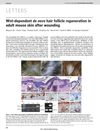
May 2007 in “Nature” Hair follicles can regrow in wounded adult mouse skin using a process like embryo development.