March 2026 in “Chemical Engineering Journal” The hydrogel helps heal diabetic wounds by combining antibacterial, antioxidant, and immune-boosting effects.
This study in adult mice found that somatosensory axons innervating Merkel cells in the skin are highly plastic, with significant remodeling in response to epithelial turnover, and that Merkel cells play a role in limiting axonal branching and promoting their maturation.
August 2025 in “Processes” In this study, researchers used a network pharmacology approach to highlight significant interactions between compounds in rosemary (Salvia rosmarinus) and genes related to functional dyspepsia, suggesting potential pathways for developing treatments against gastrointestinal diseases.
43 citations
,
August 2021 in “Journal of Orthopaedic Translation” This study explored a dual-functional dressing with quaternized chitosan and magnesium, finding it enhanced wound healing and had strong antibacterial effects against drug-resistant bacteria in diabetic rat models with infected foot ulcers, suggesting promise for diabetic foot ulcer treatment.
 4 citations
,
February 2022 in “International Journal of Molecular Sciences”
4 citations
,
February 2022 in “International Journal of Molecular Sciences” This review discusses the similarities between myotonic dystrophy and aging, highlighting the role of cellular senescence in its pathophysiology, and reports no new clinical findings; the authors note potential anti-aging therapy applications.
1 citations
,
January 2018 This study found that sphingosine 1-phosphate and its receptor S1PR3 are essential in regulating the acute mechanical pain response, highlighting their role in mechanonociception without affecting responses to innocuous touch or thermal stimuli.
32 citations
,
February 2019 in “eLife” This study identified key cells and pathways needed for the development of touch receptor patterns in mouse skin, notably that certain keratinocytes are crucial for innervation patterns, while Merkel cells and BMP signaling have distinct roles.
24 citations
,
March 2008 in “Neuroscience Research” This study revealed the complex three-dimensional innervation of touch domes in cat forepaw skin, highlighting the extensive branching and unmyelinated endings associated with Merkel cell–axon complexes.
1 citations
,
August 2019 in “IntechOpen eBooks” This article discusses the use of mesotherapy in dentistry and reports no new clinical results, emphasizing the need for further research on its applications for oral problems.
 33 citations
,
May 1991 in “British Journal of Pharmacology”
33 citations
,
May 1991 in “British Journal of Pharmacology” Cromakalim relaxes various blood vessels, while minoxidil sulphate is more selective; they likely act on different potassium channels.
18 citations
,
April 1998 in “MIT Press eBooks” This study found that topical application of N,N-dimethylglycine sodium salt increased dermal blood flow and velocity in human subjects, likely through its effects on endothelial cells and NO-dependent vasodilation.
17 citations
,
January 2024 in “Journal of Materials Chemistry B” This paper reviews the current state of magneto-responsive biocomposites in wound dressings, highlighting their potential benefits in wound healing, such as remote control and enhancing tissue reconstruction, while addressing the need for more comprehensive research in this field.
 22 citations
,
August 1999 in “Experimental Dermatology”
22 citations
,
August 1999 in “Experimental Dermatology” This study found that subcutaneous injections of guanethidine or 6-hydroxydopamine induced premature hair growth in mice, suggesting a role for sympathetic nerves in hair growth control.
This study found that combining electrical stimulation with minoxidil had a synergistic effect on the proliferation of cultured human dermal papilla cells, potentially through enhanced activation of the Wnt/β-catenin pathway.
13 citations
,
February 2025 in “Nature Communications” In this study, a deep neural network model called regX was developed to prioritize driver regulators for cell state transitions by incorporating gene-level regulation and interactions, showing potential therapeutic targets in type 2 diabetes and hair follicle development when applied to single-cell multi-omics data.
January 2015 in “Indo American Journal of Pharmaceutical Research” This article describes mesotherapy, a technique involving small doses of compounds injected into the skin for cosmetic uses like aging skin and fat reduction, and provides no new clinical results.
15 citations
,
August 2022 in “The Application of Clinical Genetics” This review describes the clinical presentation, diagnosis, and management of adrenomyeloneuropathy, including rehabilitative therapies and spasticity management, and reports no new clinical results.
 April 2016 in “Journal of Investigative Dermatology”
 This study found that administering botulinum toxin A via Flex-PADs to mouse footpads inhibited sweating similarly to traditional injections, suggesting a promising patient-friendly delivery method for hyperhidrosis treatment.
17 citations
,
January 1998 in “Neurourology and Urodynamics” This report describes a case of adrenomyeloneuropathy where neurogenic bladder dysfunction developed, attributed to demyelinating lesions in the patient's peripheral nerves, spinal cord, and cerebral white matter.
24 citations
,
January 2023 in “Frontiers in Medicine” Moist Exposed Burn Ointment speeds up healing of diabetic wounds.
39 citations
,
February 2024 in “Small” This review discusses the evolution and development of smart and multifunctional microneedles, highlighting their potential future importance in medical applications, but it reports no new experimental results.
January 2011 in “Hispania Judaica bulletin” This study found that mechanical and chemical interactions in skin organoids are crucial for initiating mesenchymal-epithelial interactions necessary for hair follicle regeneration.
December 2025 in “Molecular Pain” This study identified that the MC-5-HT-HTR2A axis plays a role in chronic pruritus in a mouse model of SADBE-induced allergic contact dermatitis, suggesting potential for therapeutic targeting.
8 citations
,
June 2025 in “Stem Cell Research & Therapy” This review discusses the potential of exosome therapy for treating diabetic peripheral neuropathy but highlights the need for more robust preclinical trials before clinical application.
109 citations
,
November 2011 in “Nature Neuroscience” 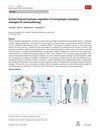
This review highlights that surface mechanical regulation can program macrophage behavior through specific mechanical cues on material surfaces, potentially advancing immunotherapies and regenerative medicine by enabling precise control over macrophage functions.
 January 2025 in “Journal of Pharmaceutical Research Science & Technology”
 This review explores the potential, challenges, and recent advancements of dissolving microneedles in drug delivery, summarizing their varied applications and current limitations without providing new clinical results.
109 citations
,
April 1997 in “Archives of Dermatological Research” The researchers reported that mast cell and nerve fiber interactions in mouse skin are highly selective for nerve fiber types and vary depending on the hair cycle phase.
This study found that somatosensory axons innervating Merkel cells in adult mouse skin exhibit significant plasticity, influenced by epithelial and neural factors, indicating a complex interaction in maintaining homeostasis.
123 citations
,
November 2003 in “Neuroscience Letters” In this study, TRPV4 channels were found in specific mechanosensory endings in mice skin, suggesting a role in pressure sensation transmitted through A- and C-fibers.