February 1842 in “Annals of clinical and laboratory science” This article reviews how environmental pollutants like glyphosate, fluoride, and electromagnetic fields may contribute to mitochondrial dysfunction and adverse health effects such as cancer and chronic diseases, but reports no new research findings.
 13 citations
,
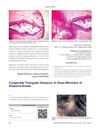
January 2011 in “International Journal of Trichology”
13 citations
,
January 2011 in “International Journal of Trichology” CTA is often mistaken for AA but doesn't respond to steroids and may require hair transplantation.
January 2025 in “Open Veterinary Journal” This case series reports that electrochemotherapy with intravenous bleomycin effectively resolved cutaneous mast cell tumors in four cats, showing no tumor recurrence during follow-up, except for new lesions in one cat, and minimal local toxicity.
1 citations
,
January 2013 This study observed that inducible deletion of the Ugcg gene in mouse epidermis led to a significant reduction in GlcCers and epidermal POS-Cers, causing impaired skin barrier function and delayed wound healing.
 5 citations
,
October 2014 in “Gynecological Endocrinology”
5 citations
,
October 2014 in “Gynecological Endocrinology” This case study describes a 15-year-old girl with a Sertoli–Leydig cell tumor who showed high androgen levels and steroidogenic responses similar to patients with polycystic ovary syndrome before surgery.
August 2025 in “International Journal of Cancer” This study reported that postnatal environmental factors, such as childhood height and early hospitalization for immune-related diseases, were associated with an increased risk of testicular germ-cell tumor, with minimal observed variation between seminomas and non-seminomas.
September 2024 in “Journal of the American Academy of Dermatology” ChatGPT-4 can help with allergic contact dermatitis but shouldn't replace expert doctors.
 9 citations
,
January 2011 in “Skin Research and Technology”
9 citations
,
January 2011 in “Skin Research and Technology” This study developed a high-resolution phototrichogram system that can automatically and accurately assess hair growth metrics in cosmetic trials, achieving over 90% correlation with manual measurements.
November 2006 in “評価・診断に関するシンポジウム講演論文集” This study found that KSR1 is essential for v-Ha-ras-mediated skin tumor formation in mice but not for MT-driven mammary tumor genesis, suggesting its potential as a therapeutic target in Ras/MAPK signaling.
This study suggests that disruptions in the Ran system related to nuclear transport may be a key factor in the development of cellular issues in Hutchinson Gilford Progeria Syndrome.
3 citations
,
December 2013 in “Balkan Journal of Medical Genetics” This case report highlights the use of microarray analysis to identify cryptic chromosomal rearrangements in a young woman with intellectual disability and multiple congenital anomalies.
 1 citations
,
September 2011 in “Journal of Dermatology”
1 citations
,
September 2011 in “Journal of Dermatology” This letter reports a woman with nevoid basal carcinoma syndrome and pronounced androgenic alopecia associated with a novel PTCH gene mutation p.Leu1159fsx32, suggesting a genetic link in this case study.
 December 2023 in “bioRxiv (Cold Spring Harbor Laboratory)”
 This study found that targeting connective tissue sheath contraction with an MLCK inhibitor may improve hair growth in androgenetic alopecia by reducing premature hair regression caused by ectopic apoptosis of hair follicle progenitor cells.
September 2017 in “The journal of investigative dermatology. Symposium proceedings/The Journal of investigative dermatology symposium proceedings” This study emphasizes the genetic component of central centrifugal cicatricial alopecia, highlighting an atypical case involving an adolescent male within an African-American family.

This study investigated the mechanisms of Platycladi Cacumen in treating androgenetic alopecia, identifying potential key components and targets but found no specific targets or regulatory mechanisms.
164 citations
,
December 1984 in “Proceedings of the National Academy of Sciences” This study found that TCDD significantly reduced EGF receptor binding in various animal models, linked to toxic symptoms like weight loss and developmental delays, with receptor phosphorylation persisting several days.
In this multicenter Phase II trial, researchers found that topical GT20029 significantly increased hair regrowth in Chinese adult males with androgenetic alopecia compared to placebo, demonstrating good tolerability and suggesting the need for further studies to confirm its therapeutic potential.
37 citations
,
February 2023 in “Gut Microbes” This study found that administering the gut bacterium Thauera sp. strain GDN1 to mice significantly reduced their serum androgen levels, indicating gut bacteria may influence androgen metabolism.
53 citations
,
June 1983 in “Journal of Investigative Dermatology” This study reports that human epidermal transglutaminase activity increases with treatment using organic solvents and chemicals without significant molecular weight changes, which may allow modulation of the enzyme in skin diseases.
 4 citations
,
August 2023 in “Varna Medical Forum”
4 citations
,
August 2023 in “Varna Medical Forum” This article explores the therapeutic potential of TECAR therapy for physiotherapy, highlighting its non-invasive nature and ability to provide analgesic, anti-inflammatory, and tissue healing effects across various conditions with minimal side effects when applied correctly.
23 citations
,
January 2008 in “Skin Pharmacology and Physiology” This study demonstrated that optical coherence tomography effectively detects significant changes in hair structure caused by steroid treatment, suggesting its potential use in doping control and clinical therapy monitoring.
 January 2025 in “Biomedical Reports”
 This case report describes the first successful use of telitacicept in treating a patient with systemic lupus erythematosus and a history of papillary thyroid carcinoma, suggesting its potential as a therapeutic option for such conditions.
 October 2024 in “Journal of the Endocrine Society”
 This study found that feminizing hormone therapy increased GFR in transgender individuals assigned male at birth, suggesting an effect of sex hormones on kidney hemodynamics, while masculinizing therapy showed a slight, nonsignificant decrease in GFR.
August 2023 in “Zenodo (CERN European Organization for Nuclear Research)”  14 citations
,
January 2013 in “Hormone and Metabolic Research”
14 citations
,
January 2013 in “Hormone and Metabolic Research” This study found that in patients with nonclassical 21-hydroxylase deficiency, genotypes do not reliably predict the severity of hyperandrogenic symptoms, suggesting other genetic factors may influence the phenotype.
 11 citations
,
December 2018 in “Bone”
11 citations
,
December 2018 in “Bone” This study found that a high-energy shock wave can increase osteogenic activities in human mesenchymal cells, offering insights into potential therapeutic targets for trauma-induced heterotopic ossification.
 88 citations
,
August 2019 in “Nature communications”
88 citations
,
August 2019 in “Nature communications” In this study, researchers identified a specific T cell receptor associated with carbamazepine-induced severe cutaneous adverse reactions, demonstrating its potential for therapeutic development in patients with the HLA-B*15:02 genotype.
15 citations
,
January 2012 in “International journal of trichology” This study found that the HairCheck® device, demonstrating high correlation between its Hair Mass Index and hair characteristics such as strand number and diameter, may be an effective tool for assessing hair mass changes in alopecia patients.
9 citations
,
February 2012 in “Clinical Neurology and Neurosurgery” In this paper, three APS patients were followed over time, showing that the diagnosis and course of autoimmune polyglandular syndrome can evolve, highlighting the need for careful monitoring and potential re-evaluation.
3 citations
,
August 2022 in “International Journal of Molecular Sciences” This study demonstrated that 5-azacytidine treatment may reduce TSC lesion-related hair follicles in mice, suggesting chromatin remodeling agents could be effective for tuberous sclerosis cutaneous lesions lacking tuberin.