January 2023 in “Zenodo (CERN European Organization for Nuclear Research)” This article reviews the polycystic ovary syndrome as a polyendocrine disease, detailing its etiology, pathogenesis, and research methods, but presents no new clinical results.
 7 citations
,
November 2017 in “Cureus”
7 citations
,
November 2017 in “Cureus” This report introduces a new potential sign, paired ear creases of the helix, which may have relevance to cardiovascular disease similar to diagonal ear lobe creases, in a case of coronary artery disease.
1 citations
,
January 2015 in “The Journal of Dermatology” This letter to the editor presents a case of non-Herlitz junctional epidermolysis bullosa associated with a COL17A1 mutation and reports no new clinical findings.
 January 2025 in “Turkish Journal of Cerebrovascular Diseases”
 This case report details two consanguineous patients with cerebral autosomal recessive arteriopathy, both having the same HTRA1 gene mutation, but exhibiting different clinical presentations, including one with epileptic seizures and lobar hemorrhages—previously undocumented in this condition.
14 citations
,
May 2022 in “Stem cell reports” This study reported that human induced pluripotent stem cell-derived skin organoids, used to model epidermolysis bullosa, have an epidermal-dermal junction largely lacking type VII collagen, which is important for skin structure.
1 citations
,
March 2022 in “Frontiers in Medicine” This case report highlights a rare instance of esophageal carcinoma in a patient with Cronkhite-Canada syndrome, emphasizing the importance of endoscopic surveillance for malignant gastrointestinal tumors in these patients.
 September 2024 in “Journal of Medicine and Life”
 In this study, researchers identified a recurrent nonsense mutation, c.409C>T (p.Arg137*), in the COL7A1 gene through whole exome sequencing in a family with autosomal recessive dystrophic epidermolysis bullosa, demonstrating the importance of this method for diagnosing genetically complex conditions.
 36 citations
,
September 2013 in “PLoS ONE”
36 citations
,
September 2013 in “PLoS ONE” This study found that sweat gland stem cells primarily maintain sweat gland homeostasis but can trans-differentiate to aid in epidermal healing and regenerate diverse skin structures under certain conditions.
70 citations
,
November 2020 in “The Ocular Surface” This review discusses the role of organoids and organ chips in advancing ophthalmological research and therapeutic evaluation, but it reports no new clinical findings.
 36 citations
,
February 2004 in “International Journal of Dermatology”
36 citations
,
February 2004 in “International Journal of Dermatology” Different sports can cause specific skin conditions that need proper diagnosis and treatment.
January 2025 in “Case Reports in Oncological Medicine” This case report emphasizes the need to consider Sertoli-Leydig cell tumors in the differential diagnosis of adnexal masses in patients with Peutz-Jeghers syndrome, noting that these tumors can present unusually with bilateral adnexal involvement.
 January 2025 in “Dermatology Reports”
 This case report describes a 61-year-old Italian man with a rare, localized variant of junctional epidermolysis bullosa linked to the R795X mutation in the COL17A1 gene, highlighting the importance of precise diagnosis for effective management of rare genetic disorders.
 April 2016 in “Journal of The American Academy of Dermatology”
 This study found that dermatology consultations in a tertiary care center often led to treatment changes, particularly for complex dermatologic conditions potentially linked to systemic disease.
39 citations
,
March 1997 in “The Lancet” Acquired perforating dermatosis often affects skin in people with kidney issues and diabetes.
 1 citations
,
March 2023 in “European Journal of Human Genetics”
1 citations
,
March 2023 in “European Journal of Human Genetics” This retrospective study observed that patients with vascular EDS on long-term angiotensin II receptor blockers or beta-blockers experienced fewer vascular events compared to those without cardiac medication under similar lifestyle and emergency care advice.
June 2016 in “Annals of the Rheumatic Diseases” This study found that glucocorticoid use in rheumatoid arthritis patients is associated with dose-dependent risk of Cushingoid habitus, easy bruising, skin atrophy, and impaired wound healing, while other skin adverse effects are rare at lower doses.
38 citations
,
May 1982 in “PubMed” This report describes almost complete resolution of calcinosis and healing of associated ulcers in an 83-year-old woman with localized scleroderma after repeated intralesional steroid injections.
September 2025 in “Anti-Aging Eastern Europe” This review discusses the full spectrum of polycystic ovary syndrome's impact on women, highlighting the need for more comprehensive care that addresses both visible symptoms and hidden systemic burdens, and reports no new clinical results.
July 2024 in “Journal of Investigative Dermatology” CRISPR/Cas9 and prime editing can potentially fix skin disorder genes safely and effectively.
 April 2024 in “Materials today bio”
 In this study, the researchers developed a novel wound dressing incorporating copper-doped calcium silicate and curcumin, which significantly promoted nerve and blood vessel regeneration in deep burn wounds, emphasizing the crucial role of bioactive chelation in neuralized skin repair.
January 2009 in “Epsilon: Revista de la Sociedad Andaluza de Educación Matemática "Thales"” This report describes a Cronkhite-Canada syndrome patient with severe sepsis and disseminated intravascular coagulation successfully treated using combined therapies, including recombinant human soluble thrombomodulin.
June 2005 in “Journal of Investigative Dermatology” A bull with a gene mutation was asymptomatic, synthetic retinoids cause hair loss, and new therapeutic targets were identified for skin diseases.
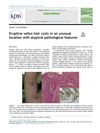 January 2018 in “The Kaohsiung journal of medical sciences”
 This case report describes an atypical presentation of eruptive vellus hair cysts on the elbows, where standard diagnostic techniques were unreliable due to the loss of cystic structural integrity.
June 2020 in “Faculty Opinions – Post-Publication Peer Review of the Biomedical Literature” This study found a specific T cell receptor that may be key in carbamazepine-induced Stevens-Johnson syndrome and toxic epidermal necrolysis, suggesting potential therapeutic targets.
 10 citations
,
June 2024 in “American Journal of Clinical Dermatology”
10 citations
,
June 2024 in “American Journal of Clinical Dermatology” This review highlights that while sonidegib and vismodegib offer promising treatment options for advanced basal cell carcinoma, their use is often limited by treatment-emergent adverse events, which can be managed through protocol modifications and supportive interventions.
2 citations
,
October 2023 in “PubMed” This study reported the creation of isogenic immortalized COL7A1-deficient keratinocyte lines, providing a model for researching Recessive Dystrophic Epidermolysis Bullosa biology and potential therapies.
 July 2023 in “Endocrinology, diabetes & metabolism case reports”
 This case report involved a premenopausal woman with rapidly progressing virilizing symptoms caused by a rare sertoliform endometrioid carcinoma of the ovary. Following surgical intervention, her symptoms improved, highlighting the importance of recognizing virilizing symptoms as potential indicators of low-grade ovarian malignancies in similar cases.
 5 citations
,
February 2023 in “European journal of endocrinology”
5 citations
,
February 2023 in “European journal of endocrinology” This study found that older patients with Cushing's syndrome had fewer typical symptoms of hypercortisolism, more comorbidities, and were more often treated conservatively compared to younger patients.
17 citations
,
January 2015 in “JOURNAL OF CLINICAL AND DIAGNOSTIC RESEARCH” This report presents a case of Cronkhite-Canada syndrome in an elderly Indian male, adding to the approximately 450 cases documented worldwide, but introduces no new results about the condition.