 1 citations
,
November 2023 in “Research Square (Research Square)”
1 citations
,
November 2023 in “Research Square (Research Square)” In this study, researchers introduced a machine learning approach to discover new nanozymes through the DiZyme platform, enabling the accurate prediction of multiple catalytic activities, and providing a comprehensive database and assistant resources for users.
 June 2026 in “Gümüşhane Üniversitesi Fen Bilimleri Enstitüsü Dergisi”
 This study observed that biodegradable PVA/agar films with incorporated Achillea millefolium L. essential oil, especially at 1% (v/v), demonstrated good mechanical performance and selective antibacterial activity against E. coli, suggesting their potential as wound dressings.
 May 2026 in “International Journal of Nanomedicine”
 This review discusses the promising roles of nanozymes in burn wound treatment, highlighting their broad enzyme-like activities that include antibacterial, anti-inflammatory, and pro-angiogenic effects, along with advantages over traditional treatments such as reduced drug resistance and higher stability.
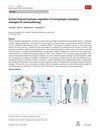
This review highlights that surface mechanical regulation can program macrophage behavior through specific mechanical cues on material surfaces, potentially advancing immunotherapies and regenerative medicine by enabling precise control over macrophage functions.
 April 2026 in “Journal of Pharmaceutical Investigation”
 This review discusses recent advancements in nanotechnology for treating hypertrophic scarring and atopic dermatitis, highlighting the potential of nanotherapeutic platforms in enhancing therapeutic effects by modulating the skin's microenvironment.
 March 2026 in “Tissue Engineering and Regenerative Medicine”
 In this review, the authors discuss recent advancements in underwater adhesion technologies, specifically highlighting mussel-inspired catechol-based adhesives, which offer strong underwater bonding through various interfacial interactions and the influence of dopamine-modified polymeric tissue adhesives.
 January 2026 in “Microsystems & Nanoengineering”
 This study analyzed 853 articles to reveal that research on silica-based nanobiomaterials in regenerative medicine has rapidly increased, with distinct regional differences in impact and emerging focus areas in drug delivery and wound healing.
 January 2026 in “International Journal of Applied Pharmaceutics”
 This review discusses the integration of nanoparticles with microneedles to improve drug delivery through enhanced stability, bioavailability, and controlled release, noting ongoing challenges with stability, scalability, and safety.
 January 2026 in “International Society of Hair Restoration Surgery”
 In this case study, a 35-year-old male with severe burn-related scalp injuries underwent successful reconstruction through tissue expansion, skin grafts, and multiple hair transplant sessions, resulting in satisfactory aesthetic and functional recovery.
 November 2025 in “Nanoscale Advances”
 This review highlights the potential of inorganic nanoparticle-based scaffolds as innovative tools for advanced wound care, emphasizing their ability to provide antimicrobial action and regenerative support, while also discussing fabrication strategies and challenges in optimizing their clinical application.
 February 2025 in “Cureus”
 In this case report, a 31-year-old man developed erosive pustular dermatosis of the scalp after hair transplant surgery, highlighting potential surgical trauma as a trigger for this condition in younger patients.
 January 2025 in “Exploratory Animal and Medical Research”
 Among adult male rats, this study found that combined exposure to lithium carbonate and lead acetate over 28 days led to synergistic cardiotoxic effects, evidenced by oxidative stress, ECG abnormalities, and molecular markers of increased apoptosis, despite no observable structural damage to myocardial tissue.
 November 2024 in “International Journal of Research and Review”
 This review explores the application of nanotechnology in cosmetics, highlighting its role in enhancing skin penetration, sustaining drug action, and protecting against UV radiation, while also addressing regulatory considerations and potential exposure routes.
 March 2024 in “International Journal of Drug Delivery Technology”
 This study reviews the potential of electrospun nanofiber mats as innovative drug delivery systems for wound healing, emphasizing their ability to enhance drug release, improve cell adhesion, and promote tissue regeneration by incorporating antibiotics, growth hormones, or stem cells.
 January 2024 in “Biological trace element research”
 In this study, isotretinoin treatment for acne vulgaris was associated with changes in plasma phosphorus, potassium, magnesium, and zinc levels, potentially affecting kidney function and contributing to side effects like fatigue and dry skin.
 January 2024 in “Journal of chemical health risks”
 In this study, gold nanoparticles-embedded ceria nanoparticles with enhanced antioxidant activities effectively reduced inflammation and colon injury in a colitis mouse model, suggesting their potential as a nano-therapeutic for inflammatory bowel disease.

This study found that all examined biomarkers and clinical features were elevated in systemic lupus erythematosus patients, particularly ANA and Anti-dsDNA autoantibodies, but no single biomarker was sensitive or specific enough for diagnosis.

This review discusses the association between hair element levels and autism spectrum disorder, reporting links between neurotoxic elements like mercury and lead and pathogenesis, alongside potentially protective roles for zinc and copper balance.
 521 citations
,
January 1954 in “Physiological Reviews”
521 citations
,
January 1954 in “Physiological Reviews” Hair growth is cyclic and influenced mainly by local factors.
 286 citations
,
April 2009 in “The journal of neuroscience/The Journal of neuroscience”
286 citations
,
April 2009 in “The journal of neuroscience/The Journal of neuroscience” This study found that TRPA1-deficient mice exhibited normal cold sensitivity but had decreased mechanical response in nociceptors, suggesting TRPA1's role in mechanotransduction.
 238 citations
,
July 2003 in “British Journal of Plastic Surgery”
238 citations
,
July 2003 in “British Journal of Plastic Surgery” This review discusses the importance of early diagnosis and the management of hidradenitis suppurativa, reporting no new clinical results but highlighting current therapeutic approaches and need for collaboration in treatment.
 212 citations
,
May 2012 in “Genes & Development”
212 citations
,
May 2012 in “Genes & Development” This study identified a set of wound-induced genes in planarians that play a role in regeneration initiation, with some genes specifically activating within regenerative cells called neoblasts.
 175 citations
,
April 1982 in “Journal of The American Academy of Dermatology”
175 citations
,
April 1982 in “Journal of The American Academy of Dermatology” This study found that oral isotretinoin achieved good to excellent clinical results in treating severe inflammatory acne, severe rosacea, and gram-negative folliculitis.
 153 citations
,
November 2004 in “Current Medicinal Chemistry”
153 citations
,
November 2004 in “Current Medicinal Chemistry” This article updates a prior work on pharmacophore modeling and highlights the advances in 3D database searching technologies for drug design, without presenting new research findings.
 146 citations
,
May 2002 in “The American journal of pathology”
146 citations
,
May 2002 in “The American journal of pathology” This study found that cathepsin L deficiency in mice led to significant abnormalities in hair follicle development and cycling, including disrupted hair shaft outgrowth and premature hair growth phase entry.
 140 citations
,
December 2017 in “Journal of Controlled Release”
140 citations
,
December 2017 in “Journal of Controlled Release” This study reviews the evolution and modifications of microneedle drug delivery systems, initially designed for percutaneous use, now expanded for targeting a variety of tissues and organs such as ocular, oral mucosal, and gastrointestinal, suggesting widespread future applicability.
 111 citations
,
March 1951 in “Annals of the New York Academy of Sciences”
111 citations
,
March 1951 in “Annals of the New York Academy of Sciences” This article discusses the hair cycle of mice and its relevance in studying experimental carcinogenesis sequences, but it reports no new research findings.
 97 citations
,
September 2016 in “Reviews in Endocrine and Metabolic Disorders”
97 citations
,
September 2016 in “Reviews in Endocrine and Metabolic Disorders” This review summarizes recent multidisciplinary advances in sebaceous gland research and highlights potential novel therapeutic strategies for skin diseases, but it reports no new clinical results.
 94 citations
,
August 1975 in “Journal of Cutaneous Pathology”
94 citations
,
August 1975 in “Journal of Cutaneous Pathology” In this study, the researchers observed that male pattern alopecia is characterized by miniature follicles, enlarged sebaceous glands, and an increased number of mast cells, without significant abnormalities in enzyme activity.
 87 citations
,
August 2017 in “Scientific Reports”
87 citations
,
August 2017 in “Scientific Reports” This study found that PCL-based nanofiber scaffolds enhanced cell proliferation and extracellular matrix deposition, suggesting they show promise as a cell delivery system for improving skin wound healing.