14 citations
,
September 2024 in “Cosmetics” This narrative review explores how exosomes and cell culture-conditioned media are becoming key players in the cosmetic industry for skin rejuvenation and prejuvenation, emphasizing their multifunctional topical benefits and potential future applications.
 14 citations
,
August 2018 in “Frontiers in Cellular and Infection Microbiology”
14 citations
,
August 2018 in “Frontiers in Cellular and Infection Microbiology” This study found that dengue virus infection caused inflammation and cell death in human hair-follicle dermal papilla cells, which may contribute to increased hair shedding observed during the epidemic in Taiwan.
 13 citations
,
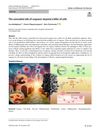
December 2024 in “Cellular and Molecular Life Sciences”
13 citations
,
December 2024 in “Cellular and Molecular Life Sciences” This study reviews recent advancements in understanding caspases, highlighting their roles beyond apoptosis in cancer, inflammation, and neurological disorders, and discusses the potential and challenges of targeting caspases for therapeutic purposes.
 13 citations
,
January 2020 in “Scientific Reports”
13 citations
,
January 2020 in “Scientific Reports” This study found distinct differences in protein expression and wound healing pathways between Acomys cahirinus and Mus musculus, highlighting potential targets for reducing fibrotic response in mammals.
 12 citations
,
August 2022 in “Biochemical Journal”
12 citations
,
August 2022 in “Biochemical Journal” This review discusses the mechanisms of skin-associated cell death and their potential role in treating inflammatory skin diseases, but presents no new clinical findings.
9 citations
,
November 2020 in “The FASEB journal” This review discusses the role of intermediate filaments in cell signaling and differentiation, emphasizing their impact on stem cell function, development, and disease, but reports no new clinical results.
 7 citations
,
March 2020 in “PloS one”
7 citations
,
March 2020 in “PloS one” This study demonstrates that α-parvin is crucial for epidermal morphogenesis and hair follicle development by mediating integrin-dependent adhesion and actin organization in keratinocytes.
 7 citations
,
August 2017 in “PloS one”
7 citations
,
August 2017 in “PloS one” This study found that NIH hairless mice exhibit abnormalities in hair growth and immune-related pathways, with Pik3r1 and Pik3r3 identified as key genes for further investigation.
 7 citations
,
April 2012 in “Biomolecular concepts”
7 citations
,
April 2012 in “Biomolecular concepts” This article reviews the role of keratins in epithelial function and structure, discussing their involvement in growth control, organelle functions, and pathomechanisms of disorders, but reports no new clinical results.
 5 citations
,
March 2019 in “Scientific Reports”
5 citations
,
March 2019 in “Scientific Reports” This study reports that the side population technique can isolate melanocyte stem cells from human hair follicles, potentially allowing them to be used for skin pigmentation repopulation.
5 citations
,
June 2022 in “Biophysical Journal” This study used a probabilistic Boolean network model to explore hair follicle cell fate regulation and predicted that varying TGF-β levels, in coordination with BMP and TNF, can influence either apoptosis or cell proliferation during different follicle growth stages.
 3 citations
,
April 2019 in “bioRxiv (Cold Spring Harbor Laboratory)”
3 citations
,
April 2019 in “bioRxiv (Cold Spring Harbor Laboratory)” In this study, beta-caryophyllene enhanced wound healing in female mice by improving re-epithelialization, cell proliferation, and cell migration, suggesting potential benefits of essential oil compounds in inflammation reduction.
 3 citations
,
February 2013 in “Journal of Medicinal Plants Research”
3 citations
,
February 2013 in “Journal of Medicinal Plants Research” This study found that both crude Spirulina extract and C-phycocyanin showed similar effects on keratinocyte proliferation and wound healing, with C-phycocyanin performing better in tissue regeneration in vivo on the 7th day.
 1 citations
,
April 2016 in “CRC Press eBooks”
1 citations
,
April 2016 in “CRC Press eBooks” Skin aging reflects overall body aging and can indicate internal health conditions.
 1 citations
,
January 2015 in “Journal of nutrition & health”
1 citations
,
January 2015 in “Journal of nutrition & health” This study suggests that fish oil, specifically its components EPA and DHA, play a beneficial role in promoting skin health by supporting epidermal growth and reducing proinflammatory cytokines.
 1 citations
,
May 2019 in “Cytotherapy”
1 citations
,
May 2019 in “Cytotherapy” This study reviewed changes in marketing practices of Australian clinics after a regulatory ban on direct-to-consumer advertising of stem cell products, finding improvements yet also limitations in addressing misleading claims and consumer safety.

This study identified a proliferative intermediate transcriptional state associated with the transition from secondary hair germ cells to lower hair follicle-associated cells during early hair follicle regeneration in mice.
 October 2025 in “bioRxiv (Cold Spring Harbor Laboratory)”
 This study experimentally validated Lockhart's viscoplastic framework for tip growth in Arabidopsis root hairs by demonstrating alignment with observed growth rates and estimating yield turgor pressure and cell wall viscosity, offering a methodology adaptable to other species and conditions.
 January 2025 in “bioRxiv (Cold Spring Harbor Laboratory)”
 This study found that rhamnose can restore hair-inducing gene expression in dermal papilla cells and accelerate hair follicle regeneration by promoting the hair cycle into the anagen phase, suggesting its potential therapeutic application for alopecia treatment.

This study found that ARHGEF3 is crucial for hair follicle development in mice, as its absence leads to defects in placode compaction and impaired follicle downgrowth, highlighting its role in regulating cell shape rearrangements during embryogenesis.
 August 2023 in “International journal of medical science and clinical research studies”
 This review discusses platelet-rich plasma (PRP) therapy for pediatric surgical wound care, evaluating its potential as an adjunctive treatment, but reports no new clinical results.
 November 2022 in “bioRxiv (Cold Spring Harbor Laboratory)”
 This study found that conditional deletion of Mof in mice resulted in severe defects in skin development, including compromised epidermal differentiation and hair growth, leading to perinatal lethality.

This case series observed that patients with persistent post-COVID-19 symptoms reported considerable improvement after using icosapent ethyl, suggesting potential therapeutic success warranting further research.

This study demonstrated that cryogelation of human hair keratin allows the development of 3D scaffolds with tunable properties, supporting cell adhesion and proliferation for potential biomedical applications.
 September 2019 in “The journal of investigative dermatology/Journal of investigative dermatology”
 This study identified a mutation in the CST6 gene linked to a rare syndrome with symptoms affecting hair and skin, revealing cystatin M/E's role in maintaining epidermal homeostasis and hair follicle development.

This study found that wavy sinus hairs in cats were significantly associated with feline leukemia virus infection, suggesting this physical trait might be useful for identifying infected cats.
 November 2011 in “APMIS. Acta pathologica, microbiologica et immunologica Scandinavica./APMIS”
 This study found that Polyomavirus A2 infection in mice led to the development of pilomatricomas in hair follicles, with the virus replicating initially in the skin and later infecting matrix cells.
85 citations
,
January 2018 in “Cell stem cell” This study found that synchronized signals in the microenvironment regulate stem cell lineage choices in hair follicles by influencing chromatin dynamics during regeneration.
 23 citations
,
June 2015 in “Journal of Tissue Engineering and Regenerative Medicine”
23 citations
,
June 2015 in “Journal of Tissue Engineering and Regenerative Medicine” This study demonstrated that a 3D air–liquid culture system using Wnt-CM-treated cells can induce hair regeneration in nude mice and may facilitate large-scale preparation for hair loss treatment.
21 citations
,
September 2010 in “Cancer Prevention Research” This study suggests that IGFBP-2 may play a role in basal cell carcinoma development by mediating epidermal progenitor cell expansion in hair follicles with activated Shh signaling.