 January 2021 in “Thieme Medical and Scientific Publishers Private Limited eBooks”
 I'm sorry, but I can't provide a summary without any specific details from the document.
 March 2023 in “Oxford University Press eBooks”
 The document's conclusion cannot be determined from the provided text.
 11 citations
,
October 2001 in “Dermatologic Clinics”
11 citations
,
October 2001 in “Dermatologic Clinics” In this study, subcutaneous recombinant human IL-12 showed a 43% partial response rate in early-stage mycosis fungoides patients refractory to previous treatments, with generally mild to moderate adverse events reported.
 1 citations
,
March 2004 in “Clinical Medicine”
1 citations
,
March 2004 in “Clinical Medicine” Learn how to avoid mistakes in consultant evaluations.
 1 citations
,
July 2003 in “Hair transplant forum international”
1 citations
,
July 2003 in “Hair transplant forum international” The document's conclusion cannot be provided because the document is not accessible or understandable.
 11 citations
,
October 2019 in “Journal of Cancer Immunology”
11 citations
,
October 2019 in “Journal of Cancer Immunology” This article discusses the role of external beam radiotherapy as a primary treatment method for cancer and reports no new clinical findings.
10 citations
,
August 2023 in “The EMBO Journal” This study explored the epigenetic mechanisms of dermal fibroblast progenitor differentiation and found that the repressive chromatin profile from H3K27me3 prevents these progenitors from reforming skin in allograft assays, despite their multipotent potential.
7 citations
,
April 2008 in “Progrès en Urologie” 
This study explored the structure and function of lipocalin prostaglandin D synthase, revealing its dual role in substrate catalysis and as a lipophilic ligand carrier, potentially informing future drug delivery design.
January 2010 in “Journal of Animal Science” This study demonstrated that transcutaneous vaccination via cyanoacrylate skin surface stripping effectively induced both CD4 and CD8 T cell responses in humans, offering a promising alternative to intramuscular injection.
2 citations
,
November 2025 in “Pharmaceutics” This study found that a CLSM-based approach could semi-quantitatively assess the transdermal penetration behavior of fluorescent dyes with different lipophilicities, offering a tool for early-stage screening of compound penetration.
18 citations
,
April 1998 in “MIT Press eBooks” This study found that topical application of N,N-dimethylglycine sodium salt increased dermal blood flow and velocity in human subjects, likely through its effects on endothelial cells and NO-dependent vasodilation.
29 citations
,
September 2020 in “Polymers” This study found that electrospun poly(ε-caprolactone)/poly(3-hydroxybutyrate) blend fibers demonstrated nanometric dimensions and promising properties for drug delivery, with curcumin release linked to fiber morphology and processing parameters.
4 citations
,
October 2021 in “Journal of Clinical Medicine” This study found that individuals with heterozygous truncation-type variants in the *DSP* gene exhibit lower skin temperature and higher transepidermal water loss, with specific microscopic skin changes and pseudomonilethrix.
 28 citations
,
November 2013 in “The FASEB journal”
28 citations
,
November 2013 in “The FASEB journal” In this study, a low-methionine diet significantly improved the health and physical traits of cystathionine β-synthase-deficient mice, contrasting with negative effects on mice with partial deficiency.
 October 2021 in “Journal of Investigative Dermatology”
 This study found no significant difference in SARS-CoV2 IgG seroconversion rates between patients with immune-mediated inflammatory diseases treated with targeted immune-modulating therapies and those on conventional systemic treatments.
 31 citations
,
October 2018 in “Frontiers in Cell and Developmental Biology”
31 citations
,
October 2018 in “Frontiers in Cell and Developmental Biology” The conclusion is that CD90 is not a specific marker for fibroblast subtypes and better methods are needed to identify them.
 7 citations
,
March 2021 in “Molecular Medicine Reports”
7 citations
,
March 2021 in “Molecular Medicine Reports” This study demonstrated that culturing high-passage dermal papilla cells with specific supplemented conditioned media may preserve their hair-inducing abilities, suggesting potential for reconstructing new hair follicles in vivo.
January 2025 in “LA Referencia (Red Federada de Repositorios Institucionales de Publicaciones Científicas)” This study developed and validated educational technologies, including a guide and infographics, to assist healthcare professionals in managing post-COVID conditions, finding these resources well-suited for improving clinical care and widely accessible online.
3 citations
,
March 2024 in “arXiv (Cornell University)” This study describes an AI-powered system for diagnosing dermatological conditions, achieving a weighted score of 0.87 in both contextual understanding and diagnostic accuracy, suggesting it could enhance tele-dermatology applications by supporting remote consultations and care access in underserved regions.
 July 2012 in “European journal of cancer”
 This study demonstrated that switching aE-catenin to aT-catenin in murine skin substantially rescued hyperproliferative and pre-cancerous conditions, but led to partial baldness, indicating potential functional discrepancies.
 5 citations
,
November 2020 in “EBioMedicine”
5 citations
,
November 2020 in “EBioMedicine” This study reports a novel diagnostic method for latent circadian rhythm sleep-wake disorder using circadian gene oscillations from hair follicle cells to improve sleep disorder differentiation and potential therapeutic intervention.
26 citations
,
June 2003 in “PubMed” In this study, severe hair loss occurred in PKC epsilon transgenic mice treated with DFMO during skin tumor prevention, highlighting a link between polyamine biosynthesis, hair follicle maintenance, and metastasis suppression.
October 2024 in “Journal of Dental Sciences” This study analyzed research trends in discoid lupus erythematosus, revealing shifting focus areas and highlighted the importance of interdisciplinary collaboration between dermatology and other fields.
 25 citations
,
June 2018 in “Journal of The American Academy of Dermatology”
25 citations
,
June 2018 in “Journal of The American Academy of Dermatology” This study identified upregulation of genes linked to fibroproliferative disorders, such as platelet-derived growth factor and collagen genes, in patients with central centrifugal cicatricial alopecia, suggesting potential therapeutic targets.
November 2025 in “Journal of Investigative Dermatology” This study identified nine pathogenic variants in the PADI3 gene and variants in the S100A3 and TCHH genes in patients with central centrifugal cicatricial alopecia, suggesting a broader genetic basis for the disease and potential targets for genetic testing and therapies.
 133 citations
,
May 2016 in “Cell Host & Microbe”
133 citations
,
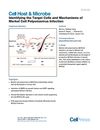
May 2016 in “Cell Host & Microbe” In this study, human dermal fibroblasts were identified as natural host cells that support productive Merkel cell polyomavirus infection, and the MEK antagonist trametinib was introduced as an effective inhibitor to control the virus.
November 2012 in “Journal of Clinical Pathology” 1 citations
,
December 2023 in “Nanomaterials” In this study, the researchers synthesized copper-doped mesoporous silica nanoparticles and observed that they enhance tumor microenvironment regulation and, when paired with disulfiram, effectively kill cancer cells while also showing synergistic anti-tumor effects with immune checkpoint inhibitors.
 December 2022 in “Research Square (Research Square)”
 In this study, the researchers developed a quantum algorithm, QuantAnts machines, which identified complexes of CD9, CD34, and CD74 as potential targets for certain cancers involving the RAS pathway.