2 citations
,
May 2024 in “International Journal of Molecular Sciences” This study found that in a mouse model of psoriasis, depleting CD169+ macrophages led to milder symptoms and decreased inflammation, suggesting these macrophages play a crucial role in psoriasis development.
1 citations
,
January 2024 in “Pharmaceuticals” The researchers reported that dPGS-PCL as a carrier improved the penetration of tofacitinib in an ex-vivo human skin model compared to free tofacitinib, but did not show significant differences in inhibiting IL-6 and IL-8 during short incubation.
4 citations
,
January 2024 in “Allergy” This study indicates that individuals exposed to PPD mount varying immune responses, with either tolerance, subclinical inflammation, or allergy, suggesting no true non-responders to PPD.
 June 2025 in “bioRxiv (Cold Spring Harbor Laboratory)”
 This study found that in alopecia areata, epidermal γδ T cells and macrophages contribute to the disease alongside CD8 T cells, with the expression of BST2 marking interferon-driven immune activation in both mouse and human skin, which decreases following treatment with the JAK inhibitor tofacitinib.
3 citations
,
September 2024 in “Journal of Microbiology and Biotechnology” This study found that human placenta hydrolysate effectively inhibited atopic dermatitis development in stimulated human cells and a mouse model, suggesting its potential as a therapeutic agent for related skin diseases.
 26 citations
,
February 2020 in “Frontiers in genetics”
26 citations
,
February 2020 in “Frontiers in genetics” This study identified three candidate genes (CORT, FGF5, and CD36) associated with cold climate adaptation in Yanbian cattle through genome resequencing and comparison with African tropical cattle.
April 2025 in “Journal of Biophotonics” This study found that 808 nm laser photobiomodulation altered mitochondrial respiration and enhanced osteogenic protein expression in human dental pulp stem cells, with the effects being dose-specific and more pronounced at 15 J/cm².
2 citations
,
January 2020 in “Evidence-based Complementary and Alternative Medicine” This study found that Hataedock may alleviate atopic dermatitis symptoms in mice by maintaining skin homeostasis and improving skin barrier formation through the endocannabinoid system.
1 citations
,
January 2013 in “Lung India” This letter discusses how differentiating features in clinical and radiological findings can help distinguish pulmonary Langerhans cell histiocytosis and Birt-Hogg-Dube syndrome from lymphangioleiomyomatosis, noting overlapping symptoms but specific distinctive traits.
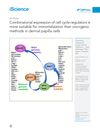 5 citations
,
January 2021 in “iScience”
5 citations
,
January 2021 in “iScience” Using a combination of specific cell cycle regulators is better for safely keeping hair root cells alive indefinitely compared to cancer-related methods.
13 citations
,
February 1995 in “Archives of Dermatological Research” In this study, gamma/delta T cells were observed in skin after allergic or irritant reactions to heavy metal salts, suggesting a role in skin defense against these metals.
May 2023 in “The Journal of Immunology” In this study of C3H/HeJ mice, researchers observed that alopecia areata is associated with the expansion of exhausted-memory CD8 T cells in multiple organs, with autoreactive activation not fully explained by known mechanisms, shedding light on the immunological dynamics underlying the condition.
12 citations
,
April 2023 in “Molecular Pharmaceutics” This study demonstrated that a microarray patch can deliver antibodies in a controlled and prolonged manner, maintaining their functionality after manufacturing and heat exposure, with successful pharmacokinetic proof-of-concept in rats.
11 citations
,
September 2019 in “The journal of investigative dermatology/Journal of investigative dermatology” This study identified a distinct CD49fhigh mesenchymal stem cell subpopulation in the dermis that supports hair follicle development and maintenance via Notch signaling activation.
 1 citations
,
June 2022 in “JCRPE”
1 citations
,
June 2022 in “JCRPE” This study reports that metreleptin treatment in a boy with congenital generalized lipodystrophy significantly improved metabolic complications and overall health outcomes during the first year of therapy.
16 citations
,
April 2024 in “Proceedings of the National Academy of Sciences” This study found that selectively targeting HDAC4 and HDAC7 in mice can reduce Th17 cell-mediated intestinal inflammation, suggesting a potential treatment approach for Th17-related inflammatory diseases like ulcerative colitis.
3 citations
,
November 2024 in “Viruses” This study found that cepharanthine significantly inhibits EqHV-8 infection in vitro and improves lung tissue pathology in infected mice by reducing oxidative stress through specific signaling pathways, suggesting its potential as a treatment for equid herpesvirus type 8.
159 citations
,
July 2014 in “Molecular pharmaceutics” This study found that MPEG-dihexPLA micelles significantly improved the skin deposition of tacrolimus compared to a marketed ointment, suggesting better targeted delivery with reduced systemic absorption.
15 citations
,
August 2019 in “F1000Research” This review discusses the physiological roles of anthrax toxin receptors CMG2 and TEM8, highlighting their influence on extracellular matrix homeostasis, angiogenesis, cell migration, and skin elasticity, and reports no new clinical results.
 10 citations
,
December 2015 in “International Journal of Molecular Sciences”
10 citations
,
December 2015 in “International Journal of Molecular Sciences” This study suggests that PDCD4 regulates keratinocyte proliferation and contact inhibition, playing a role in epidermal homeostasis and wound healing.
6 citations
,
July 2025 in “Cancer Medicine” This study reported that ZSYY001, a nanoparticle formulation of polymeric micellar paclitaxel, showed promising antitumor activity and was safe and well-tolerated in preclinical models and a phase I trial, without acute hypersensitivity reactions at doses up to 390 mg/m².
 11 citations
,
August 2019 in “Journal of Molecular Histology”
11 citations
,
August 2019 in “Journal of Molecular Histology” This study found that upregulation of NFIC may enhance proliferation and osteogenic/cementogenic differentiation in rat dental follicle cells.
December 2013 in “Pump Industry Analyst” This study found that using particle-based antigen delivery in combination with cyanoacrylate skin surface stripping is an effective needle-free method for targeting HIV-1 p24 protein to skin cells, enhancing transcutaneous vaccination potential.
 October 2023 in “Regular and Young Investigator Award Abstracts”
 This study found that Baricitinib significantly reduced hair loss and immune response in a mouse model of alopecia areata.
2 citations
,
November 1996 in “Transplantation” This study found that intrathymic injection of recipient-type splenocytes into donor rats, combined with antilymphocyte antiserum, effectively prevented graft-versus-host disease for up to 300 days.
May 2022 in “The journal of immunology/The Journal of immunology” This study developed a foxn1-deficient Xenopus laevis model using CRISPR/Cas9, observing reduced T-cell markers and altered immune responses in tadpoles, providing a nonmammalian model for immunological research.
2 citations
,
September 2020 in “International Journal of Molecular Sciences” In this study, the elimination of NG2+ hair follicle stem cells during the anagen phase was associated with an aggravated sensitization phase of allergic contact dermatitis, suggesting their immunosuppressive role.
July 2025 in “Journal of Investigative Dermatology” Complex basal cell carcinomas need personalized treatment due to unique genetic mutations.
 April 2026 in “Frontiers in Cell and Developmental Biology”
 This study found that CD200-negative human hair follicle bulge cells have a higher hair-regenerative capability compared to CD200-positive cells, suggesting that reduced CD200 expression may enhance hair regeneration, providing insights for improving bulge cell-based hair restoration techniques.
This study presents the G4 transgenic mouse model, which suggests a direct link between polycystic ovary syndrome and the Gm10800 gene, offering a valuable tool for understanding the disease and testing treatments.