 4 citations
,
January 2021 in “Journal of Clinical Medical Research”
4 citations
,
January 2021 in “Journal of Clinical Medical Research” This review provides an in-depth analysis of the structure and function of c-kit activation, and its role in both normal physiological and pathological conditions, with no new research findings reported.
 5 citations
,
January 2021 in “iScience”
5 citations
,
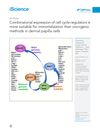
January 2021 in “iScience” Using a combination of specific cell cycle regulators is better for safely keeping hair root cells alive indefinitely compared to cancer-related methods.
12 citations
,
November 2007 in “Journal of Investigative Dermatology” CD200 is not a reliable marker for identifying stem cells in all skin types.
July 2026 in “Journal of Investigative Dermatology” 11 citations
,
September 2023 in “Nature Communications” In this study, researchers found that the cell surface protein Lrig1 plays a crucial role in regulating the suppressive function of regulatory T cells, suggesting it as a potential target for treating autoimmune diseases, as evidenced by experiments in mouse models.
89 citations
,
March 1996 in “Proceedings of the National Academy of Sciences” This study found that homozygous mutant mice with a hypomorphic CD18 mutation developed a chronic inflammatory skin disease resembling human psoriasis, potentially implicating additional genetic factors in disease susceptibility.
 1 citations
,
April 2018 in “Journal of Investigative Dermatology”
1 citations
,
April 2018 in “Journal of Investigative Dermatology” This study found that Polycomb repressive complex 1 is crucial for skin development and stem cell specification, influencing gene activity beyond its known repressor functions.
 April 2023 in “Journal of Investigative Dermatology”
 This study found that in biopsied skin samples of alopecia areata, a lower anagen/telogen ratio was associated with increased T cell infiltration, and enhancing the PD-1/PD-L1 axis may inhibit CD8+T cell infiltration and improve the condition.
 5 citations
,
September 2022 in “Research Square (Research Square)”
5 citations
,
September 2022 in “Research Square (Research Square)” This study identified CD201+ fibroblast progenitors in mouse skin that regulate wound healing through differentiation into specialized cell types, with retinoic acid and hypoxia influencing this process.
January 2024 in “Wiadomości Lekarskie” This pilot clinical study introduces DEC cells as a novel therapy for Duchenne muscular dystrophy, confirming safety and efficacy in seven patients up to 24 months post-treatment.
 8 citations
,
January 2023 in “RSC Advances”
8 citations
,
January 2023 in “RSC Advances” This article reviews advancements in carbon dots for tissue engineering and regenerative medicine, highlighting challenges and future directions without presenting new clinical findings.
May 2024 in “International journal of medicine and psychology.” This study examined monoclonal antibodies LT-1, LT-2, and LT-7, finding they can effectively detect certain antigens on T and B cells involved in various lymphoproliferative diseases, aiding in the diagnosis of both acute and chronic lymphoid neoplasias.
This study identified a high proportion of dual TCR Treg cells in both lymphoid and non-lymphoid tissues of mice, revealing their tissue specificity, TCR repertoire characteristics, and functional phenotypes.
29 citations
,
December 2004 in “Developmental biology” In this study, forced expression of the transcription factor cDermo-1 in chicken dermis led to the formation of ectopic feather buds and enhanced feather growth, demonstrating its role in initiating skin appendage development.
3 citations
,
January 2017 in “Acta Dermato Venereologica” This study found that a specific T-cell receptor motif associated with lipid-antigen stimulation may play a role in the pathogenesis of folliculotropic mycosis fungoides.
9 citations
,
June 2017 in “American journal of ophthalmology. Case reports” This case report identifies a novel CDH3 gene mutation associated with hypotrichosis with juvenile macular dystrophy in a 13-year-old Turkish girl, highlighting implications for future genetic analysis and counseling.
July 2026 in “bioRxiv (Cold Spring Harbor Laboratory)” In this study, researchers observed that TCDD exposure in mice enhanced sebaceous gland differentiation and lipid production before causing seboatrophy, providing insights into the cellular events that may contribute to chloracne pathogenesis.
 27 citations
,
May 2007 in “Archives of dermatological research”
27 citations
,
May 2007 in “Archives of dermatological research” In this study, alopecia areata patients treated with diphencyprone showed a significant increase in CD8 lymphocytes around hair bulbs, which may be associated with hair regrowth.
July 2024 in “Journal of Investigative Dermatology” This study found that in mice with alopecia areata, CD8+ T cells showed clonal expansion and specific regulatory networks, which might help identify new therapeutic targets for patients not responding to JAK inhibitors.
 1 citations
,
January 2021
1 citations
,
January 2021 In this study, CD4+ non-haematopoietic, skin-resident stem cell-like populations were identified in both murine and human epidermis, suggesting they may serve as potential basal cell carcinoma precursors.
 April 2018 in “Journal of Investigative Dermatology”
 This study found that DC-HIL+ myeloid derived suppressor cells are increased in the blood and skin of patients with cutaneous lupus erythematosus and show immunosuppressive properties.
 40 citations
,
March 2019 in “Nature Communications”
40 citations
,
March 2019 in “Nature Communications” This study found that deleting Stim1 and Stim2 in mature T regulatory cells disrupts Ca 2+ signaling, preventing their differentiation and leading to severe autoimmune disorders in mice.
2 citations
,
April 2023 in “American Journal of Dermatopathology” This study suggests that central centrifugal cicatricial alopecia may involve a CD4-predominant T-cell process with potential PD1/PDL1 pathway involvement, indicated by increased caspase 3 expression and loss of PDL1.
July 2022 in “Journal of Investigative Dermatology”  April 2017 in “Journal of Investigative Dermatology”
 In this study, CTCF was found to play essential roles in epidermal differentiation and skin barrier formation, simultaneously acting as a suppressor of epithelial inflammatory responses in mouse skin.
33 citations
,
October 2006 in “European Journal of Immunology” This study found that CD44 and CD49d together enhance signaling pathways in lymphocytes in mice with alopecia areata, influencing their activation and function.
This study observed two distinct groups of alopecia areata lesions based on PD-1 expression in T cells from biopsied skin samples, suggesting potential differences in subtypes or stages of the disease that warrant further investigation.
 9 citations
,
July 2022 in “EMBO molecular medicine”
9 citations
,
July 2022 in “EMBO molecular medicine” This study found that targeting IL-6, IL-1, and CCR6 signaling pathways may effectively reduce irradiation-induced alopecia and dermatitis in radiotherapy patients.
7 citations
,
April 2025 in “Science Advances” This study suggests that a biomaterial-based approach using microneedles and ion solutions to deliver SiO3 2− ions may disrupt inflammatory cycles and improve outcomes in inflammatory dilated cardiomyopathy (iDCM).
96 citations
,
September 1996 in “PubMed” This study demonstrated that murine monoclonal antibodies can reveal specific patterns of desmosomal cadherin expression, Dsc1 and Dsc3, in human tissues and cultured cells using immunofluorescence microscopy.