 16 citations
,
February 2018 in “Journal of The American Academy of Dermatology”
16 citations
,
February 2018 in “Journal of The American Academy of Dermatology” This study found that scalp involvement in dermatomyositis consistently shows a nonscarring pattern with chronic telogen effluvium, featuring telangiectasia and mucin deposition as universal histologic markers.
 5 citations
,
July 2013 in “Our Dermatology Online”
5 citations
,
July 2013 in “Our Dermatology Online” This study found that lichen planopilaris was the most common variant of cicatricial alopecia among patients, with perifollicular fibrosis being a prevalent histopathological feature.
July 2025 in “INTERNATIONAL JOURNAL OF SCIENTIFIC RESEARCH” In this observational study, researchers found that alopecia areata is associated with specific trichoscopic features, such as black dots, yellow dots, and vellus hair, and highlighted trichoptilosis as a potential overlap feature with other hair disorders, suggesting a need for further differentiation between these conditions.
15 citations
,
December 1972 in “Journal of Investigative Dermatology”  February 2026 in “Dermatology Reports”
 In this case study, trichoscopy was found to be a valuable non-invasive tool for diagnosing dissecting cellulitis of the scalp, enabling early detection and intervention to prevent disease progression and reduce the need for invasive procedures.
 4 citations
,
May 2022 in “Frontiers in Medicine”
4 citations
,
May 2022 in “Frontiers in Medicine” The authors concluded that trichoscopic examination can be useful for diagnosing syphilitic alopecia in patients with idiopathic alopecia, though the findings are nonspecific and further studies are needed.
 7 citations
,
August 2018 in “The American Journal of Dermatopathology”
7 citations
,
August 2018 in “The American Journal of Dermatopathology” This study describes a newly observed "inflammatory vellus involvement" pattern in early frontal fibrosing alopecia, which may lead to misdiagnosis due to the absence of typical histological features.
3 citations
,
January 2018 in “International Journal of Trichology” The authors concluded that their new grading system can effectively classify early female pattern hair loss and evaluate treatment progress.
 101 citations
,
January 2016 in “Journal of Cutaneous and Aesthetic Surgery”
101 citations
,
January 2016 in “Journal of Cutaneous and Aesthetic Surgery” This review discusses various classification systems for patterned hair loss in both sexes and reports no new clinical findings, highlighting the Hamilton-Norwood and Ludwig systems as the most commonly used.
 July 2023 in “Al-Azhar Assiut Medical Journal”
 In this study, tinea capitis was identified as the most common cause of noncicatricial alopecia in children, followed by alopecia areata and marginal traction alopecia. Diagnosis using trichoscopy enhanced understanding by revealing specific hair and scalp disorder characteristics.
September 2022 in “International Journal of Trichology” This study found that trichoscopic measurements of hair density and diameter are useful for assessing the severity of female pattern hair loss and its progression.
 36 citations
,
August 2018 in “Dermatologic Clinics”
36 citations
,
August 2018 in “Dermatologic Clinics” This article reviews various hair abnormalities observable through trichoscopy in conditions like monilethrix, trichorrhexis nodosa, and ectodermal dysplasias, with no new clinical findings reported.
 2 citations
,
October 2017 in “Journal of The American Academy of Dermatology”
2 citations
,
October 2017 in “Journal of The American Academy of Dermatology” In this study, focal atrichia was associated with late-onset female pattern hair loss, providing a clinical clue to its diagnosis, particularly separating it from other hair disorders.
 October 2024 in “Dermatology Practical & Conceptual”
 In this study, the authors evaluated 200 Egyptian children with focal non-cicatricial alopecia, finding that alopecia areata (42%) and tinea capitis (40.5%) were the most prevalent causes. Trichoscopy identified unique features for each condition, enhancing diagnosis and management.
 69 citations
,
January 2015 in “Current problems in dermatology”
69 citations
,
January 2015 in “Current problems in dermatology” This review discusses trichoscopy as a noninvasive, effective technique for diagnosing various hair loss conditions and monitoring treatment, highlighting its potential to reduce scalp biopsy necessity.
 September 2023 in “Skin Research and Technology”
 This article presents a new method using dermoscopy to evaluate the severity and treatment effectiveness of androgenetic alopecia in men by capturing images of specific scalp regions.
This review discusses how dermoscopy enhances diagnostic accuracy in hair and scalp disorders, particularly distinguishing between conditions such as cicatricial and non-scarring alopecia, and offers insights into its practical uses in hair transplantation; it reports no new clinical results.
 108 citations
,
March 2011 in “Archives of Dermatology”
108 citations
,
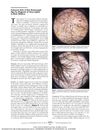
March 2011 in “Archives of Dermatology” Corkscrew hair may be a new sign for quickly diagnosing scalp fungus in black children.
 19 citations
,
March 2013 in “Journal of Cutaneous Pathology”
19 citations
,
March 2013 in “Journal of Cutaneous Pathology” This case report describes a 26-year-old female with linear morphea and unique alopecia characterized by atrophic follicular remnants, resembling telogen follicles but indicating permanent alopecia, unlike typical findings in morphea-related alopecia.
 September 2023 in “Zenodo (CERN European Organization for Nuclear Research)”
 In this study, researchers examined trichoscopic features in 80 patients with androgenetic alopecia and found that hairshaft thickness heterogeneity was the most common feature, highlighting trichoscopy as a useful, non-invasive diagnostic tool for assessing this condition.
24 citations
,
August 2023 in “Journal of the American Academy of Dermatology” Trichoscopy helps diagnose and manage different types of hair loss effectively.
June 2015 in “Turkish Journal of Dermatology” This review discusses how trichoscopy, a hair and scalp examination method, helps in diagnosing various hair diseases by identifying specific structural features but provides no new clinical findings.
 9 citations
,
January 2019 in “Skin appendage disorders”
9 citations
,
January 2019 in “Skin appendage disorders” This study found that among patients with seborrheic dermatitis, the "dandelion" vascular conglomerate observed through trichoscopy was correlated with Malassezia scalp colonization.
 14 citations
,
June 2018 in “JAMA Dermatology”
14 citations
,
June 2018 in “JAMA Dermatology” This Viewpoint discusses the utility of dermoscope in routine practice and how familiarity with dynamic vs static trichoscopy may address its limitations, but it reports no new clinical findings.
 12 citations
,
June 2006 in “Anais Brasileiros de Dermatologia”
12 citations
,
June 2006 in “Anais Brasileiros de Dermatologia” This study reports that scalp biopsies in white adults usually have 16.5 hair follicles, primarily in the anagen phase, with male samples showing fewer follicular units but more fibrous tracts in certain areas.
This study reported that combining vertical and horizontal sectioning in scalp biopsies allows for a more thorough examination of histological changes in various types of alopecia.
 12 citations
,
October 1996 in “Dermatologic Clinics”
12 citations
,
October 1996 in “Dermatologic Clinics” This review outlines diagnostic possibilities for diffuse, nonscarring hair loss in women and reports no new clinical findings.
 June 2024 in “Annals of Medicine and Surgery”
 This case report highlights the rare co-occurrence of Pili Annulati and Trichorrhexis Nodosa in a Syrian woman, underlining the need for further research into their relationship and treatment.
8 citations
,
April 2014 in “Clinical and Experimental Dermatology” This study suggests that eruptive vellus hair cysts often have atypical pathological changes and likely originate from the infrainfundibulum and sebaceous duct based on keratin expression analysis.
 13 citations
,
October 2017 in “Anais Brasileiros de Dermatologia”
13 citations
,
October 2017 in “Anais Brasileiros de Dermatologia” This review highlights the occurrence of yellow dots, a trichoscopic finding, in several scalp conditions beyond alopecia areata and reports no new clinical results.