July 2025 in “PNAS Nexus” This study integrated single-cell RNA-seq data from four previous studies to create a comprehensive human corneal cell state meta-atlas, revealing novel marker genes, rare cell states, and distinct transcription factors, and offering a tool to enhance future cornea research.
10 citations
,
November 2018 in “The Italian Journal of Pediatrics/Italian journal of pediatrics” This case report identifies a mutation in the TRPS1 gene, leading to the diagnosis of trichorhinophalangeal syndrome type I in a young girl and her family, highlighting the importance of detailed clinical and family history for proper diagnosis.

This study revealed that IP-PA1, derived from Pantoea agglomerans, promoted hair growth in mice and increased certain growth factor expressions in human cell cultures, suggesting a unique mechanism compared to traditional hair growth treatments.
 6 citations
,
May 2021 in “Stem Cell Reviews and Reports”
6 citations
,
May 2021 in “Stem Cell Reviews and Reports” This study identified and characterized progenitor cells from equine feet that may play a role in the pathogenesis and recovery of laminitis, suggesting potential therapeutic targets for treatment.
93 citations
,
March 2017 in “Molecular Plant” This study concluded that CNGC14 is a calcium-permeable channel crucial for polarized tip growth in Arabidopsis root hairs, but other channels may also influence the observed calcium influx.

This study found that CYP21A2 gene mutations are the most common cause of non-classic congenital adrenal hyperplasia, while CYP11B1 mutations are rare and may partially impair enzyme activity.
24 citations
,
October 2019 in “Genes” In this study, the identification of a novel KAP gene in sheep, named KRTAP36-1, was associated with increased prickle factor in wool, suggesting its potential as a genetic marker for breeding purposes.
1 citations
,
May 2022 in “International journal of molecular sciences” This study found that in Hutchinson–Gilford progeria syndrome, iPSCs committed to the keratinocyte lineage faster than normal cells, with LEF1 expression reduced and a partial rescue of the phenotype achieved through adenine base editing.
September 2025 in “Science Advances” This study reports that PADI4, an enzyme involved in posttranslational protein modifications, regulates progenitor cell transitions in hair follicle development by repressing transcription and interacting with translational and ribosomal processes.
 4 citations
,
December 2013 in “The Journal of Dermatology”
4 citations
,
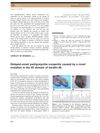
December 2013 in “The Journal of Dermatology” This letter to the editor discusses a case of delayed-onset pachyonychia congenita linked to a new mutation in keratin 6b but presents no new research findings.
3 citations
,
April 2025 in “Science Advances” This study found that mice with a homozygous knockout of the Ten1 gene, developed through CRISPR-Cas9-mediated exon 3 deletion, exhibited telomere shortening and symptoms consistent with accelerated aging, such as reduced lifespan, skin changes, aplastic anemia, and cerebellar hypoplasia.
January 2019 in “Columbia Academic Commons (Columbia University)” This study used cryo-electron microscopy to reveal the structural mechanisms by which TRPV6 and TRPV3 ion channels open, close, and are regulated, providing insights for potential future research.
 April 2023 in “Journal of Investigative Dermatology”
 In this study, topical inhibition of casein kinase 1 in mice was found to enhance melanocyte precursor migration and eumelanin production, suggesting potential applications for treating vitiligo and graying hair through KitL/c-Kit signaling pathway activation.
May 2025 in “Experimental Dermatology” In this study, researchers developed a novel genetic tool using Wif1-CreER knock-in mice for precise labeling and manipulation of dermal papilla cells, which could enhance understanding of hair biology and aid in developing targeted therapies for hair-related disorders.
In this study, conditional inactivation of the Mad2l1 SAC gene in mice led to aggressive and lethal acute lymphoblastic leukemia and hepatocellular carcinoma, demonstrating a link between chromosomal instability and cancer development.
 93 citations
,
April 2003 in “Proceedings of the National Academy of Sciences of the United States of America”
93 citations
,
April 2003 in “Proceedings of the National Academy of Sciences of the United States of America” This study identified an unexpected critical role for the FATP4 protein in skin and hair development in mice, linking it to a potential candidate gene for restrictive dermopathy in humans.
14 citations
,
February 2022 in “The Journal of clinical investigation/The journal of clinical investigation” This study found that the development of Merkel cell carcinoma from hair follicles in mice can be driven by in vivo reprogramming with ATOH1 and relies on p53 loss for progression.
 30 citations
,
March 2019 in “Archives animal breeding/Archiv für Tierzucht”
30 citations
,
March 2019 in “Archives animal breeding/Archiv für Tierzucht” In this study, variation in the KRTAP15-1 gene in goats was linked to changes in cashmere fibre diameter, with specific variants showing dominant or recessive effects.
38 citations
,
March 1997 in “Journal of interferon & cytokine research” This study suggests that IL-1β produced by dermal papilla cells, regulated by protein kinase C, may inhibit human hair follicle growth through paracrine signaling.
 16 citations
,
March 2013 in “The Journal of Dermatology”
16 citations
,
March 2013 in “The Journal of Dermatology” This case report identifies a novel mutation in a patient with trichorhinophalangeal syndrome 1 and reduced TRPS 1 protein expression in hair follicle tissues compared to normal subjects.
415 citations
,
January 2008 in “Cell” NFATc1 controls hair stem cell activity, affecting hair growth and could be a target for hair loss treatments.
27 citations
,
December 1997 in “Archives of Dermatological Research” This study observed that cultured dermal papilla cells showed distinct functional properties from dermal fibroblasts, including lower proliferation rates, higher adhesion to collagen type IV, and different cell-matrix interactions.
 April 2018 in “Journal of Investigative Dermatology”
 This study found that Basonuclin 1 knockdown in human primary keratinocytes significantly reduces cell proliferation and affects migration, indicating its role in coordinating the re-epithelization phase of wound healing.
 January 2024 in “Wiadomości Lekarskie”
 This study reports that Abelson Interactor 1 (ABI1) regulates androgen receptor transcription in prostate cancer, identifying it as a potential target for new therapies addressing treatment resistance.
 2 citations
,
December 2018 in “Journal of cosmetic dermatology”
2 citations
,
December 2018 in “Journal of cosmetic dermatology” This study observed a significant increase in cellular retinol-binding protein-1 expression in lesional skin of patients with alopecia areata compared to healthy controls, suggesting its potential role in the disease's pathogenesis.
July 1995 in “Journal of Dermatological Science”  December 2022 in “Frontiers in plant science”
 This study identifies two new proteins, CCDC22 and CCDC93, essential for root and root hair growth in Arabidopsis, and demonstrates their genetic link to a VTI13-dependent vacuolar trafficking pathway.
 21 citations
,
January 2018 in “PLoS Genetics”
21 citations
,
January 2018 in “PLoS Genetics” This study found that certain keratin gene mutations associated with pachyonychia congenita are linked to altered enamel structure and increased risk of dental caries.
 174 citations
,
April 2005 in “The American journal of pathology (Print)”
174 citations
,
April 2005 in “The American journal of pathology (Print)” This study found that TRPV1 activation in human scalp hair follicles inhibited hair shaft elongation, suppressed proliferation, and induced apoptosis, suggesting TRPV1 as a potential target for managing hair growth and epithelial disorders.
1 citations
,
August 2016 in “Dermatology - Open Journal” In this study, the researchers found that optic atrophy 1 (OPA1) is involved in the transition between filamentous and rounded mitochondria in hair follicle dermal papilla cells, potentially influencing cellular energy dynamics.