August 2015 in “아시안뷰티화장품학술지” This study found that ultrasonic (ethanol) extracts of Salvia miltiorrhiza bunge and Scutellaria baicalensis were most effective for cell proliferation, while ethanol and ultrasonic waves (water) methods had high antioxidant activity, suggesting their potential in functional cosmetics.
 April 2018 in “Journal of Investigative Dermatology”
 This study found that kaempferol increased the proliferation potential of basal epidermal cells in three-dimensional skin models by enhancing integrin expression and altering cell morphology.
 January 2025 in “International Journal of Advanced Research in Science Communication and Technology”
 This review summarizes the pharmacological and therapeutic uses of Calotropis gigantea latex, noting its traditional applications in treating skin diseases, wounds, and asthma, as well as its potential in addressing cancer, diabetes, and cardiovascular diseases due to its rich bioactive compound content.
 27 citations
,
February 2014 in “Planta Medica”
27 citations
,
February 2014 in “Planta Medica” This study found that Scutellaria baicalensis extract and its main component baicalin inhibited androgen activation signaling and promoted proliferation of human dermal papilla cells, suggesting potential use in treating androgen-associated disorders.
September 2023 in “Journal of the American Academy of Dermatology” This review summarizes preliminary evidence suggesting that CBD-containing sunscreen may offer UV protection through antioxidant properties, though further studies are needed to confirm safety and efficacy.
 April 2023 in “International journal of pharmaceutical sciences review and research”
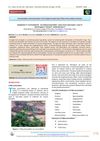
 This study concluded that an Emulgel formulation containing Tridax procumbens extract showed promising wound healing and antimicrobial activity, with improved physical properties in the F2 formulation.
6 citations
,
December 2022 in “Toxicological Research”  2 citations
,
December 2021 in “ScienceRise”
2 citations
,
December 2021 in “ScienceRise” This study identified optimal parameters for extracting oil from Urtica dioica roots to maximize phytosterol content, using corn oil and a 1:5 raw material-extract ratio over a 6-hour maceration period.
 4 citations
,
August 2017 in “Cosmetics”
4 citations
,
August 2017 in “Cosmetics” This study observed that Biota orientalis L. leaf extract may promote hair growth and suppress sebum production in human cells, suggesting potential benefits for hair restoration.

This review discusses the medicinal uses and phytochemical composition of Eclipta alba and reports no new clinical findings; the authors suggest its potential therapeutic significance due to complex interactions of its constituents.
January 2019 in “Estudo Geral (Universidade de Coimbra)” This monograph reviews the diverse effects of algae metabolites on skin health in dermocosmetic applications, without presenting new experimental results, and highlights their potential benefits such as photoprotection and anti-aging.
 5 citations
,
September 2020 in “Molecules”
5 citations
,
September 2020 in “Molecules” In this study, extracts from three Polynesian plants—Bidens pilosa, Calophyllum inophyllum, and Fagraea berteroana—were found to increase dermal papilla cell proliferation and modulate hair growth-related gene expression, suggesting potential for stimulating hair growth.
 May 2026 in “Zenodo (CERN European Organization for Nuclear Research)”
 This review examines the use of horsetail extract in cosmetics, highlighting its antioxidant, anti-aging, and skin-enhancing properties due to its rich phytochemical content, but notes that standardization and clinical validation remain challenges.
 January 2024 in “Middle East Journal of Applied Science & Technology”
 This study formulated and evaluated a polyherbal body lotion using neem, tulsi, and aloe vera extracts, finding it met satisfactory physicochemical standards and was well received by users for skin smoothness and hydration without causing allergies.
 February 2026 in “Zenodo (CERN European Organization for Nuclear Research)”
 In this study, researchers developed and evaluated a hair serum using Murraya koenigii and Clitoria ternatea extracts, finding that the F3 formulation had strong antifungal activity and was effective in dandruff management, suggesting potential benefits for scalp health.
 18 citations
,
December 2016 in “Phytomedicine”
18 citations
,
December 2016 in “Phytomedicine” In this study, applying 1% or 5% Curcuma aeruginosa essential oil lotion to the underarm for 10 weeks significantly slowed hair growth and brightened skin in young women, with no adverse effects reported.
 April 2026 in “Dove Medical Press (Taylor and Francis Group)”
 This study found that Myrtus communis leaf extract significantly decreased IL-1α and increased VEGF gene expressions in human keratinocytes, which may relate to the plant's traditional uses for hair loss and wound healing, though further research is needed to explore these effects.
 September 2019 in “Journal of Investigative Dermatology”
 This study reports that thermography and high-frequency ultrasound show promise as diagnostic tools for personalizing treatment plans in atopic dermatitis and psoriasis vulgaris by assessing skin lesion characteristics.
 April 2023 in “Jurnal Farmasi Indonesia”
 In this study using New Zealand White rabbits, a nanoemulsion combining candlenut oil and celery powder improved hair growth over 28 days, showing greater hair weight and thickness than both positive and negative controls, suggesting potential as an alopecia treatment.
 June 2020 in “Journal of Investigative Dermatology”
 This study reported that a treatment serum containing ingredient blends with panthenol, licorice extract, and red clover extract significantly improved hair volume, scalp coverage, and reduced hair breakage over 6 months in individuals with thinning or damaged hair.
19 citations
,
January 2009 in “OpenSIUC (Southern Illinois University Carbondale)” This study found that extracts from Calotropis gigantea and Tridax procumbens individually demonstrated greater anti-inflammatory activity than Ibuprofen in a carrageenin-induced paw edema model.
 March 2026 in “International Journal of Molecular Sciences”
 This study found that Grateloupia angusta extract improved wound healing by promoting matrix production and pro-angiogenic activity in cell cultures and enhanced early wound repair in a mouse skin incision model.
 8 citations
,
May 2017 in “Chinese Journal of Integrative Medicine”
8 citations
,
May 2017 in “Chinese Journal of Integrative Medicine” Among in vitro and in vivo models, this study found that Miscanthus sinensis var. purpurascens flower extract may promote hair growth, potentially by modulating growth factor expressions and facilitating earlier hair follicle transitions in treated mice.
 January 2026 in “Lumbung Farmasi Jurnal Ilmu Kefarmasian”
 This study found that a topical emulsion containing purified extracts of sidr leaves and roasted candlenut seeds significantly increased hair growth compared to the base and 2% minoxidil, potentially through their antioxidant and anti-inflammatory properties.
January 2014 in “The Scientific Issues of Ternopil Volodymyr Hnatiuk National Pedagogical University Series pedagogy” This study found that an ointment containing essential oil of yarrow floodplain shows a pronounced healing effect and stimulates hair growth on damaged skin.
11 citations
,
August 2022 in “Evidence-based Complementary and Alternative Medicine” This study found that methanolic extract of Eclipta alba leaves exhibited strong antibacterial effects against certain pathogens including methicillin-resistant Staphylococcus aureus, but it showed no activity against Mycobacterium tuberculosis, including drug-resistant strains.
1 citations
,
May 2022 in “International Journal of Cosmetic Science” This study reports that Edelweiss extract significantly prolonged the anagen phase and increased hair density, suggesting potential as an anti-hair loss treatment.
 43 citations
,
August 2016 in “International Journal of Nanomedicine”
43 citations
,
August 2016 in “International Journal of Nanomedicine” This study found that a eupafolin nanoparticle delivery system improved water solubility and skin penetration, enhancing its antioxidant and anti-inflammatory effects against particulate matter-induced stress in skin cells.
5 citations
,
March 2023 in “Journal of Cosmetic Dermatology” This study reports that Plantago asiatica L. extract may promote hair growth by enhancing growth factor production and activating specific signaling pathways in hair follicle dermal papilla cells.
 121 citations
,
May 2009 in “Journal of Ethnopharmacology”
121 citations
,
May 2009 in “Journal of Ethnopharmacology” This study found that the methanol extract of Eclipta alba showed dose-dependent hair growth promoting activity in pigmented C57/BL6 mice by influencing the transition from the telogen to anagen phase.