2 citations
,
February 2025 in “Free Radical Biology and Medicine” In a mouse model of chemotherapy-induced alopecia, this study found that inhibiting the protein S100A8 with paquinimod alleviated hair loss and reduced oxidative stress and ferroptosis, suggesting a potential therapeutic strategy for managing this side effect in chemotherapy patients.
2 citations
,
May 2016 in “Journal of Clinical Oncology” This study found that topical BPM31543 was safe, tolerable, and showed potential to reduce chemotherapy-induced alopecia at higher dosing levels among adult women with cancer receiving taxane-based chemotherapy.
1 citations
,
May 2017 in “Journal of Clinical Oncology” This study found that applying BPM 31543 twice daily was safe, well-tolerated, and showed signs of reducing chemotherapy-induced alopecia in women receiving taxane-based chemotherapy.
 1 citations
,
July 2025 in “Science & Education”
1 citations
,
July 2025 in “Science & Education” This study introduces a framework to help laypeople evaluate scientific information based on its relevance to specific needs by categorizing causal information into two epistemic games, enhancing their ability to make informed decisions, with a focus on genetics education for practical application.
191 citations
,
November 2007 in “Journal of Biological Chemistry” This review discusses the acyl-CoA synthetase very-long-chain (ACSVL) enzyme family, including its biochemical characteristics, tissue expression, and involvement in lipid metabolism, but presents no new experimental results.
7 citations
,
March 2022 in “The FASEB journal” This study observed that mice with a whole-body deficiency of Cystathionine-β-synthase developed severe hyperhomocysteinemia and related mild symptoms without increased mortality, indicating HHCy may not directly cause end organ damage.
 December 2024 in “Journal of General-Procedural Dermatology & Venereology Indonesia”
 This case report describes a 62-year-old female patient with onycholysis whose condition recurred despite taking Coix seed extract, although both initial and recurrent symptoms resolved with its use, suggesting limited efficacy and warranting further study.
 February 2024 in “International journal of medical science and clinical research studies”
 This article reviews the clinical features, pathogenesis, and treatment strategies for Central Centrifugal Cicatricial Alopecia, emphasizing the need for enhanced understanding and early diagnosis, but reports no new research findings.
 2 citations
,
August 2017 in “British Journal of Dermatology”
2 citations
,
August 2017 in “British Journal of Dermatology” Hair loss in Cronkhite-Canada syndrome may be due to an autoimmune response.
 March 2024 in “Indian Journal of Dermatology”
 In this case report, a 42-year-old male diagnosed with Cronkhite-Canada syndrome presented symptoms like chronic diarrhea, significant weight loss, skin hyperpigmentation, alopecia, and nail dystrophy, with endoscopic findings revealing numerous gastrointestinal polyps.
 9 citations
,
January 2013 in “Case reports in emergency medicine”
9 citations
,
January 2013 in “Case reports in emergency medicine” This case study reports that Citrullus colocynthis can cause severe gastrointestinal symptoms, including rectorrhagia and mucosal erosion, highlighting the need for awareness of its potential side effects.
November 2025 in “Biomedicine & Pharmacotherapy” This study found that administering calcium blockers verapamil or nimodipine significantly preserved auditory function and hair cell survival in Cx26-cKO mice, suggesting potential protective effects for other inner ear disorders.
June 2024 in “Institutional Repository of the Federal Technological University of Paraná (RIUT) (Federal University of Technology – Paraná)” This study assessed Mapu Cosméticos' business plan for producing castor bean-derived products, projecting a net profit from year two and indicating financial feasibility with a favorable Net Present Value and Internal Rate of Return.
 1 citations
,
May 2023 in “Revista Eletrônica Acervo Saúde”
1 citations
,
May 2023 in “Revista Eletrônica Acervo Saúde” In this study, researchers reported that individuals with post-COVID-19 alopecia experienced a significant impact on their quality of life, particularly in the vitality domain, when compared to those without alopecia.
 14 citations
,
November 2015 in “Annals of the New York Academy of Sciences”
14 citations
,
November 2015 in “Annals of the New York Academy of Sciences” This review discusses dietary manipulation strategies in a mouse model of CBS deficiency and reports no new results; the authors emphasize the importance of understanding gene-diet interactions.
 January 2023 in “Brazilian Journals Editora eBooks”
 Girls with Autism Spectrum Disorder may show different symptoms than boys, leading to missed or delayed diagnoses.
 32 citations
,
November 2018 in “Anais Brasileiros de Dermatologia”
32 citations
,
November 2018 in “Anais Brasileiros de Dermatologia” This study highlighted the importance of aesthetic and common dermatological conditions such as acne and nonmelanoma skin cancer in Brazil, with varying patterns based on demographic and funding factors.
 April 2024 in “REVISTA INTERDISCIPLINAR CIÊNCIAS MÉDICAS”
 In this study, 41% of participants reported experiencing alopecia post-COVID-19, with notable associations found between the condition and female sex, azithromycin use, and symptoms like fatigue and post-infection skin irritation.
May 2025 in “International Journal of Women’s Dermatology” This study found that patients with central centrifugal cicatricial alopecia were less likely to report treatment improvement and more commonly associated with certain hairstyling practices compared to those with other scarring alopecias.
 October 2007 in “Clinical Biochemistry”
 This study identified a new genotype, V281+I172N/V281L, linked to non-classical 21-hydroxylase deficiency, suggesting it should be considered in genetic panels for the condition.
 46 citations
,
January 2008 in “Journal of cosmetic dermatology”
46 citations
,
January 2008 in “Journal of cosmetic dermatology” Caffeine and siloxanetriol alginate caffeine in emulsion form can reduce fatty cell size and number, potentially treating cellulite effectively.
 1 citations
,
November 2021 in “Jurnal Farmasi Indonesia”
1 citations
,
November 2021 in “Jurnal Farmasi Indonesia” In this study, three hair tonic formulas containing Kayu Secang extracts demonstrated hair growth activity in rabbits, with the chloroform-methanol fraction showing the most significant results.
 September 2025 in “Ensaios USF”
 This study developed a solid shampoo formulation with conditioning properties, highlighting its feasibility and environmental benefits compared to conventional shampoos due to biodegradable packaging and no water in its composition, thus offering a sustainable alternative in the cosmetic industry.
57 citations
,
August 2002 in “American Journal Of Pathology” Cathepsin L deficiency causes hair and skin issues in mice.
6 citations
,
September 2018 in “ACS applied bio materials” This study provides conclusive evidence of exogenous calcium fatty acid deposits forming between the cuticle layers in hair, affecting its optical and mechanical properties.
1 citations
,
January 2013 This study observed that inducible deletion of the Ugcg gene in mouse epidermis led to a significant reduction in GlcCers and epidermal POS-Cers, causing impaired skin barrier function and delayed wound healing.
 13 citations
,
December 2024 in “Cellular and Molecular Life Sciences”
13 citations
,
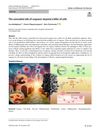
December 2024 in “Cellular and Molecular Life Sciences” This study reviews recent advancements in understanding caspases, highlighting their roles beyond apoptosis in cancer, inflammation, and neurological disorders, and discusses the potential and challenges of targeting caspases for therapeutic purposes.
 March 2021 in “Research Society and Development”
 This case study described a Staffordshire Bull Terrier diagnosed with alopecia by color dilution, characterized by gradual hair loss and confirmed through clinical examination and histopathology.
February 2026 in “Psychoneuroendocrinology” Lower family income is linked to more stress in parents and more behavior problems in children.
 July 2018 in “Madridge journal of dermatology & research”
 This study reported that using a herbal hair oil containing Cereus grandiflorus (cactus) Flower extract over 12 weeks was effective in significantly reducing hair fall and aiding new hair growth among alopecia patients.