January 2011 in “Dermatologic Clinics” This review examines challenges in managing hair loss in women, emphasizing the complexity of diagnosis, treatment options like antiandrogens and minoxidil, and the need for long-term management, but reports no new clinical results.
 1 citations
,
January 2025 in “International Research Journal of Multidisciplinary Scope”
1 citations
,
January 2025 in “International Research Journal of Multidisciplinary Scope” This review systematically summarizes the ethnopharmacology, phytochemistry, and pharmacological activities of Caryota mitis, highlighting its rich phytochemical profile and potential uses in treating various ailments, though many traditional uses still require further scientific validation.
 January 2026 in “Frontiers in Public Health”
 This study observed distinct post-marketing safety signal patterns for baricitinib and tofacitinib in adult AA, influenced by their differing regulatory uses and real-world contexts, and emphasizes the need for future studies to validate these findings.
1 citations
,
February 2018 in “Psicologia e Saúde em Debate” This study explored the preformulation of a caffeine-containing shampoo for treating androgenic alopecia and found the formulation to be stable and viable for compounding.
 November 2007 in “Neuro-chirurgie/Neurochirurgie”
 This study reported that treatment with cyproterone acetate alone and then with incremental estrogen doses induced mild feminizing effects in late-pubertal trans-girls, with further feminization observed after adding estrogen.
July 2026 in “Editora Pasteur eBooks” This narrative review explores current understanding and management of female pattern hair loss, highlighting the role of genetic and environmental factors, and discussing diagnostic approaches like trichoscopy alongside emerging therapeutic strategies.
 May 2014 in “Hair transplant forum international”
 This spotlight highlights the Brazilian Association of Hair Restoration Surgery and shares the positive experiences of the International Society of Hair Restoration Surgery members with their Brazilian colleagues, reporting no new findings.
October 2022 in “Amplla Editora eBooks” April 2026 in “Clinical Case Reports” This case study suggests that "celiac hepatitis" should be considered in patients with unexplained liver dysfunction, highlighting the importance of recognizing celiac disease to avoid misdiagnosis and allow reversal of liver abnormalities with proper treatment.
 April 2023 in “Journal of Investigative Dermatology”
 This study suggests that the CsA-induced inactivation of the CaN/NFAT pathway may suppress TGF-β2 expression in dermal papilla cells, potentially contributing to CsA-associated hypertrichosis.
 November 2022 in “CARDIOMETRY”
 This article discusses the potential benefits of GcMAF and oral MAF, developed by "Saisei Mirai", for cancer and other conditions, but reports no new clinical results.
 November 2011 in “Hair transplant forum international”
 This article provides an update from the ISHRS Practice Census Subcommittee and Media Relations Committee for 2011 but presents no new research results.
2 citations
,
July 2023 in “International Journal of Clinical and Experimental Medicine Research” This study found that for thyroid cancer patients who underwent radical mastectomy, the combination of CAF regimen and fufangbanmao capsule improved short-term clinical efficacy, enhanced immune function, reduced drug toxicity, and positively impacted quality of life compared to the CAF regimen alone.
 26 citations
,
March 2009 in “Dermato-endocrinology”
26 citations
,
March 2009 in “Dermato-endocrinology” This review discusses the evaluation, clinical presentation, and cutaneous manifestations of congenital adrenal hyperplasia, focusing on differential diagnosis challenges with polycystic ovary syndrome, and reports no new clinical findings.
 April 2017 in “Journal of Investigative Dermatology”
 In this study, CTCF was found to play essential roles in epidermal differentiation and skin barrier formation, simultaneously acting as a suppressor of epithelial inflammatory responses in mouse skin.
48 citations
,
March 2010 in “PloS one” This study found that the co-ablation of C/EBPalpha and C/EBPbeta in adult mouse skin disrupted sebocyte differentiation and epidermal homeostasis, highlighting their critical roles in these processes.
October 1993 in “The Journal of Clinical Pharmacology” 2 citations
,
January 2023 in “Brazilian Journal of Development” This report describes a Sapajus nigritus investigated for multiparasitism after rescue from illegal home possession, highlighting public health and biodiversity conservation concerns related to human-primate proximity.
 January 2023 in “Brazilian Journals Editora eBooks”
 Passiflora incarnata may help with anxiety and sleep issues but has side effects; teleconsultation for heart failure can improve quality of life; increased screen time for children during the pandemic led to more clinical complaints; older and severely affected COVID-19 patients are more likely to have long-term symptoms.
 5 citations
,
March 2013 in “International journal of surgical pathology”
5 citations
,
March 2013 in “International journal of surgical pathology” This case report illustrates that a diagnosis of Cronkhite-Canada syndrome can be made without the presence of polyps, as demonstrated by resolving symptoms with steroid treatment.
 1 citations
,
January 2010 in “Journal of Cutaneous and Aesthetic Surgery”
1 citations
,
January 2010 in “Journal of Cutaneous and Aesthetic Surgery” The Journal of Cutaneous and Aesthetic Surgery is now included in PubMed.
 January 2025 in “bioRxiv (Cold Spring Harbor Laboratory)”
 This study identifies Armadillo Repeat Only proteins as crucial regulators of plant CNGC channels, influencing various plant functions and showcasing a unique plant-specific role in Ca2+ signaling.
 May 2023 in “The journal of investigative dermatology/Journal of investigative dermatology”
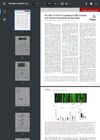
 In this study, researchers found that the expression of SLC1A6, a gene linked to calcium gradient and keratinocyte differentiation in the skin, significantly decreases with age, which may contribute to reduced skin barrier function in elderly individuals.
 6 citations
,
August 2009 in “Arquivos Brasileiros de Ciências da Saúde”
6 citations
,
August 2009 in “Arquivos Brasileiros de Ciências da Saúde” This study created a novel classification for dermatological and cosmiatric changes caused by cancer treatments, categorizing them as triggered, exacerbated, or unrelated to the treatment.
 11 citations
,
August 2019 in “The Journal of Sexual Medicine”
11 citations
,
August 2019 in “The Journal of Sexual Medicine” This study found that women with nonclassic congenital adrenal hyperplasia (NC-CAH) reported lower sexual function and higher sexual distress compared to those with classic CAH (C-CAH), particularly among those showing signs of androgen excess.
1 citations
,
May 2019 in “Annals of Medicine” In this study, researchers found that most food supplement labels in Portugal recommend daily mineral doses exceeding the EU's Recommended Daily Allowance, with some even surpassing the Tolerable Upper Intake Level, raising safety concerns regarding potential adverse effects.
 January 2022 in “Gastro Hep advances”
 This case report describes a woman diagnosed with Cronkhite-Canada syndrome whose gastrointestinal symptoms and alopecia improved significantly after systemic prednisone treatment, with no recurrence four years after a second treatment course.
 8 citations
,
August 2018 in “Anais Brasileiros De Dermatologia”
8 citations
,
August 2018 in “Anais Brasileiros De Dermatologia” Researchers translated and validated the WAA-QoL questionnaire into Brazilian Portuguese, finding it to be a reliable tool for assessing quality of life in women with female pattern hair loss.
1 citations
,
November 2024 in “Journal of the American Academy of Dermatology” People with celiac disease have a higher risk of developing alopecia areata.
 May 2024 in “Animal genetics”
 The researchers investigated a Maine Coon cat with suspected classical Ehlers-Danlos Syndrome and discovered a heterozygous deletion in the COL5A1 gene, underscoring the value of whole-genome sequencing for precise veterinary diagnostics.