189 citations
,
July 2000 in “American Journal of Botany” In this study, wild-type Arabidopsis thaliana with responsive root hairs efficiently acquired phosphorus under low-phosphorus conditions compared to mutants, suggesting an adaptive advantage in nutrient-limited environments.
3 citations
,
May 2018 in “The Indian Journal of Animal Sciences” This study suggests that the KAP 7 gene may serve as a potential molecular marker for genetic selection to improve staple length and greasy fleece weight in Rambouillet sheep.
 1 citations
,
October 2022 in “Journal of food and nutrition research”
1 citations
,
October 2022 in “Journal of food and nutrition research” This review investigates the potential benefits of cinnamon supplementation alongside lifestyle changes for managing obesity and polycystic ovary syndrome, but it reports no new clinical results.
280 citations
,
January 2004 in “The EMBO Journal” AGC2-1 protein is essential for root hair growth in Arabidopsis.
56 citations
,
March 2017 in “Plant and Cell Physiology” This study used light sheet fluorescence microscopy to successfully image and analyze calcium oscillations in the root hairs of Arabidopsis thaliana, finding that these oscillations correlate with the root hair growth rate and that auxin affects these properties.
 2 citations
,
November 2019 in “Phytotherapy Research”
2 citations
,
November 2019 in “Phytotherapy Research” This study found that consuming 100 mg of pea sprout extract daily for 8 weeks significantly reduced hair loss in individuals experiencing excessive hair shedding.
6 citations
,
August 2016 in “Journal of Visualized Experiments” This article describes a method using the CUBIC protocol to clarify and visualize molecular and cellular interactions in mouse skin biopsies at single cell resolution, but does not provide new biological findings.
 March 2024 in “Research Square (Research Square)”
 In this study, scalp cooling therapy was found to be well tolerated and effective at improving hair preservation for Asian women with breast or gynecological cancers undergoing certain chemotherapy regimens, particularly weekly paclitaxel, compared to historical controls.
 2 citations
,
August 2019 in “Asian journal of pharmaceutical and clinical research”
2 citations
,
August 2019 in “Asian journal of pharmaceutical and clinical research” This study found that in female breast cancer patients, supplementation with 400 mg IND02 (Cinnamon bark extract) thrice daily during chemotherapy significantly reduced severe weight loss and hair loss compared to placebo, with the treatment being well-tolerated and safe.

This study created a detailed atlas of endogenous peptides across 13 maize tissues during various developmental phases, revealing a complex regulatory network where peptide abundance doesn't always align with their source proteins, signaling unique roles in maize development.
5 citations
,
January 2021 in “Pakistan Journal of Nematology” This review discusses the potential of Citrullus colocynthis as a natural nematicidal agent and highlights its phytochemical composition, but reports no new experimental results.
 9 citations
,
January 2013 in “Case reports in emergency medicine”
9 citations
,
January 2013 in “Case reports in emergency medicine” This case study reports that Citrullus colocynthis can cause severe gastrointestinal symptoms, including rectorrhagia and mucosal erosion, highlighting the need for awareness of its potential side effects.
 26 citations
,
October 2017 in “Scientific reports”
26 citations
,
October 2017 in “Scientific reports” This study found that a bacterial endophyte from Zea nicaraguensis effectively targets and colonizes plant root hair cells, promoting growth and solubilizing insoluble phosphorus for nutrient uptake.
23 citations
,
August 1975 in “Experimental Biology and Medicine” This study found that supplementing pregnant and lactating mice with high dietary copper improved survival and physical traits in mice carrying the crinkled mutation, suggesting copper's role in modulating gene expression.
 February 1961 in “The Lancet”
 Some new drugs show potential for treating blood cancers but have serious side effects and need more research.
 3 citations
,
December 2021 in “Frontiers in endocrinology”
3 citations
,
December 2021 in “Frontiers in endocrinology” In this study, a novel DCAF17 gene mutation was identified in a Chinese family, suggesting a potential role in pancreatic β cell dysfunction and diabetes development in Woodhouse-Sakati syndrome.
This study found that Xiaochuang Drink significantly reduced the sebaceous gland and hair follicle diameter in a rabbit ear acne model and was determined to be safe at clinical doses.
 7 citations
,
April 2022 in “South African journal of botany”
7 citations
,
April 2022 in “South African journal of botany” This study found significant chemical variability and heavy metal contamination in commercial chrysanthemum flower products from different geographic origins, highlighting the need for stricter quality control and regulations.
12 citations
,
May 2023 in “Molecules” This study identified seven potential enzyme inhibitors from a Polygonum cuspidatum extract using ultrafiltration combined with high-performance liquid chromatography. These compounds showed inhibitory activity against tyrosinase, α-glucosidase, and xanthine oxidase, with most discovered in this extract for the first time.
August 2025 in “Tropical Journal of Natural Product Research” This study found that hydromethanolic extracts from Carthamus caeruleus L. rhizomes exhibited notable antioxidant and anti-inflammatory effects in both in vitro and in vivo experiments, supporting its traditional medicinal uses and suggesting its potential as a source of therapeutic agents.
 April 2023 in “Jurnal Farmasi Indonesia”
 In this study using New Zealand White rabbits, a nanoemulsion combining candlenut oil and celery powder improved hair growth over 28 days, showing greater hair weight and thickness than both positive and negative controls, suggesting potential as an alopecia treatment.
1 citations
,
April 2021 in “IOP Conference Series Earth and Environmental Science” The study observed that rice strains IR 97477-115-1-CRB-0-SKI-1-SKI-0-2 and IR 97477-115-1-CRB-0-SKI-3-SKI-0-2 demonstrated stable high yields and zinc content across different agro-climate conditions.
 2 citations
,
July 2022 in “Asian Journal of Microbiology, Biotechnology & Environmental Sciences”
2 citations
,
July 2022 in “Asian Journal of Microbiology, Biotechnology & Environmental Sciences” This review highlights zinc's crucial role in both plant growth and human health, while noting the widespread problem of zinc deficiency in various soils, but reports no new findings.
 2 citations
,
June 2022 in “Molecules”
2 citations
,
June 2022 in “Molecules” This study demonstrated that an ethanol extract of Connarus semidecandrus Jack showed potential anti-androgenic alopecia effects in a testosterone-induced model, suggesting a possible treatment option for hair loss.
 August 2013 in “Gastroenterology”
 This case report highlights a 60-year-old patient's diagnosis with Cronkhite-Canada syndrome, characterized by gastrointestinal polyps, diarrhea, weight loss, brittle nails, alopecia, and skin changes, which showed improvement with treatment.
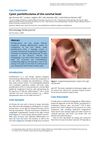 March 2026 in “Dermatology Online Journal”
 In this case report, the authors describe a rare cystic panfolliculoma in an 84-year-old man's right conchal bowl, noting its potential to mimic other tumors like basal cell carcinoma, which complicates diagnosis.
 July 2021 in “Research Square (Research Square)”
 In this study, the ethyl acetate extract of Semecarpus anacardium Linn leaves was reported to induce cytotoxicity in cancer cells, cause cell cycle arrest, and suppress tumor growth in mice.
8 citations
,
January 2020 in “Evidence-based Complementary and Alternative Medicine” This study found that Cinobufacin combined with chemotherapy improved clinical outcomes in breast cancer patients and reduced certain side effects compared to chemotherapy alone.
3 citations
,
September 2024 in “Frontiers in Plant Science” In this study, researchers used genomic, metabolomic, and transcriptomic methods to explore the biosynthetic capabilities of S. longa, aiming to better understand the species and lay the groundwork for future studies on the biosynthesis and therapeutic use of cepharanthine and similar alkaloids.
This study suggests that shiitake mushroom, buckwheat, soybean, cypress, and seaweed fulvescens may be potential candidates for use in scalp care cosmetics due to their antioxidative and antimicrobial properties, safety, and favorable user feedback.