 40 citations
,
September 2018 in “Journal of the American Academy of Dermatology”
40 citations
,
September 2018 in “Journal of the American Academy of Dermatology” This letter discusses the emerging use of Janus kinase inhibitors, specifically oral tofacitinib, for treating alopecia areata in children, but reports no new clinical findings.
 May 2023 in “International Journal of Trichology”
 In this case report, the researchers described the use of tofacitinib in treating a 14-year-old boy from India with severe alopecia areata, achieving complete hair regrowth within 2 months without serious adverse events, highlighting tofacitinib's potential benefits and safety in adolescent cases.
July 2017 in “OPAL (Open@LaTrobe) (La Trobe University)” In this study, researchers investigated the role of the ATX-LPA axis in asthma pathogenesis using human and mouse models and highlighted the potential for developing new ATX inhibitors as effective asthma treatments.
 1 citations
,
February 2024 in “JEADV. Journal of the European Academy of Dermatology and Venereology/Journal of the European Academy of Dermatology and Venereology”
1 citations
,
February 2024 in “JEADV. Journal of the European Academy of Dermatology and Venereology/Journal of the European Academy of Dermatology and Venereology” In this research, the authors reported that long-term treatment with the JAK1/JAK2 inhibitor baricitinib effectively maintains hair regrowth in patients with severe alopecia areata and may gradually improve outcomes for partial responders over 104 weeks, without increasing side effect incidence.
 1 citations
,
June 2023 in “American Journal of Clinical Dermatology”
1 citations
,
June 2023 in “American Journal of Clinical Dermatology” In two phase 3 clinical trials, this study found that adults with severe alopecia areata receiving baricitinib experienced significant hair regrowth on the scalp, eyebrows, and eyelashes over 36 weeks compared to placebo, although longer-term data are needed to fully assess benefits and risks.
 June 2025 in “The Journal of Dermatology”
 This study found that baricitinib was effective and well tolerated for long-term scalp hair regrowth in severe alopecia areata patients, with certain predictors identified for treatment response.
 August 2025 in “Fabad Journal of Pharmaceutical Sciences”
 This review highlights that bicalutamide, a non-steroidal antiandrogen used in prostate cancer treatment, is mainly effective through its (R)-enantiomer and emphasizes the need to monitor its adverse effects despite its targeted antiandrogenic action.
December 2025 in “Orvosi Hetilap” This study found that baricitinib is effective for treating severe alopecia areata, with significant hair regrowth observed by the third month of therapy and continued improvement by month 12, while adverse events were mainly mild.
10 citations
,
April 1964 in “Journal of the American Geriatrics Society” This article reviews triamcinolone acetonide as an intramuscular long-acting steroid therapy for dermatologic disorders but reports no new clinical results.
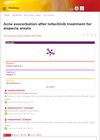 5 citations
,
January 2022 in “Dermatology Reports”
5 citations
,
January 2022 in “Dermatology Reports” This report describes a case where the JAK inhibitor tofacitinib led to hair regrowth in a patient with alopecia totalis but also worsened facial acne, highlighting a unique adverse effect.
June 2026 in “Clinical Cosmetic and Investigational Dermatology” This study found that escalating baricitinib to 6 mg daily improved hair loss in 75% of patients with severe refractory alopecia areata who responded poorly to standard treatments, while also noting manageable short-term safety concerns under close monitoring.
Botulinum toxin-A injections in the scalp can reduce hair loss and promote new hair growth in men with certain types of baldness.
 16 citations
,
July 2017 in “Rheumatology and Therapy”
16 citations
,
July 2017 in “Rheumatology and Therapy” This review examines the outcomes of treating Brazilian patients with alopecia universalis using tofacitinib and highlights the need for randomized controlled trials to determine optimal dosing and duration.
 January 2025 in “The Egyptian Journal of Hospital Medicine”
 This study observed significant repigmentation in localized stable vitiligo lesions treated with oral baricitinib, with even more improvement when combined with topical tacrolimus, and reported no side effects.
17 citations
,
August 2014 in “Journal of Craniofacial Surgery” In this study on rats, botulinum toxin–A injection was reported to reduce contraction in wounds and skin grafts, with changes in inflammation and collagen arrangement also observed.
 January 2025 in “Balkan Medical Journal”
 Baricitinib helps regrow hair in severe alopecia areata and is safe, but more research is needed.
May 2025 in “International Journal of Trichology” In this case report, a 7-year-old boy with alopecia totalis experienced significant hair regrowth after adding topical tofacitinib and mometasone to his treatment regimen, suggesting potential benefits of topical Janus kinase inhibitors for pediatric patients with this condition.
 2 citations
,
February 2020 in “Rivista Urologia”
2 citations
,
February 2020 in “Rivista Urologia” Both terazosin and baclofen effectively reduce pain in young men with chronic testicular pain, with no difference in their effectiveness.
 139 citations
,
November 2016 in “Journal of the American Academy of Dermatology”
139 citations
,
November 2016 in “Journal of the American Academy of Dermatology” In this retrospective review, tofacitinib treatment was associated with clinically significant hair regrowth in most adolescent patients with alopecia areata, though limitations suggest further studies are needed to confirm these findings.
November 2025 in “SKIN The Journal of Cutaneous Medicine” In a real-world study, baricitinib was effective for scalp, eyebrow, and eyelash regrowth in patients with alopecia areata, showing clinically meaningful improvements as early as 3 months and increasing up to 12 months; satisfaction and perceived improvement were also high among participants.
 November 2025 in “SKIN The Journal of Cutaneous Medicine”
 This study aims to assess the real-world effectiveness of baricitinib, a JAK inhibitor, for promoting regrowth of nasal, genital, and beard hair in patients with severe alopecia areata, expanding on findings from the BRAVE-AA clinical trial. Results are not reported.
 June 2024 in “ESMO Gastrointestinal Oncology”
 The BAYONET trial is a phase II study designed to assess the efficacy and safety of combining encorafenib, binimetinib, and cetuximab for patients with BRAF V600E-mutant metastatic colorectal cancer that is resistant to encorafenib plus cetuximab; results are not yet reported.
 41 citations
,
December 2015 in “JAMA Dermatology”
41 citations
,
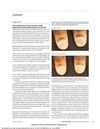
December 2015 in “JAMA Dermatology” Tofacitinib citrate improved nail dystrophy and pain in patients with alopecia universalis without causing side effects.
July 2025 in “The Egyptian Journal of Hospital Medicine” This study found that intralesional methotrexate and triamcinolone acetonide have similar efficacy for localized alopecia areata in adults, but differ in safety profiles, with methotrexate associated with hyperpigmentation and triamcinolone with atrophy.
 6 citations
,
May 2016 in “British Journal of Dermatology”
6 citations
,
May 2016 in “British Journal of Dermatology” This study reports the effective use of botulinum toxin A in treating multiple facial apocrine hidrocystomas in a 29-year-old man, a case not previously documented in English-language literature.
 March 2023 in “PARIPEX INDIAN JOURNAL OF RESEARCH”
 This study found that prolonged tofacitinib treatment in adult Indian patients with moderate-to-severe alopecia areata was associated with a high regrowth rate, which varied with factors like age at disease onset and treatment duration.

In this study, baricitinib was used as monotherapy to treat a 21-year-old woman with severe alopecia areata, resulting in significant hair regrowth and reduced alopecia severity within three months, suggesting its effectiveness and potential as a robust treatment option for this condition.
 April 2026 in “Dermatology and Therapy”
 This study evaluated baricitinib 4 mg treatment in severe to very severe alopecia areata, reporting significant scalp hair regrowth by Week 52, especially in short-duration episodes, suggesting treatment should continue for at least a year before assessing failure.
3 citations
,
February 2019 in “Molecular genetics and metabolism” This study found that coadministration of tadalafil and finasteride improved lower urinary tract symptoms and erectile function in men with benign prostatic hyperplasia better than finasteride alone over 26 weeks.
 30 citations
,
October 2014 in “PLOS ONE”
30 citations
,
October 2014 in “PLOS ONE” This study found that BAF200, a subunit of the PBAF chromatin remodeling complex, is crucial for heart development and coronary artery formation in mice, as its absence led to embryonic lethality with severe cardiac defects.