April 2026 in “IntechOpen eBooks” This study reviews the complexities of burn-related skin complications, highlighting postburn pruritus, dyspigmentation, and the risk of malignant ulcers, while offering a framework for evidence-based management through various treatment approaches.
 1 citations
,
January 2015 in “Annals of Dermatology”
1 citations
,
January 2015 in “Annals of Dermatology” This case report describes a 52-year-old woman who developed retiform purpura after using cocaine likely adulterated with levamisole, highlighting the need for levamisole detection in such cases.
1 citations
,
September 2022 in “European Journal of Dermatology” This study identified a novel splice-site variant of the LAMB3 gene that may cause junctional epidermolysis bullosa, suggesting gene sequencing is essential for accurate diagnosis.
 April 2023 in “The Egyptian Journal of Hospital Medicine”
 The study found that intralesional injection of platelet-rich plasma appears safe and may be effective for treating post-burn scars, with shorter scar durations showing better results.
 January 2008 in “대한피부과학회지”
 This study found that micropigmentation effectively improved the cosmetic appearance of scalp and eyebrow scars in 94% of patients, with the pigments remaining safely in the superficial dermis after one year.
 2 citations
,
March 2017 in “TURKDERM”
2 citations
,
March 2017 in “TURKDERM” This study observed that pediatric bone marrow transplantation patients frequently experience various dermatological issues; mucositis and xeroderma were the most common.
64 citations
,
August 1977 in “PubMed” This article describes the skin changes seen in acute and chronic graft-vs-host reactions after bone marrow transplantation, highlighting the potential for early recognition due to the visibility of these changes, but reports no new clinical results.
16 citations
,
December 1996 in “International Journal of Dermatology” This case report describes a 23-year-old man with scurvy, characterized by perifollicular hemorrhages, gum disease, and other symptoms due to a diet low in fresh fruits and vegetables.
 3 citations
,
July 2017 in “Current sports medicine reports”
3 citations
,
July 2017 in “Current sports medicine reports” This comprehensive review outlines the management and prevention strategies for mechanical, environmental, and infectious skin injuries in athletes but reports no new clinical findings.
July 2011 in “Journal of Pediatric and Adolescent Gynecology” This report discusses a teenager with blistering of localized epidermolysis bullosa simplex—Weber Cockayne type, recommending referral to dermatology, and includes no new clinical trials or broader conclusions.
 8 citations
,
February 2012 in “International Journal of Dermatology”
8 citations
,
February 2012 in “International Journal of Dermatology” This review discusses skin problems common among long-distance runners and outlines helpful treatments, without presenting new clinical results.
 June 2021 in “Asian Journal of Medical Sciences”
 This case study highlights that vitamin B12 deficiency can cause reversible hyperpigmentation, illustrated by a vegetarian female patient whose skin lesions improved after treatment.
May 2006 in “The American journal of medicine” This article presents a case of a 45-year-old African American man with firm, hyperpigmented papules and pustules on his cheeks and neck, persisting despite various shaving methods.
 2 citations
,
August 2022 in “Cutis”
2 citations
,
August 2022 in “Cutis” This article suggests that nail abnormalities might occur temporarily after COVID-19 vaccination, but they are self-limiting and should not deter individuals from getting vaccinated.
119 citations
,
May 1987 in “The Journal of Dermatologic Surgery and Oncology” This study found that pigmentation following sclerotherapy is likely caused by hemosiderin deposition from red blood cells rather than post-inflammatory hyperpigmentation, with most cases resolving spontaneously within 6–24 months.
1 citations
,
January 1986 in “PubMed” This case report describes a young patient with a unique combination of dysmorphism, bullous eruption, skin and muscle atrophy, and hyperpigmentation that doesn't fit existing nosological categories.
December 2020 in “Pathology” This case report describes how a misleading presentation of a rash initially resembling vasculitis was ultimately diagnosed as scurvy through histological examination, revealing the importance of dietary history and histopathology in differential diagnosis.
7 citations
,
January 2008 in “Indian Journal of Dermatology” This review discusses the clinical manifestations and genetic basis of pigmentary mosaicism, highlighting its varied phenotypic expressions, but reports no new clinical results.
9 citations
,
September 2020 in “Journal of cosmetic dermatology” This case report describes koebnerization-induced vitiligo in a woman following repeated eyebrow microblading, suggesting a link between the procedure and the phenomenon in susceptible individuals.
 September 2025 in “Universal library of medical and health sciences.”
 This study examined the use of medical dermapigmentation to restore lip appearance after traumatic injuries, finding that a staged approach effectively camouflages scar tissue, enhances symmetry, and improves psychological well-being, demonstrating benefits in a clinical case of a dog bite.
 January 2025 in “Pediatrics in Review”
 In this case report, a 14-year-old boy with musculoskeletal symptoms and distinctive skin lesions was diagnosed with scurvy due to a vitamin C deficiency confirmed by low serum levels and a unique skin biopsy, emphasizing the need for dietary assessment in similar presentations.

This case report describes a unique dermatologic condition called SCRATCH, occurring in a runner due to shirt friction, which resulted in clumped axillary hairs and temporary alopecia.
January 2026 in “Deutsches Ärzteblatt international” This case study reports a rare instance of sacroiliitis due to Brucella melitensis in a patient who experienced symptom relief after a 12-week treatment with doxycycline and rifampicin.
6 citations
,
July 1976 in “JAMA” This article discusses dermatological issues associated with black skin, such as postinflammatory pigmentation and keloids, and highlights the need for practitioners to understand these racial characteristics; it reports no new clinical results.
 July 2021 in “PARIPEX INDIAN JOURNAL OF RESEARCH”
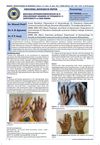
 This study highlighted knuckle hyperpigmentation as an early sign of vitamin B12 deficiency, indicating a potential link to megaloblastic anemia in the vegetarian population in India.
3 citations
,
November 2015 in “Jurnal Online Universitas Gadjah Mada (Universitas Gadjah Mada)” In this study, multiple mini punch grafts significantly improved epithelialization, covering more than 90% of a large ulcer in a 6-year-old boy after eight weeks.
 4 citations
,
March 2023 in “Journal of medical case reports”
4 citations
,
March 2023 in “Journal of medical case reports” The authors concluded that coagulopathy can result from vitamin E supplementation, even at marginally elevated levels, especially when combined with other drugs that increase bleeding risk.
20 citations
,
December 2006 in “Archives of dermatology” October 2020 in “Pediatrics in Review” This case report describes a newborn diagnosed with dominant dystrophic epidermolysis bullosa due to a COL7A1 mutation, following the presentation of blisters that healed without further complications.
 51 citations
,
January 2006 in “Wound Repair and Regeneration”
51 citations
,
January 2006 in “Wound Repair and Regeneration” This study found that MRL/MpJ mouse dorsal skin wounds heal with similar scar formation and collagen deposition as C57bl/6 and Balb/c mice.