1 citations
,
February 2025 in “Journal of the American Academy of Dermatology” Most men prefer keeping their eyebrows over scalp hair.
 September 2019 in “The journal of investigative dermatology/Journal of investigative dermatology”
 This study reported that while eyebrow hair transplantation in patients with frontal fibrosing alopecia achieves satisfactory short-term results, most patients experience significant hair graft loss within 3-4 years.
51 citations
,
August 2010 in “British journal of dermatology/British journal of dermatology, Supplement” In this study, intralesional triamcinolone acetonide was associated with eyebrow regrowth in some patients with frontal fibrosing alopecia.
 6 citations
,
July 2007 in “Aesthetic Surgery Journal”
6 citations
,
July 2007 in “Aesthetic Surgery Journal” This article discusses techniques for correcting hairline deformities after face lift procedures using follicular unit implantation, but it reports no clinical results.
 3 citations
,
June 2005 in “Ophthalmology Clinics of North America”
3 citations
,
June 2005 in “Ophthalmology Clinics of North America” Follicular unit transplantation treats hair loss and restores eyebrows with short recovery and natural results.
1 citations
,
March 2013 in “British Journal of Dermatology” This correspondence discusses eyebrow alopecia in the context of centrofacial trichoblastomatosis and reports no new clinical findings.
 22 citations
,
September 2004 in “Journal of The European Academy of Dermatology and Venereology”
22 citations
,
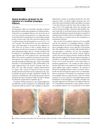
September 2004 in “Journal of The European Academy of Dermatology and Venereology” Bimatoprost can cause longer, thicker, darker eyelashes and eyebrows.
November 2025 in “Universal library of medical and health sciences.” This review highlights that while permanent eyebrow correction via micropigmentation may help restore visual appearance for patients experiencing eyebrow loss post-chemotherapy, the psychoemotional benefits of this procedure remain unclear, demonstrating a need for further research into its impact on quality of life.
6 citations
,
April 2015 in “Plastic surgical nursing” This study reports that applying bimatoprost ophthalmic solution 0.03% to the upper eyelid margin enhances eyelash growth by increasing length, thickness, and darkness, with a favorable safety profile.
31 citations
,
October 2018 in “Journal of the European Academy of Dermatology and Venereology” In this study, trichoscopic examination found distinct hair characteristics for diagnosing eyebrow loss: alopecia areata is marked by features like exclamation mark hairs, while frontal fibrosing alopecia shows dystrophic hairs and distinctive regrowth patterns.
 December 2025 in “Dermatological Health”
 This case report describes how a 23-year-old woman experienced eyebrow thinning and hair loss linked to cosmetic use, with diagnostic tests confirming follicular damage. Discontinuing the product led to eyebrow regrowth, highlighting potential risks from cosmetics and the value of non-invasive diagnostics for evaluation.
4 citations
,
April 1955 in “Archives of Dermatology” This study reports that hydrocortisone ointment significantly improved eyebrow erythema and hair growth in a 10-year-old with ulerythema ophryogenes.
This chapter reviews techniques and considerations for facial hair transplantation, including the restoration of beards and eyebrows, and provides guidance on candidate selection and managing complications, reporting no new clinical results.
 1 citations
,
September 2016 in “Indian Journal of Plastic Surgery”
1 citations
,
September 2016 in “Indian Journal of Plastic Surgery” This article describes a modified follicular unit extraction technique using a reverse rake scalp elevator, which may reduce follicular transection rates in hair transplantation from the lower occipital donor region.
 2 citations
,
February 2009 in “Journal of the American Academy of Dermatology”
2 citations
,
February 2009 in “Journal of the American Academy of Dermatology” Injecting triamcinolone into the eyebrow area may help eyelash regrowth in alopecia areata patients.
27 citations
,
May 2016 in “British journal of dermatology/British journal of dermatology, Supplement”  36 citations
,
November 2005 in “Journal of The American Academy of Dermatology”
36 citations
,
November 2005 in “Journal of The American Academy of Dermatology” This article discusses the potential of latanoprost for treating alopecia areata, but notes that well-controlled studies are still needed to confirm its effectiveness.

This review discusses how permanent micropigmentation can restore eyebrow appearance and potentially improve psychosocial well-being in cancer survivors experiencing alopecia after chemotherapy, but it reports no new clinical results.
 7 citations
,
March 2002 in “Aesthetic Surgery Journal”
7 citations
,
March 2002 in “Aesthetic Surgery Journal” This article describes techniques for hair restoration surgery, including using intradermal sutures for donor area closure and employing the retroauricular ellipse from a facelift as a donor site, but reports no new clinical results.
September 2024 in “Revista Brasileira de Cirurgia Plástica” This study reported that a frontoplasty endoscopic subperiosteal technique using three small incisions was effective and aesthetically beneficial in treating upper facial aging among patients with frontotemporal alopecia, though it did result in some minor complications such as eyebrow correction issues and recurring glabellar wrinkles.
April 2024 in “Dermatology Reports” In this study, Saudi Arabian women showed moderate awareness of eyebrow microblading, yet many lacked knowledge of hygiene practices, indicating a need for more public education on the procedure's risks and standards.
August 2025 in “Journal of Cosmetic Dermatology” This study reported that hair transplantation using the FUE technique improves mid-upper facial proportions and the forehead contour in East Asian women with high and wide foreheads, yielding high patient satisfaction and favorable safety outcomes.
4 citations
,
September 2021 in “Sensors” In this study, LED therapy for eyebrow loss in older females with frontal fibrosing alopecia significantly increased eyebrow hair count after 10 treatments and maintained improvement at 6 months, indicating it could be a promising and well-tolerated treatment option.
191 citations
,
December 2013 in “Plastic & Reconstructive Surgery” This study found that surgical deactivation of migraine trigger sites significantly reduced or eliminated migraine symptoms in most treated patients, compared to controls, and also decreased migraine-associated costs and workdays lost.

This study reports that a novel eyelash transplantation method using chalazion forceps effectively thickens and enhances eyelashes by precisely placing transplanted hairs in a narrow recipient area, with approximately 85-92% of transplanted lashes expected to grow within 12 months.
2 citations
,
May 2018 in “Dermatologic Surgery” This overview outlines the Dermatologic Surgery journal's comprehensive focus on cosmetic and reconstructive procedures, but it does not present any new research findings.
August 2017 in “Journal of the Dermatology Nurses' Association” This article reviews the usage, efficacy, side effects, and alternatives of topical bimatoprost 0.03% for dermatological applications but does not present new clinical findings.
September 2025 in “Journal of the American Academy of Dermatology” Eyebrow and eyelash hair loss in alopecia areata worsens quality of life.
 7 citations
,
January 2017 in “International Journal of Dermatology”
7 citations
,
January 2017 in “International Journal of Dermatology” This study found that superficial cryotherapy significantly increased hair density and thickness in treated eyebrows compared to untreated controls after 5 months in patients with alopecia areata.