14 citations
,
June 2014 in “World Journal of Urology” This study found that the herbal combination PRO 160/120 significantly improved nocturnal voiding frequency in patients with moderate-to-severe LUTS/BPH compared to placebo, with similar effectiveness to tamsulosin and finasteride.

This study identified distinct and significant adverse event patterns across different drug classes used to treat benign prostatic hyperplasia, confirming known risks and suggesting novel safety signals for further investigation.

This study analyzed the FDA Adverse Event Reporting System and found distinct safety signals and adverse event patterns among α1-blockers, 5α-reductase inhibitors, and tadalafil used in treating benign prostatic hyperplasia, emphasizing known risks and identifying potential new ones that require further study.
March 2026 in “The Aging Male” This retrospective pharmacovigilance study reviewed adverse event reports from 2004 to 2025 for drugs treating benign prostatic hyperplasia, identifying distinct safety signals for α1-blockers, 5ARIs, and PDE5I, including some potential new adverse events that require further investigation.
 April 2020 in “The Journal of Urology”
 This study found that big chain pharmacies in Pennsylvania charged significantly higher prices for generic BPH medications compared to independent pharmacies, which had more regional price variation.
January 2025 in “Faculty of 1000 Research Ltd” Plant-based treatments may help reduce BPH symptoms, but more research is needed.
March 2010 in “The Journal of Urology” This study demonstrated that methylation of the 5-alpha reductase type 2 (5-AR2) promoter is linked to reduced expression of the 5-AR2 protein, possibly explaining resistance to Finasteride in some BPH patients.
 March 2016 in “European Urology Supplements”
 This study identified that methylation of the 5-AR2 gene promoter is linked to reduced expression of 5-AR2 protein, which may explain why some BPH patients are resistant to finasteride treatment.
 3 citations
,
January 2019 in “Therapeutic advances in urology”
3 citations
,
January 2019 in “Therapeutic advances in urology” This review concluded that WS PRO 160 I 120 mg, a herbal preparation, may be an effective and safer alternative to standard drugs for treating lower urinary tract symptoms in men with benign prostatic hyperplasia.
April 2006 in “The Journal of Urology” This study investigates the potential influence of genetic variations in the 5α-reductase type 2 gene on the effectiveness of finasteride treatment for benign prostatic hyperplasia, but it reports no new clinical results.
 53 citations
,
June 1993 in “Proceedings of the National Academy of Sciences of the United States of America”
53 citations
,
June 1993 in “Proceedings of the National Academy of Sciences of the United States of America” This study identified LY191704 as a specific noncompetitive inhibitor of human 5 alpha-reductase type 1, which may be useful in treating endocrine disorders related to DHT overproduction.
 21 citations
,
May 2021 in “Prostate Cancer and Prostatic Diseases”
21 citations
,
May 2021 in “Prostate Cancer and Prostatic Diseases” This review analyzes the potential mechanisms by which SARS-CoV-2 may exacerbate symptoms of benign prostatic hyperplasia and suggests a connection via ACE2 and androgen receptor pathways; it reports no new clinical results.
April 2018 in “The Journal of Urology” This study found that phosphodiesterase inhibitors may suppress the proliferation of benign prostatic hyperplasia epithelial cells by modulating CCL5 levels in low androgen conditions.
 December 2025 in “Naunyn-Schmiedeberg s Archives of Pharmacology”
 In this animal study, AGO (agomelatine) effectively alleviated testosterone-induced benign prostatic hyperplasia in rats by reducing oxidative stress and inflammation, indicating its potential as a therapeutic option for managing BPH through specific signaling pathways.
 49 citations
,
January 2004 in “Journal of steroid biochemistry and molecular biology/The Journal of steroid biochemistry and molecular biology”
49 citations
,
January 2004 in “Journal of steroid biochemistry and molecular biology/The Journal of steroid biochemistry and molecular biology” This review discusses the development and selectivity of 5 alpha-reductase inhibitors, particularly non-steroidal ones, and reports no new clinical trial results.
 6 citations
,
March 2003 in “Archiv Der Pharmazie”
6 citations
,
March 2003 in “Archiv Der Pharmazie” This study reported that newly synthesized nonsteroidal compounds were effective at inhibiting prostatic 5 alpha reductase isozyme 2, especially the compound with an N, N-diisopropylcarbamoyl substituent, suggesting potential for treating benign prostatic hyperplasia.
4 citations
,
September 2002 in “Der Urologe” This review reports that combination therapy with 5α-reductase inhibitors and α1-receptor blockers does not appear to benefit patients with benign prostatic hyperplasia and prostate volumes up to 40–45 ml, but may be more effective for larger prostate volumes.
 4 citations
,
April 2020 in “medRxiv (Cold Spring Harbor Laboratory)”
4 citations
,
April 2020 in “medRxiv (Cold Spring Harbor Laboratory)” This case-control study from Lombardy, Italy, observed that men over 55 taking 5-alpha reductase inhibitors for benign prostatic hyperplasia were hospitalized for COVID-19 at a lower rate than age-matched controls, suggesting potential protective effects against severe disease.
1 citations
,
April 2023 in “World Journal of Urology” In this study, researchers found that using a 5-α reductase inhibitor may reduce inflammation-related cytokines associated with T-helper cell 1 and T-helper cell 2 in prostate tissues after surgery, but it did not affect those related to Th17 cells.
 1 citations
,
March 1997 in “Journal of Chromatography B: Biomedical Sciences and Applications”
1 citations
,
March 1997 in “Journal of Chromatography B: Biomedical Sciences and Applications” This study discovered that the disposition of LY191704 enantiomers in rats and dogs is both stereoselective and species specific.
April 2017 in “The Journal of urology/The journal of urology” This Cochrane review reports that 5-alpha reductase inhibitors may slightly reduce urological symptoms and acute urinary retention risk compared to placebo, with a possible small reduction in surgical intervention need compared to alpha blockers.
 February 2007 in “Faculty Opinions – Post-Publication Peer Review of the Biomedical Literature”
 Taking 1mg of finasteride daily for hair loss can lower PSA levels by 40-50%, so to keep PSA effective as a cancer screening tool, the PSA value should be doubled during treatment.
 April 2024 in “The Journal of urology/The journal of urology”
 In this study, researchers found that methylation of the SRD5A2 gene in blood and tissue samples can serve as a biomarker to predict men's clinical response to finasteride treatment for benign prostatic hyperplasia, offering a non-invasive method for assessing potential treatment success.
September 2021 in “The Scientific Issues of Ternopil Volodymyr Hnatiuk National Pedagogical University Series pedagogy” This review discusses the impact of COVID-19 on urological treatment approaches, including the heightened severity of LUTS in men with urological issues and emphasizes the importance of adhering to treatment protocols.
 March 2013 in “The Journal of Urology”
 This study found that patients with androgenetic alopecia frequently had higher PSA levels and more significant urinary symptoms, likely due to older age, though prostate weight did not differ.
 51 citations
,
May 2013 in “The Journal of Steroid Biochemistry and Molecular Biology”
51 citations
,
May 2013 in “The Journal of Steroid Biochemistry and Molecular Biology” This review examines the role of steroidal inhibitors in treating prostatic diseases but presents no new clinical results.
 14 citations
,
February 1994 in “Tetrahedron Letters”
14 citations
,
February 1994 in “Tetrahedron Letters” This study found that using anhydrous cerium(III) chloride with alkyl Grignard reagents significantly improved the addition to sterically hindered 17-ketosteroids, resulting in high yields and stereoselectivity.
 12 citations
,
April 1995 in “Journal of Medicinal Chemistry”
12 citations
,
April 1995 in “Journal of Medicinal Chemistry” In this study, 4-substituted N-(1,1-dimethylethyl)-3-oxo-4-androstene-17.beta.-carboxamides were synthesized and evaluated in vitro as potential 5 alpha-reductase inhibitors and antiandrogens.
 8 citations
,
April 2004 in “The Journal of Urology”
8 citations
,
April 2004 in “The Journal of Urology” Doxazosin and finasteride negatively affect sexual function in men with BPH.
 2 citations
,
October 2001 in “Analytical Sciences”
2 citations
,
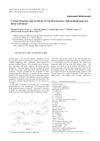
October 2001 in “Analytical Sciences” A new compound that could treat various androgen-related conditions was created and analyzed.