May 2005 in “Faculty Opinions – Post-Publication Peer Review of the Biomedical Literature” In this study, transgenic mice with a truncated latent transforming growth factor-beta-binding protein showed reduced keratinocyte proliferation and alterations in the hair cycle due to mis-localization of transforming growth factor-beta.

This research explores the pathogenesis of benign prostatic hyperplasia and evaluates the combined effect of finasteride and anastrozole in treating BPH in a rat model, but reports no new results yet.
 November 2024 in “Communities in ADDI (University of the Basque Country)”
 Antisense oligonucleotides show promise for treating Myotonic Dystrophy type I.
7 citations
,
January 2025 in “Journal of Experimental & Clinical Cancer Research” This study found that PRMT5 inhibitors showed potent anti-tumor activity in models of adenoid cystic carcinoma and that combining these inhibitors with lenvatinib may have additional growth-inhibitory effects.
37 citations
,
June 2004 in “Human molecular genetics online/Human molecular genetics” This study suggests that the HCR risk allele within the PSORS1 locus may contribute to psoriasis susceptibility by altering gene expression related to skin structure and differentiation, although these changes alone might not result in clinical symptoms.
 59 citations
,
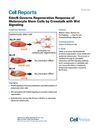
April 2016 in “Cell Reports”
59 citations
,
April 2016 in “Cell Reports” This study demonstrated that EdnrB signaling promotes melanocyte stem cell proliferation and differentiation, enhancing hair and epidermal melanocyte regeneration, especially under conditions of active Wnt signaling.
 August 2025 in “Fabad Journal of Pharmaceutical Sciences”
 This review highlights that bicalutamide, a non-steroidal antiandrogen used in prostate cancer treatment, is mainly effective through its (R)-enantiomer and emphasizes the need to monitor its adverse effects despite its targeted antiandrogenic action.
September 2024 in “Journal of Ethnopharmacology” In this study, Terminalia bellirica extracts promoted hair regrowth in testosterone-induced AGA mice, possibly by inhibiting type II 5α-reductase activity and enhancing the MAPK signaling pathway.
10 citations
,
February 2022 in “Cancers” This review discusses managing prostate cancer in patients with high-risk germline mutations and highlights the need for more research and consensus guidelines, reporting no new clinical results.
 16 citations
,
October 2012 in “The Journal of Dermatology”
16 citations
,
October 2012 in “The Journal of Dermatology” This study found that the BASP classification system for pattern hair loss showed better reproducibility and repeatability compared to the Norwood-Hamilton classification.
48 citations
,
June 2000 in “Japanese Journal of Cancer Research” This study found that dimethylarsinic acid significantly accelerates skin tumor development in hair follicle-targeted K6/ODC transgenic mice.
In this study, melatonin implantation altered BMP2 gene expression associated with hair follicle growth in Inner Mongolia Cashmere Goats, particularly reducing expression during the follicles' resting period.
4 citations
,
January 2014 in “The Journal of urology/The journal of urology” This study found that folliculin deficient renal cancer cells were more sensitive to irradiation due to increased autophagic cell death, suggesting a potentially enhanced therapeutic approach when combined with autophagy inducers like rapamycin.
 3 citations
,
December 2016 in “Canadian Urological Association journal”
3 citations
,
December 2016 in “Canadian Urological Association journal” This study suggests that male pattern baldness—especially moderate to severe—is an independent risk factor for prostate cancer and high-grade disease in men undergoing prostate biopsy.
 148 citations
,
April 2009 in “Molecular Pharmaceutics”
148 citations
,
April 2009 in “Molecular Pharmaceutics” This study reports that three synthesized PSMA-targeted radioimaging agents demonstrated high affinity and specific localization to prostate cancer tumors in a mouse model, highlighting their potential for cancer detection and monitoring.
6 citations
,
June 2021 in “The journal of investigative dermatology/Journal of investigative dermatology” This study observed that the SREBF1 mutation c.1669C>T (p.Arg557Cys) may act as a recurrent hotspot mutation associated with both hereditary mucoepithelial dysplasia and autosomal-dominant ichthyosis follicularis with atrichia and photophobia syndrome, suggesting they may be on the same clinical spectrum.
10 citations
,
June 2021 in “Journal of Investigative Dermatology” GNPTAB gene is crucial for normal hair color in humans and mice.
 76 citations
,
September 1992 in “Endocrinology”
76 citations
,
September 1992 in “Endocrinology” This study details the isolation and characterization of the human type II 5 alpha-reductase gene, which may play a role in male pseudohermaphroditism, prostate cancer, and benign prostatic hyperplasia.

PTHrP is important for bone formation and may be targeted for osteoporosis treatment and longevity therapies.
September 2023 in “Journal of the American Academy of Dermatology” Certain factors like being female, having high cholesterol, using Medicaid, and previous non-biologic treatments increase the risk of multiple biologic failures in psoriasis patients.
 6 citations
,
May 2012 in “Archives of Dermatological Research”
6 citations
,
May 2012 in “Archives of Dermatological Research” This study reports a novel missense mutation in the HR gene in a 68-year-old Hungarian woman with alopecia universalis and limb deformities, suggesting a need for further research on its role in these conditions.
January 2026 in “Animals” This study researched the dun coat color in Mongolian horses, finding that variations in TBX3 expression in different skin areas are linked to Bider markings, suggesting TBX3's role in this specific pigment pattern, while further investigation is needed on its regulation.
 September 2016 in “Journal of Dermatological Science”
 This study reports a case of GGCX syndrome in a 55-year-old Japanese male, characterized by PXE-like symptoms and coagulation deficiency, with an unreported phenotype of possible spinocerebellar degeneration.
 November 2022 in “Journal of the Endocrine Society”
 This case report suggests that genetic evaluation for glucocorticoid resistance, such as the NR3C1 gene variant, is crucial for proper diagnosis and management of patients showing atypical signs of hypercortisolism.
 September 2022 in “Research Square (Research Square)”
 This study found that overexpressing Rps14 in supporting cells promoted hair cell regeneration in the organ of Corti by facilitating cell proliferation and differentiation.
2 citations
,
December 2013 in “Cancer research” In this study, GTx-027, a selective androgen receptor modulator, significantly inhibited tumor growth in certain breast cancer models and showed good tolerance in a Phase II trial with postmenopausal women.
 January 2013 in “International Journal of Trichology”
 This case report highlights the discovery of a novel TRPS1 gene mutation in a 17-year-old with TRPS type I, underscoring the diagnostic importance of hair symptoms in congenital hair diseases.
546 citations
,
February 2008 in “PLANT PHYSIOLOGY” This study found that overexpression of OsPHR2 in rice leads to increased phosphate accumulation and root architecture changes even under phosphate-sufficient conditions.
This study found that platelet-rich plasma might support brain health by enhancing glial cell function and modulating immune responses in inflammation, indicating potential as a treatment for brain disorders.
1 citations
,
August 2019 in “Journal of Investigative Dermatology” PRDX5 enzyme may contribute to alopecia areata by affecting oxidative stress and autoimmunity.