January 2026 in “Advances in Dermatology and Allergology” In this study, patients with lichen planopilaris and frontal fibrosing alopecia reported a substantial impairment in quality of life and experienced high levels of stress, often considering stress a cause of their condition.
January 2003 in “Jiefangjun yixue zazhi” In this study, the researchers observed that the expression of certain growth factors and their receptors increases with gestational age, implying a role in skin development, structure maintenance, and wound healing.
In this report, two pediatric cases of solitary basaloid follicular hamartoma, a rare benign skin malformation often misdiagnosed, were documented using dermoscopy, highlighting its clinical diversity and the need for accurate diagnosis.
 January 2024 in “Journal of Clinical Images and Medical Case Reports”
 This article discusses frontal fibrosing alopecia as a type of Lichen planopilaris marked by gradual hair loss at the front of the scalp but reports no new clinical results.
January 2015 in “프로그램북(구 초록집)” In this study, researchers found that nearly half of Korean women with female pattern hair loss showed temporal scalp involvement, with a decrease in temporal hair density compared to occipital areas.
 January 2026 in “BIO Web of Conferences”
 This study suggests that fibroblast growth factors exhibit significant expression differences in rodent and primate skin, potentially related to their evolutionary paths and environmental adaptations.

In this open uncontrolled study on microneedling as an adjuvant therapy for frontal fibrosing alopecia, researchers observed stable frontotemporal recession measurements while patients reported improvements in quality of life and a reduction in inflammatory activity parameters.
 March 2026 in “Dermatology Reports”
 This study found that frontal fibrosing alopecia had higher long-term remission rates compared to lichen planopilaris, highlighting differences in their clinical presentations and outcomes.
 3 citations
,
September 2022 in “Archives of dermatological research”
3 citations
,
September 2022 in “Archives of dermatological research” In this study, fractional CO2 laser treatment for alopecia areata was found to significantly increase terminal hair and patient satisfaction compared to betamethasone valerate cream alone, highlighting its efficacy and safety both as a standalone and combined treatment.
 February 2025 in “Journal of Nanobiotechnology”
 This study developed a microneedle system using black phosphorus nanosheets and baicalin for treating androgenetic alopecia, finding it effectively enhanced drug penetration and follicular targeting while showing synergistic efficacy and safety in preclinical tests, including in vivo model efficacy against testosterone-induced hair loss.
 2 citations
,
January 2017 in “Przegla̧d dermatologiczny”
2 citations
,
January 2017 in “Przegla̧d dermatologiczny” This study identified two distinct trichoscopic patterns in the mid-frontal scalp of patients with frontal fibrosing alopecia who also display clinical features of androgenetic alopecia.
 September 2023 in “Journal of The American Academy of Dermatology”
 This announcement discusses the recent FDA approval of baricitinib for treating severe alopecia areata in adults and reports no new clinical results.
3 citations
,
February 2017 in “The American journal of dermatopathology/American journal of dermatopathology” This case report details a 73-year-old woman with systemic sarcoidosis, whose scalp biopsy revealed features consistent with both sarcoidosis and frontal fibrosing alopecia, emphasizing the necessity of biopsy in complex alopecia diagnoses.
January 2017 in “The American Pharmacists Association eBooks” January 2017 in “The American Pharmacists Association eBooks” 22 citations
,
April 2013 in “International Journal of Dermatology” Frontal fibrosing alopecia can occur with lichen planus pigmentosus, needing careful diagnosis and treatment.
May 2025 in “Journal of Clinical Medicine” This study suggests that women with alopecia have decreased microcirculation oscillations, which may imply neuroinflammation as a factor in the disease's pathogenesis.
19 citations
,
January 2019 in “Animals” This study suggests that PDGFA and BMP2 play a role in the hair follicle cycle in cashmere goats, with PDGFA particularly involved in activating the growth phase.
January 2016 in “프로그램북(구 초록집)” This study found that the revised BASP classification for pattern hair loss, which addresses certain limitations of the original, could serve as an alternative option despite a decrease in clinical accuracy and ease of use.
This thesis presents the development of the Breast Utility Instrument (BUI), a new tool for assessing health-related quality of life specifically in breast cancer patients.
 June 2026 in “Springer Link (Chiba Institute of Technology)”
 This study found that fibroblast growth factors exhibit significant expression differences in the skin of rodents and primates, which may be linked to their evolutionary and environmental adaptations.
 October 2018 in “International journal of clinical & experimental dermatology”
 In this pilot study, baicalin-containing serum significantly decreased hair loss and increased hair growth after two months in participants with telogen effluvium, as subjective and objective assessments showed statistically significant improvements in hair thickness and density.
December 2025 in “Actas Dermo-Sifiliográficas” This consensus from 22 Spanish dermatologists recommends using a multimodal therapy starting with oral dutasteride, combined with topical and/or intralesional agents, and adding hydroxychloroquine if inflammation persists, to manage frontal fibrosing alopecia due to its irreversible hair loss and lack of specific approved treatments.
39 citations
,
July 1993 in “The journal of investigative dermatology/Journal of investigative dermatology” This study found that daily injections of basic and acidic fibroblast growth factor in newborn mice significantly delayed hair follicle development within the treatment area, while epidermal growth factor affected the entire body coat and caused skin hyperkeratinization.
 13 citations
,
September 2017 in “Skin appendage disorders”
13 citations
,
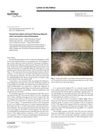
September 2017 in “Skin appendage disorders” Some women with Frontal Fibrosing Alopecia also have Lichen Planopilaris, which can lead to more symptoms and affect hair outside the scalp.
 April 2023 in “Journal of Investigative Dermatology”
 This study found that short-term NB-UVB treatment significantly reduced anxiety levels in psoriasis patients, but not depression.
 September 2021 in “CRC Press eBooks”
 This review discusses fibrosing alopecia in a pattern distribution and highlights diagnostic features, but reports no new clinical results; the authors emphasize the value of trichoscopy and histology in diagnosis.
 9 citations
,
October 2019 in “Dermatologic Therapy”
9 citations
,
October 2019 in “Dermatologic Therapy” This study observed that oral tofacitinib was reasonably well-tolerated but had limited efficacy in treating alopecia areata, with a clinical response seen in 41.4% of patients over six months.
September 2024 in “Journal of the American Academy of Dermatology” This study found that MF patients with darker skin types show slower initial improvement with NB-UVB phototherapy, highlighting disparities in treatment efficacy that warrant further investigation.