 12 citations
,
June 2020 in “Frontiers in Cell and Developmental Biology”
12 citations
,
June 2020 in “Frontiers in Cell and Developmental Biology” This study found that the PP2A-B55α regulatory subunit is crucial for ectodermal development in mice, with knockout embryos displaying severe neural and epidermal defects and failing to survive to birth.
 41 citations
,
April 2016 in “Journal of experimental botany”
41 citations
,
April 2016 in “Journal of experimental botany” This research suggests that the barley protein RACB supports cell polarity functions rather than interfering with immunity, as it aids nucleus positioning during fungal attack rather than affecting early immune responses.
 July 2023 in “New phytologist”
 This research identified a genetic mutation in Brachypodium distachyon that initially allows root hair initiation but fails to elongate them, while also affecting root growth and nitrate sensitivity; the mutation is linked to a previously uncharacterized cyclin-dependent kinase-like gene.
 1 citations
,
January 2024
1 citations
,
January 2024 CaBP1 and CaBP2 are necessary for proper hearing and neurotransmission in the ear's inner hair cells.
 3 citations
,
March 2015 in “Biomolecules & Therapeutics”
3 citations
,
March 2015 in “Biomolecules & Therapeutics” In this study, BP201, derived from porcine lung phospholipids, promoted hair growth in mice, especially when combined with minoxidil, and increased hair follicle numbers and dermal papilla cell proliferation.

CaBP1 and CaBP2 are necessary for proper hearing and neurotransmission in the ear's inner hair cells.
 160 citations
,
December 2016 in “Journal of biophotonics”
160 citations
,
December 2016 in “Journal of biophotonics” This review discusses the evolution and potential of photobiomodulation therapy, highlighting its transition from skepticism to recognition in medical research; it reports no new experimental findings.

This study found that scalp micropigmentation significantly improved psychological well-being among adults by enhancing appearance satisfaction and perceived physical attractiveness, but not through a direct relationship with psychological well-being itself.
1 citations
,
February 2023 in “Plants” This study reported that rice bran oil from the Thai rice variety BB4CMU showed potential in promoting melanin production and inhibiting steroid 5α-reductase, suggesting a natural option for hair revitalization.
 54 citations
,
May 1998 in “Urology”
54 citations
,
May 1998 in “Urology” This study demonstrates that patients with benign prostatic hyperplasia have a higher severity and frequency of male pattern baldness compared to a control group.
 1 citations
,
January 2023 in “Annals of Dermatology”
1 citations
,
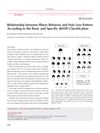
January 2023 in “Annals of Dermatology” The BASP classification helps predict patient behavior and improve treatment for hair loss.

This study identified ISPP-Rb, a novel immuno-stimulatory complex from Royoporus badius, that significantly activates murine macrophage cells and induces multiple proinflammatory cytokines.
20 citations
,
August 2020 in “Scientific Reports” In this study, low-dose BPA was associated with induced prostatic hyperplasia in rats, potentially mediated by COX-2 and L-PGDS through pathways involving cell proliferation and apoptosis.
 November 2022 in “The journal of investigative dermatology/Journal of investigative dermatology”
 This study found that cPPARγ and dnPPARγ isoforms are differentially expressed in healthy human skin, suggesting that PPARγ modulators may have compartment-specific effects depending on isoform presence.
 1 citations
,
January 2020 in “bioRxiv (Cold Spring Harbor Laboratory)”
1 citations
,
January 2020 in “bioRxiv (Cold Spring Harbor Laboratory)” This study suggests that Dicer, but not Tarbp2, plays a crucial role in regulating the growth phase of hair follicles in bulge stem cells during post-natal development in mice.
 16 citations
,
May 2000 in “Endocrinology”
16 citations
,
May 2000 in “Endocrinology” This study identified a new gene, mrp4, in mice, which suggests it may have a unique role in the growth and development of hair follicles in the ears and tails.
40 citations
,
May 2005 in “Journal of Cell Science” In this study, transgenic mice expressing a truncated form of latent transforming growth factor-β-binding protein exhibited altered hair cycles due to increased active transforming growth factor-β, impacting keratinocyte proliferation and hair cycle phases.
1 citations
,
October 2023 in “European Journal of Dermatology” This study found that combining hair transplantation with platelet-rich plasma treatment significantly improved hair regeneration, reduced hair loss, and minimized skin lesion areas in patients with androgenic alopecia compared to hair transplantation alone, suggesting enhanced treatment efficacy.
18 citations
,
July 2016 in “Genetica” This study found that in Liaoning cashmere goats, the BMP4 gene shows increased transcription from the anagen stage to telogen, and higher gene methylation correlates with reduced expression in skin tissue.
 60 citations
,
January 2004 in “The journal of investigative dermatology/Journal of investigative dermatology”
60 citations
,
January 2004 in “The journal of investigative dermatology/Journal of investigative dermatology” This study found that inhibiting PKC-β activity with bisindolylmaleimide reduces pigmentation in the skin and hair of guinea pigs and mice by preventing tyrosinase activation.
 4 citations
,
January 2001 in “Archives of Biochemistry and Biophysics”
4 citations
,
January 2001 in “Archives of Biochemistry and Biophysics” This study found that TPA induces apoptosis in pig renal epithelial cells by affecting cell cycle proteins, and activated ras can prevent this process.
1 citations
,
January 1999 in “Proceedings of the British Society of Animal Science” This research investigates apoptosis and bcl 2 expression in hair follicles cultured with and without biotin, but it reports no new results.
 April 2016 in “The journal of investigative dermatology/Journal of investigative dermatology”
 This study found that Sox2 and BMP signaling may be key regulators of pigmentation and melanocyte migration, as suggested by experiments in mice, human biopsies, and cell co-cultures.
January 2022 in “Menoufia Medical Journal /Menoufia Medical Journal” This study found that alopecia areata was associated with increased serum levels of retinol-binding protein-4 compared to controls, but no correlation with disease severity was observed.
43 citations
,
January 1999 in “Endocrinology” This study found that cortisol increases mac25/IGFBP-rP1 expression in osteoblast-enriched cells from fetal rat calvariae, indicating transcriptional regulation which may influence IGF and insulin effects in bone.
 1 citations
,
May 2023 in “Frontiers in endocrinology”
1 citations
,
May 2023 in “Frontiers in endocrinology” The researchers reported that the novel MBTPS2 variant p.Glu172Asp found in a male proband is likely pathogenic, consistent with osteogenesis imperfecta symptoms and molecular signatures, including disrupted fatty acid metabolism and collagen production.
 November 2020 in “Journal of The American Academy of Dermatology”
 This study reported that using plain bottles instead of commercial kits for extracting platelet-rich plasma may be an effective method for treating hair loss.
16 citations
,
April 2025 in “Journal of the American Academy of Dermatology” In this study, an expert panel established a consensus guideline indicating that photobiomodulation is a safe and effective treatment for various conditions, including peripheral neuropathy and androgenic alopecia.
 9 citations
,
November 2021 in “Frontiers in Cell and Developmental Biology”
9 citations
,
November 2021 in “Frontiers in Cell and Developmental Biology” This study found that PBX1 overexpression reduces hair follicle-derived mesenchymal stem cell senescence and apoptosis by alleviating ROS-mediated DNA damage, rather than enhancing DNA repair.
4 citations
,
May 2023 in “Pigment Cell & Melanoma Research” In this study, researchers found that deleting the Bmi1 gene in murine melanocytes caused premature hair greying and loss of melanocyte lineage cells, highlighting BMI1's role in protecting melanocyte stem cells from stress and oxidative damage.