 6 citations
,
December 2014 in “Clinical and Experimental Dermatology”
6 citations
,
December 2014 in “Clinical and Experimental Dermatology” In this study, hair density and thickness in nonbalding scalp areas varied with the severity and BASP subtypes of androgenetic alopecia in East Asian men, showing notable decreases in some subtypes.
 1 citations
,
September 2016 in “Hair transplant forum international”
1 citations
,
September 2016 in “Hair transplant forum international” This article proposes enhancing the Norwood-Hamilton scale for assessing hair loss patterns but reports no new clinical results.
 July 2016 in “Journal of Cutaneous Medicine and Surgery”
 This study found that a quantitative system detected subtle asymmetries in frontotemporal hairline regression among male androgenetic alopecia patients, which were not captured by the traditional Norwood classification.
 101 citations
,
January 2016 in “Journal of Cutaneous and Aesthetic Surgery”
101 citations
,
January 2016 in “Journal of Cutaneous and Aesthetic Surgery” This review discusses various classification systems for patterned hair loss in both sexes and reports no new clinical findings, highlighting the Hamilton-Norwood and Ludwig systems as the most commonly used.
 1 citations
,
January 2017 in “Springer eBooks”
1 citations
,
January 2017 in “Springer eBooks” The document explains how hair loss patterns in men and women, known as Androgenetic alopecia, are classified using the Hamilton-Norwood system for men and the Ludwig grade system for women.

This review discusses the complex causes and treatment options for female androgenetic alopecia but does not present new research findings, emphasizing the need for early diagnosis and treatment.
 January 2016 in “Springer eBooks”
 This article reviews the classification systems for androgenetic alopecia and reports no new research findings.
This article reviews classification systems for androgenetic alopecia in men and women and reports no new research findings.
 November 2025 in “Scientific Reports”
 This study demonstrates that an AI-based grading framework using a novel area ratio metric improves the accuracy and consistency of male pattern hair loss classification, especially in advanced grades, compared to traditional methods.
 2 citations
,
December 2018 in “International Journal of Dermatology”
2 citations
,
December 2018 in “International Journal of Dermatology” This study developed a new semiquantitative grading scale for frontal and vertex androgenetic alopecia, which was found to be more sensitive and objective than existing classifications.
2 citations
,
December 2022 in “Archives of Dermatological Research” In this study, researchers developed a new classification system for anterior hairline types among Asian males without androgenetic alopecia, finding MM, RM, and ML to be the most common types.
 1 citations
,
August 2023 in “arXiv (Cornell University)”
1 citations
,
August 2023 in “arXiv (Cornell University)” This study reports that deep learning models, particularly CNN and FCN, achieved high accuracy in diagnosing scalp and skin disorders, suggesting potential for improved diagnostic systems with further advancements.
 January 2025 in “International Journal of Trichology”
 In this 10-year study at a single hair referral center, pattern hair loss was the most common type of alopecia, affecting 67% of patients.
 1 citations
,
October 2021 in “Journal of The American Academy of Dermatology”
1 citations
,
October 2021 in “Journal of The American Academy of Dermatology” This review discusses treatment options for androgenetic alopecia in transgender and gender-diverse patients, highlighting first-line treatments like topical minoxidil and finasteride, but reports no new clinical results.
1 citations
,
March 2021 in “Frontiers in Medicine” In this study, female pattern hair loss in Chinese Han patients was characterized by decreased hair density and shaft diameter, with minor gender differences and the vertex most affected.
 March 2017 in “Journal of Dermatology”
 This article is a letter discussing variations in male sex hormone levels among different pattern subtypes of androgenetic alopecia and does not present new research results.
 11 citations
,
September 2011 in “British Journal of Dermatology”
11 citations
,
September 2011 in “British Journal of Dermatology” New ABCA12 gene mutations were linked to a skin condition with scaling and hair loss, and a treatment helped with hair loss in a related case.
 1 citations
,
January 2017 in “ARC journal of dermatology”
1 citations
,
January 2017 in “ARC journal of dermatology” This study introduced and evaluated Ahmad's NPRT system for documenting hair loss, finding it helpful in assessing the specific state of male pattern baldness in 500 patients.
 13 citations
,
January 2018 in “Annals of Dermatology”
13 citations
,
January 2018 in “Annals of Dermatology” Alopecia areata and androgenetic alopecia affect quality of life similarly.
 7 citations
,
January 2018 in “International Journal of Dermatology”
7 citations
,
January 2018 in “International Journal of Dermatology” In this study, male Koreans with androgenetic alopecia showed a significant association with hypertension, whereas females did not demonstrate this link.
 6 citations
,
March 2020 in “Journal of International Medical Research”
6 citations
,
March 2020 in “Journal of International Medical Research” This study reported that early-onset androgenetic alopecia primarily affects Chinese males aged 21–30, with a high likelihood of paternal inheritance.
 6 citations
,
July 2011 in “British Journal of Dermatology”
6 citations
,
July 2011 in “British Journal of Dermatology” This paper reports a case of sebaceous carcinoma developing at the site of chronic candidiasis in a patient with keratitis–ichthyosis–deafness syndrome, without presenting new generalizable findings.
 4 citations
,
September 2019 in “Journal of Cosmetic Dermatology”
4 citations
,
September 2019 in “Journal of Cosmetic Dermatology” This study found that follicular unit extraction megasession resulted in high patient satisfaction without infections for treating severe androgenetic alopecia, offering a promising one-stage option compared to multi-stage hair transplants.
 2 citations
,
January 2020 in “International Journal of Medical Sciences”
2 citations
,
January 2020 in “International Journal of Medical Sciences” This study found that several factors, including ponytail hairstyles and alcohol consumption, were associated with increased severity of female pattern hair loss in the surveyed Chinese women.
 1 citations
,
April 2020 in “Magnetic Resonance in Medical Sciences”
1 citations
,
April 2020 in “Magnetic Resonance in Medical Sciences” This study aimed to determine if MRI can assess anatomical changes in the scalp caused by androgenetic alopecia, but it reports no new clinical results.
 July 2011 in “British Journal of Dermatology”
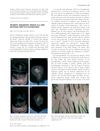
 Hormone treatment caused hair loss, finasteride helped regrowth.
 51 citations
,
January 2012 in “Annals of Dermatology”
51 citations
,
January 2012 in “Annals of Dermatology” This review discusses characteristics of androgenetic alopecia in Asian patients and includes algorithmic management guidelines, but reports no new clinical findings.
 30 citations
,
January 2014 in “Annals of Dermatology”
30 citations
,
January 2014 in “Annals of Dermatology” This study observed no significant relationship between trichoscopic findings and disease severity in male or female androgenetic alopecia, despite some specific patterns correlating with different severity levels in female patients.
 23 citations
,
January 2013 in “Indian Journal of Dermatology, Venereology and Leprology”
23 citations
,
January 2013 in “Indian Journal of Dermatology, Venereology and Leprology” This article reviews the pathophysiology, diagnosis, and treatment of female pattern hair loss, highlighting the importance of early medical intervention to arrest hair loss progression, but reports no new clinical results.
 21 citations
,
May 2017 in “International Journal of Dermatology”
21 citations
,
May 2017 in “International Journal of Dermatology” This study found that among Caucasian individuals with androgenetic alopecia, being overweight and smoking were associated with greater severity of the condition.