25 citations
,
October 2008 in “Chromatographia” This study developed and validated a sensitive and rapid method to simultaneously measure alfuzosin and dutasteride in human plasma, enabling high-throughput analysis for pharmacokinetic and bioequivalence studies.
19 citations
,
April 2023 in “Antibiotics” This study found that azelaic acid entrapped in transethosomes exhibited enhanced antidermatophyte activity and improved treatment outcomes in guinea pig models of dermatophytosis compared to free azelaic acid.
 13 citations
,
November 2021 in “Pediatric Dermatology”
13 citations
,
November 2021 in “Pediatric Dermatology” This study found that oral tofacitinib was effective and well tolerated for treating alopecia areata in most pediatric patients, with nearly 73% experiencing hair regrowth.
13 citations
,
April 2019 in “International journal of molecular sciences” This article reviews the potential of Acyzol, a zinc-containing drug, to treat and prevent zinc deficiency conditions, but it reports no new clinical findings.
 7 citations
,
April 2009 in “Bioorganic & Medicinal Chemistry Letters”
7 citations
,
April 2009 in “Bioorganic & Medicinal Chemistry Letters” Diphenyl ethers can potentially reduce excess oil production when applied on the skin, helping treat conditions like acne.
 9 citations
,
May 2019 in “Journal of dermatological treatment”
9 citations
,
May 2019 in “Journal of dermatological treatment” This article reviews characteristics and mental health impacts of alopecia areata but provides no new clinical findings; future research is encouraged.
 31 citations
,
July 2017 in “Journal of the American Academy of Dermatology”
31 citations
,
July 2017 in “Journal of the American Academy of Dermatology” This study observed that apremilast treatment improved skin lesions and reduced pruritus in patients with chronic, severe atopic dermatitis and one case of hand and foot dermatitis.
5 citations
,
January 2021 in “Frontiers in Cell and Developmental Biology” This study found that elevated expression of the protein Zyxin in hair follicles is associated with androgenetic alopecia and suggests it may be targeted for therapy.
23 citations
,
October 2008 in “Journal of medicinal chemistry” This study suggests that PF-0998425 is an effective androgen receptor antagonist for sebum control and androgenetic alopecia with rapid metabolism reducing the risk of systemic side effects.
January 2022 in “Drug Delivery” This study investigated a finasteride and oregano oil-loaded nano-cubosome gel formulation, finding it enhanced drug release and skin permeation and demonstrated synergistic antibacterial effects, suggesting potential for treating alopecia areata.
This study identified ISX9 as a novel agonist of the Wnt/β‐catenin pathway, which promoted hair regrowth in mice and may offer a therapeutic approach for alopecia.
13 citations
,
April 2020 in “European Journal of Dermatology” This study found that apremilast treatment did not result in sustained improvement for most patients with treatment-resistant alopecia areata, although one patient experienced significant benefit.
 9 citations
,
February 2022 in “Dermatology and therapy”
9 citations
,
February 2022 in “Dermatology and therapy” This study found that daily use of an emollient PLUS containing ADE-G1 significantly reduced xerosis severity and improved quality of life in cancer patients, regardless of their initial xerosis severity or cancer treatment.
October 2025 in “Figshare” This systematic review and meta-analysis reported that deuruxolitinib is effective for hair regrowth and improving patient-reported outcomes in individuals with moderate to severe alopecia areata, but observed manageable treatment-emergent adverse events such as elevated creatinine kinase levels and headaches, particularly with higher doses.
 December 2023 in “The Sri Lanka Journal of Dermatology”
 In this case report, a 12-year-old girl was diagnosed with alopecia as part of the rare ALX4-related frontonasal dysplasia sequence, highlighting the condition's uniqueness in pediatric dermatology.
1 citations
,
November 2022 in “Journal of Investigative Dermatology” This study found that ALRN-6924, a clinical-stage dual inhibitor, can selectively protect human scalp hair follicles from paclitaxel-induced toxicity and damage by inducing transient cell cycle arrest in healthy cells without affecting cancer cells, potentially reducing chemotherapy-induced alopecia.
 6 citations
,
January 2011 in “Journal of pediatric endocrinology & metabolism/Journal of pediatric endocrinology and metabolism”
6 citations
,
January 2011 in “Journal of pediatric endocrinology & metabolism/Journal of pediatric endocrinology and metabolism” This report details the case of an 11-year-old girl with APECED syndrome carrying a unique homozygous mutation in the AIRE gene, the first of its kind documented.
2 citations
,
December 2023 in “Stem Cells Translational Medicine” This study found that combining ISX-9 with mesenchymal stem cells enhanced their ability to reduce inflammation and repair lung damage in an acute lung injury model compared to using the cells alone.
 June 2026 in “International Journal of Innovative Technologies in Social Science”
 This source describes clascoterone, a new topical treatment for acne vulgaris that blocks androgen receptors to reduce sebaceous gland activity and inflammation, offering a lower risk of systemic side effects compared to oral treatments.
 5 citations
,
December 2015 in “Dermatologic Therapy”
5 citations
,
December 2015 in “Dermatologic Therapy” In this study, topical phenylephrine significantly reduced hair shedding and increased the force needed to pluck hair in women undergoing cosmetic procedures, suggesting its potential utility for traction alopecia.
2 citations
,
March 2016 in “Düşünen Adam” This case report describes alopecia associated with escitalopram use, which improved upon switching to duloxetine, and examines existing literature on antidepressant-related hair loss.
 November 2023 in “PubMed”
 This study showed that intralesional injections of pentoxifylline may be an effective and safe alternative to triamcinolone acetonide for treating localized alopecia areata.
January 2026 in “Clinical and Experimental Dermatology” In this case report, complete hair regrowth was observed in a patient with autoimmune-related alopecia areata after treatment with a Janus kinase inhibitor, suggesting its potential effectiveness for both genetic and sporadic forms of the condition.
 13 citations
,
February 2007 in “British Journal of Dermatology”
13 citations
,
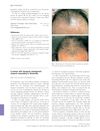
February 2007 in “British Journal of Dermatology” EF and PXE not closely related.
January 2023 in “Applied sciences” This study suggests that Equisetum debile extracts, particularly the ethyl acetate fraction, may offer natural cosmeceutical benefits for treating hyperpigmentation, delaying skin aging, and remediating hair loss due to androgenic alopecia.
 114 citations
,
December 1951 in “Archives of Dermatology”
114 citations
,
December 1951 in “Archives of Dermatology” This article reviews the effectiveness of adrenal cortex compounds E and F in treating various connective tissue disorders and reports no new clinical findings.
 1 citations
,
April 2016 in “Journal of The American Academy of Dermatology”
1 citations
,
April 2016 in “Journal of The American Academy of Dermatology” Ixekizumab helps improve life quality, physical ability, and work performance in patients with psoriatic arthritis who haven't used biologic drugs before.
June 2026 in “Value in Health” January 2026 in “Dermatologic Therapy” This study found that a hair serum containing Acanthus ebracteatus extract improved hair regrowth in men with androgenic alopecia, increasing hair count and density of anagen hairs over a 6-month period, with combination treatments showing early effectiveness.