 5 citations
,
November 2017 in “Asian journal of pharmaceutical and clinical research”
5 citations
,
November 2017 in “Asian journal of pharmaceutical and clinical research” This study found that water fractions of Angiopteris evecta stimulated hair growth in male rabbits, suggesting potential alopecia treatment benefits pending further research in humans.
February 2025 in “Skin Appendage Disorders” This scoping review found that most of the 64 alopecia areata patients treated with upadacitinib in existing reports experienced significant hair regrowth, with mild side effects, but the authors call for larger studies to confirm these outcomes.
June 2025 in “British Journal of Dermatology” This study details a case of a 20-year-old woman with APECED syndrome and alopecia areata who experienced complete scalp hair regrowth and improved quality of life after nine months of ruxolitinib treatment, highlighting the drug's effectiveness for severe AA linked to AIRE gene mutation.
5 citations
,
July 2024 in “Pediatric Dermatology” This study reports that dupilumab significantly reduced alopecia areata severity in pediatric patients with atopic dermatitis, indicating potential as an effective treatment option, though further research on long-term safety and optimal use is needed.
8 citations
,
January 2011 in “International journal of trichology” This report discusses the accurate diagnosis of atrichia with papular lesions, emphasizing its distinction from alopecia universalis to prevent unnecessary steroid treatment, and presents a case matching APL diagnostic criteria.
This study explored the experiences of systemic lupus erythematosus patients receiving Anifrolumab, revealing improvements in self-reported symptoms and daily life impacts alongside decreased disease activity and lowered corticosteroid use.
June 2025 in “Journal of Drug Delivery Science and Technology” A dissolving microneedle patch with dutasteride offers effective, long-lasting hair loss treatment with fewer side effects.
24 citations
,
March 2009 in “Archives of dermatological research” This study found that a combination therapy of oral corticosteroid and oral PUVA led to scalp hair regrowth in patients with intractable alopecia totalis and universalis within two months.
8 citations
,
January 2015 in “Genetics and Molecular Research” This study found that specific SNPs in the CXCL1 and CXCL2 genes may be associated with increased susceptibility to alopecia areata in the Korean population.
 January 2025 in “Clinical Cosmetic and Investigational Dermatology”
 This article reports the first documented cases of Marie-Unna hereditary hypotrichosis in Egypt, highlighting the variability of genetic mutations in this rare form of congenital hair loss.
 1 citations
,
September 2015 in “Aesthetic Surgery Journal”
1 citations
,
September 2015 in “Aesthetic Surgery Journal” This article discusses advances in hair transplantation techniques, particularly follicular unit extraction (FUE), emphasizing its advantage of avoiding donor site scarring and allowing for short hairstyles.
3 citations
,
October 2013 in “Photodermatology Photoimmunology & Photomedicine” This study observed that combining targeted UVA phototherapy with topical 8-methoxypsoralen showed cosmetically acceptable hair regrowth in patients with patchy alopecia areata.
 4 citations
,
March 2024 in “Quality of Life Research”
4 citations
,
March 2024 in “Quality of Life Research” In this study, health state utility values revealed a significant impact on quality of life for patients with alopecia areata, particularly those with more extensive hair loss.
January 2017 in “Seoul National University Open Repository (Seoul National University)” This study found that the N-terminal fragment of AIMP1 enhances hair growth and proliferation of hair follicle stem cells in mice, suggesting its potential as a therapeutic peptide for hair loss treatment.
 9 citations
,
September 2014 in “Cancer Epidemiology, Biomarkers & Prevention”
9 citations
,
September 2014 in “Cancer Epidemiology, Biomarkers & Prevention” This study found that men without prostate cancer carrying the A-allele of SNP rs1204038 had a 65% higher risk of PSA levels above 3 ng/mL compared to those with the G-allele, increasing referrals for further examination.
February 2006 in “Journal of the American Academy of Dermatology” This study observed that patients using dupilumab for atopic dermatitis or chronic rhinosinusitis with nasal polyps may experience new-onset or worsening paradoxical alopecia areata, potentially due to unopposed Th1/Th17 immune activity following Th2 pathway blockade.
 31 citations
,
October 2016 in “PLoS ONE”
31 citations
,
October 2016 in “PLoS ONE” This study suggests that UMPP activation is a key signaling pathway in differentiating primary and secondary hair follicles in cashmere goats.
 December 2022 in “Dermatology and Therapy”
 This review discusses the unmet needs and barriers in managing alopecia areata in Latin America, highlighting access constraints and recommending coordinated efforts to improve patient outcomes with promising new treatments.
March 2026 in “JID Innovations” In a mouse model study, researchers found that mutations in Aire reduced alopecia areata frequency, while Notch4 mutations did not lead to the disease, likely due to proximity with a resistance gene.
15 citations
,
January 1981 in “Neonatology” This study observed that changes in amino acid levels in milk correlate with developmental events in pouch young marsupials, notably around hair follicle development and homeothermy onset.
July 2026 in “Journal of the American Academy of Dermatology” 8 citations
,
May 2016 in “Indian Journal of Pharmacology” This case report describes an atypical postfinasteride syndrome in a patient treated with both dutasteride and finasteride for androgenic alopecia, highlighting its multisystem involvement and irreversible nature.
July 2024 in “International Journal of Medical Science and Clinical Research Studies” The authors concluded that alopecia areata incognita, mainly affecting young females, generally has a more favorable prognosis than other types of alopecia areata.
 January 2014 in “International Journal of Trichology”
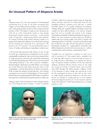
 A man had an unusual type of hair loss that didn't match known patterns and didn't improve with treatment.
25 citations
,
October 2018 in “Pediatric dermatology” In this study, three pediatric patients with alopecia areata demonstrated hair regrowth after being treated with ustekinumab.
 June 2025 in “International Medical Case Reports Journal”
 This case study reported on a 30-year-old male with autoimmune polyglandular syndrome type 2, highlighting rare co-occurrence with alopecia universalis and emphasizing the importance of recognizing non-endocrine symptoms for early diagnosis and management of autoimmune endocrinopathies.
 4 citations
,
February 2021 in “Plant journal”
4 citations
,
February 2021 in “Plant journal” This study found that the protein OsUEV1B is essential for maintaining phosphate balance in rice, with Pi deficiency leading to its inhibition and causing overaccumulation of phosphate in mutants.
 May 2026 in “Institutional Repository of the University of Granada (University of Granada)”
 This research aims to address gaps in understanding alopecia areata by evaluating the real-world effectiveness and safety of baricitinib, identifying predictors of therapeutic response, and exploring the long-term impact on life quality, including sexual health. Results are not reported in the abstract.