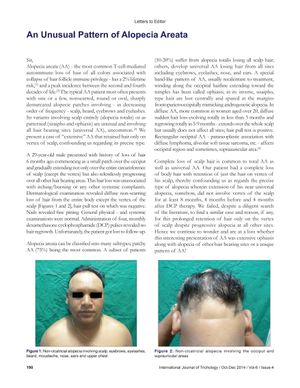
 April 2024 in “International Journal of Research Publication and Reviews”
 This source highlights that alopecia areata is a complex autoimmune disorder leading to patchy, nonscarring hair loss with variable treatment responses, reflecting unmet clinical needs. Advances in genetic research are improving understanding, yet current treatments often lead to persistent relapses.
 33 citations
,
April 2012 in “British Journal of Dermatology”
33 citations
,
April 2012 in “British Journal of Dermatology” This review discusses the role of stem cells in alopecia pathogenesis, highlighting the differences between scarring and nonscarring types, and reports no new clinical results.
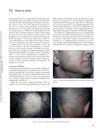 April 2012 in “Informa Healthcare eBooks”
 Alopecia areata is a common autoimmune condition causing varying hair loss, diagnosed by specific patterns of inflammation around hair follicles, with several treatment options available.
This genetic study identified a potential interval for the Marie Unna hypotrichosis gene but found no mutations in the nearby hr gene, suggesting its involvement remains unconfirmed.
 29 citations
,
August 2008 in “Current Opinion in Pediatrics”
29 citations
,
August 2008 in “Current Opinion in Pediatrics” This review discusses the most common types of alopecia in adolescents and emphasizes the importance of psychosocial support, but reports no new clinical findings.