July 2023 in “Indian Journal of Sexually Transmitted Diseases and AIDS” This case study reports that moth-eaten alopecia and a macular rash, along with positive histopathology and serology tests, indicated a diagnosis of secondary syphilis in a 24-year-old male patient.
23 citations
,
March 2017 in “JAAD case reports” This study reports a new family with hereditary fibrosing poikiloderma (POIKTMP) and identifies a pancreatic cancer occurrence in a family member, raising questions about FAM111B's role as a potential cancer predisposition gene.
 November 2021 in “Research Square (Research Square)”
 This case report describes the first recorded instance of posterior cerebral artery dissection in a patient with childhood-onset systemic lupus erythematosus, which uniquely progressed from cerebral infarction to subarachnoid hemorrhage.
 53 citations
,
September 2007 in “Veterinary dermatology”
53 citations
,
September 2007 in “Veterinary dermatology” This study suggests that Malassezia spp. overgrowth may contribute to pruritus and skin lesions in allergic cats, with antifungal treatments alone providing substantial improvements.
3 citations
,
April 2019 in “Journal of the Endocrine Society” This case report describes a rare instance of Satoyoshi syndrome in a 27-year-old Asian American woman, notable for her normal ovarian function despite typical syndrome features.
 70 citations
,
January 2000 in “Hormone Research in Paediatrics”
70 citations
,
January 2000 in “Hormone Research in Paediatrics” This article reviews the characteristics and classification of SAHA syndrome and its relationship with other conditions, without presenting new clinical findings.
January 2014 in “International Journal of Dermatology and Venereology” This case report describes a 42-year-old male with alopecia areata and a scalp neurofibroma, emphasizing the tumor's histopathological features and the patient's decision against surgical treatment.
 November 2021 in “American Journal of Tropical Medicine and Hygiene”
 In this report, an 11-year-old girl and her 14-year-old brother developed marking nut dermatitis from an amulet, highlighting the importance of recognizing cultural practices in diagnosing skin conditions.
January 2026 in “JDDG Journal der Deutschen Dermatologischen Gesellschaft” This case report describes a five-year-old boy diagnosed with nevus comedonicus syndrome, a rare skin condition, characterized by asymptomatic skin lesions and a congenital cataract of the right eye, without inflammation or typical signs of related conditions.
 21 citations
,
January 2018 in “Anticancer Research”
21 citations
,
January 2018 in “Anticancer Research” This study suggests that NBCCS and BFHS may be the same genetic condition, which could help improve identification and management of misdiagnosed cases with specific surveillance strategies.
 18 citations
,
June 2019 in “Clinical research in dermatology”
18 citations
,
June 2019 in “Clinical research in dermatology” This review discusses psychological impacts associated with facial acne, noting that high levels of anxiety and depression among these patients are not linked to oxidative stress, and reports no new clinical results.
April 2025 in “Dermatología Argentina” This study found that simultaneous presence of specific and nonspecific skin lesions, or having three or more types of skin lesions, was associated with increased systemic activity of systemic lupus erythematosus.
65 citations
,
April 2018 in “Oncotarget” This review discusses the potential carcinogenic effects of anabolic androgenic steroids, particularly regarding Leydig cell tumors, and highlights the need for preventive information campaigns due to associated health risks.
 May 2014 in “Journal of The American Academy of Dermatology”
 Patients with nonmelanoma skin cancers are most bothered by fear of progression, appearance concerns, and having cancer.
 8 citations
,
May 1998 in “Journal of Oral and Maxillofacial Surgery”
8 citations
,
May 1998 in “Journal of Oral and Maxillofacial Surgery” This article discusses the importance of oral and maxillofacial surgeons understanding the pathogenesis and treatment of acne vulgaris, but it presents no new research findings.
January 2025 in “Indian Journal of Dermatopathology and Diagnostic Dermatology” In this histopathology study of nevus sebaceus, researchers observed distinct epidermal, sebaceous, follicular, and apocrine changes, including sebaceous hyperplasia and basaloid adnexal proliferation, which help differentiate it from similar conditions like basal cell carcinoma and trichoblastoma.
 13 citations
,
September 2018 in “Journal of the American Academy of Dermatology”
13 citations
,
September 2018 in “Journal of the American Academy of Dermatology” This editorial proposes a new classification for alopecia areata that incorporates the SALT score and body hair involvement, aiming to improve the assessment and treatment outcomes.
 May 2026 in “The Journal of Headache and Pain”
 In this study, researchers developed an enhanced rodent model of trigeminal neuralgia, demonstrating that structural and functional changes in the anterior cingulate cortex are linked to chronic pain and emotional disturbances, and chemogenetic inhibition of specific neurons could alleviate symptoms.
14 citations
,
June 2022 in “British Journal of Dermatology” This study found that the Alopecia Areata Symptom Impact Scale (AASIS) is a better tool than the Alopecia Areata Quality of Life Index (AA-QLI) for assessing patient-reported outcomes in alopecia areata.
November 2025 in “The Journal of Dermatology” In this case report, a Japanese woman with both atopic dermatitis and alopecia areata showed improvement in both conditions following treatment with nemolizumab.
June 2024 in “British Journal of Dermatology” This study found that alopecia areata significantly impacts patients' quality of life irrespective of hair loss severity, and concluded that the newer assessment tools AAPPO and AASIS better capture this impact compared to the traditional SALT measure.
36 citations
,
November 2011 in “Journal of the European Academy of Dermatology and Venereology” This study identified distinct microscopic characteristics of acne scars, including inflammatory infiltrates and insufficient collagen deposition, suggesting that treatment should consider these histopathological findings and employ combination therapy.
 4 citations
,
January 1987 in “Journal of The American Academy of Dermatology”
4 citations
,
January 1987 in “Journal of The American Academy of Dermatology” A man with both skin lesions and lung cancer improved quickly with chemotherapy, suggesting the skin condition might be a reaction to immune system injury.
3 citations
,
July 2017 in “Journal of Investigative Dermatology” This study found that SSEA-4 is a marker that distinguishes eccrine from apocrine ductal cells in human sweat glands, suggesting its potential use in diagnostic applications.
July 2017 in “OPAL (Open@LaTrobe) (La Trobe University)” In this study, researchers investigated the role of the ATX-LPA axis in asthma pathogenesis using human and mouse models and highlighted the potential for developing new ATX inhibitors as effective asthma treatments.
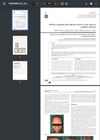
In this study, the authors emphasize the importance of accurately diagnosing congenital atrichia with papules—a condition marked by hair loss and papular skin lesions—differentiating it from other similar disorders to prevent unnecessary treatments and inform families about its benign but irreversible nature.
 18 citations
,
November 2008 in “Disease-a-Month”
18 citations
,
November 2008 in “Disease-a-Month” This study developed a multifunctional injectable hydrogel that effectively provided hemostasis and accelerated healing of infected skin wounds, demonstrating significant potential for clinical wound dressing applications.
2 citations
,
January 2020 in “Skin Appendage Disorders” This report presents a case where multiple steatocystomas appeared in a psoriatic patient during ustekinumab treatment, suggesting the drug may unmask a genetic predisposition to steatocystoma multiplex.
25 citations
,
January 2006 in “Journal of the European Academy of Dermatology and Venereology” This study reported that a new extraction technique using cautery and forceps is a simple, effective treatment and diagnostic procedure for eruptive vellus hair cysts, with no recurrence after 4 months.
17 citations
,
May 2007 in “British Journal of Dermatology” This case report describes a child with Gomez–Lopez–Hernandez syndrome, highlighting developmental challenges and medical interventions, yet noting academic success and participation in mainstream activities.