2 citations
,
March 2012 in “Current opinion in urology” This study suggests that 5-alpha-reductase inhibitors may reduce the rate of clinical progression in men with low-risk prostate cancer who choose active surveillance.
 2 citations
,
November 2017 in “Elsevier eBooks”
2 citations
,
November 2017 in “Elsevier eBooks” This article discusses the role of the androgen receptor in regulating development and homeostasis, and reviews treatment approaches for conditions related to hormone imbalances, without reporting new clinical findings.
 6 citations
,
April 2004 in “Journal of Enzyme Inhibition and Medicinal Chemistry”
6 citations
,
April 2004 in “Journal of Enzyme Inhibition and Medicinal Chemistry” This study found that four new progesterone derivatives reduced prostate weight in gonadectomized hamsters, suggesting potent in vivo antiandrogenic effects similar to finasteride.
12 citations
,
October 1978 in “PubMed” This study found that the aromatic retinoic acid derivative Ro 10-9359 provided excellent results in 64% of severe psoriasis patients, especially in those with erythrodermic and pustular types, though relapses and side effects were noted.
 June 2025 in “Biomolecules”
 In this study, researchers found that activating RORA in hair follicle stem cells reduced the expression of cytoskeleton-related genes, affecting cell migration and adhesion, which may aid in understanding hair follicle development and potentially inform alopecia treatments.
 1 citations
,
November 2023 in “Journal of ovarian research”
1 citations
,
November 2023 in “Journal of ovarian research” In this study involving rats with letrozole-induced polycystic ovary syndrome, Agaricus subrufescens significantly reduced blood glucose, total cholesterol, testosterone levels, and renal markers, suggesting its potential protective effects on both metabolic and reproductive parameters.
January 2026 in “Annals of Medicine and Surgery” This article corrects an author name in a previously published study on the application of retinoids for androgenic alopecia, without presenting new research findings.
 1 citations
,
August 2022 in “BMC Plant Biology”
1 citations
,
August 2022 in “BMC Plant Biology” Melatonin helps broccoli roots produce anti-cancer compounds by controlling nitric oxide and hydrogen peroxide levels.
9 citations
,
January 2014 in “Molecular Genetics and Metabolism Reports” This study discovered that a specific G to C mutation in the ornithine aminotransferase gene is linked to the retarded hair growth phenotype in mice and may serve as a model for human gyrate atrophy.
 13 citations
,
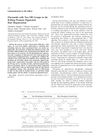
August 2019 in “Biological & Pharmaceutical Bulletin”
13 citations
,
August 2019 in “Biological & Pharmaceutical Bulletin” This study found that flavonoids with two hydroxyl groups in their B-ring, such as sterubin and luteolin, supported the regeneration of pigmented hair after skin injury, unlike those with one hydroxyl group.
10 citations
,
August 2020 in “Acta histochemica” This study found that all-trans-retinoic acid (ATRA) inhibits mink hair follicle growth by reducing dermal papilla cell proliferation and inducing apoptosis, likely through the TGF-β2/Smad2/3 pathway.
143 citations
,
May 2002 in “PubMed” This study found that the retinoid LGD1069 suppressed mammary tumorigenesis in a mouse model without observable toxicity, while TTNPB showed modest effects but was associated with significant toxicity.
 March 2022 in “Indonesian Journal of Chemistry”
 This review discusses the traditional uses, phytochemistry, and pharmacological activities of Curcuma aeruginosa Roxb., highlighting its potential as a source for therapeutic applications and drug development, but it reports no new clinical results.
 February 2026 in “MedBA Medicine”
 This study identified potential new adverse drug reaction signals for erlotinib, used in lung and pancreatic cancer treatment, by analyzing a large dataset of case reports, indicating further clinical studies are necessary to confirm these findings.
54 citations
,
June 2023 in “International Journal of Molecular Sciences” This review reports that myricetin, a naturally occurring antioxidant in plants, may assist in cancer management by enhancing the effects of existing drugs and inhibiting inflammatory markers, based on in vivo and in vitro studies.
 April 2019 in “Journal of Investigative Dermatology”
 This study identifies a mechanism where dsRNA activates TLR3 to induce RA production, promoting hair follicle regeneration in mice and suggesting a potential role in human tissue regeneration.
This literature review suggests that herbal extracts show promise as antiandrogenic agents for androgen-related conditions, potentially offering a natural alternative with fewer side effects than synthetic medications.
 November 2024 in “Journal of Family Medicine and Primary Care”
 This review highlights that 5 Alpha Reductase Inhibitors, used for treating conditions like benign prostatic hypertrophy, can cause side effects that sometimes persist after stopping the medication, urging physicians to consider these drugs as potential sources of new symptoms in patients.
 3 citations
,
July 2021 in “Drug Testing and Analysis”
3 citations
,
July 2021 in “Drug Testing and Analysis” This study found that chronic administration of finasteride affected the isotopic composition of testosterone and nandrolone metabolites, impacting the drug-testing outcomes in athletic contexts.
11 citations
,
July 1993 in “The journal of investigative dermatology/Journal of investigative dermatology”  July 2025 in “The Journal of Dermatology”
 This study identified common and unexpected adverse events associated with ritlecitinib in real-world use, providing insights into its safety profile for treating severe alopecia areata.
 January 2025 in “Natural Product Research”
 This review compiles scientific data on Nyctanthes arbor-tristis Linn., highlighting its documented anti-inflammatory, anticancer, and hepatoprotective properties, among others, and recommends future research to further explore the plant's bioactive components and their potential applications.
2 citations
,
April 2021 in “Asian pacific Journal of Tropical Biomedicine” This study found that Origanum vulgare extract significantly ameliorated finasteride-induced liver and kidney damage in mice by improving biochemical indices, reducing inflammation, and enhancing antioxidant status in a dose-dependent manner.
22 citations
,
June 2002 in “Journal of Medicinal Chemistry” This study found that several synthesized compounds were potent inhibitors of human steroid 5alpha-reductase type 2 and reduced prostate weights in treated rats, with compound 15 showing promise for potency in humans.
 1 citations
,
January 2013 in “MedChemComm”
1 citations
,
January 2013 in “MedChemComm” This study characterized the SARM PF-05314882, finding it demonstrates anabolic activity in rats with minimal effects on the prostate, seminal vesicles, and luteinizing hormone levels.
5 citations
,
January 2018 in “Thai Journal of Pharmaceutical Sciences (TJPS)” This study found that extracts from riceberry broken rice and crude riceberry rice oil contain bioactive compounds with antioxidant and tyrosinase-stimulating activities, suggesting potential use in hair product development.
 4 citations
,
September 2022 in “Dermatologic Therapy”
4 citations
,
September 2022 in “Dermatologic Therapy” This study found that twice-daily oral baricitinib at a 2-mg dose showed promising results in treating refractory alopecia areata, particularly among Chinese patients, with 64% achieving significant hair regrowth, although none attained complete hair regrowth. Adverse events were mild and included nausea and folliculitis.
2 citations
,
September 2025 in “Frontiers in Endocrinology” This review critically evaluates the evidence for SARMs' tissue selectivity and suggests their clinical benefits over traditional androgens are not yet well-supported by robust evidence, underscoring the need for further head-to-head trials.
 4 citations
,
August 2021 in “Annals of Translational Medicine”
4 citations
,
August 2021 in “Annals of Translational Medicine” In this study, dihydroartemisinin reduced prostate enlargement and related markers in a rat model of benign prostatic hyperplasia, suggesting its potential as a therapeutic agent.
January 2026 in “Updates in clinical dermatology”