 3 citations
,
June 1983 in “Archives of Dermatology”
3 citations
,
June 1983 in “Archives of Dermatology” This article discusses the effectiveness of adrenal cortex compounds E and F in treating connective tissue disorders like rheumatoid arthritis and lupus erythematosus, but it reports no new clinical results.
November 2025 in “animal” In this study, researchers analyzed 24 European Merino sheep populations to investigate genetic adaptations to climate, identifying 168 significant SNPs and related genes associated with temperature variation and environmental adaptation, focusing on traits like isothermality and pathways related to immune response and system development.
 January 2024 in “Wiadomości Lekarskie”
 This study reports that Abelson Interactor 1 (ABI1) regulates androgen receptor transcription in prostate cancer, identifying it as a potential target for new therapies addressing treatment resistance.
 August 2024 in “Journal of Animal Science and Technology”
 This study identified specific keratin-associated protein genes that are highly expressed in different varieties and sexes of Angora goats, providing insights for improving mohair development through targeted breeding strategies.
 9 citations
,
October 2014 in “Experimental and Clinical Endocrinology & Diabetes”
9 citations
,
October 2014 in “Experimental and Clinical Endocrinology & Diabetes” This study observed that acanthosis nigricans is highly prevalent in Latin American youths, especially at the knuckles, and may indicate early insulin resistance even in those with a normal BMI.
129 citations
,
October 2017 in “BMC Genomics” This study identified potential ceRNA regulatory networks in cashmere goat hair follicle cycling, expanding understanding of lncRNA and miRNA biology and annotation of the goat genome.
 January 2025 in “FASKES Jurnal Farmasi Kesehatan dan Sains”
 In this study, the researchers used molecular docking to identify Erythrabyssin II from Erythrina subumbrans as a potential candidate for anti-alopecia treatment, comparable to minoxidil, suggesting clinical trials are needed to evaluate its pharmacological effects.
 January 2017 in “Brazilian Journal of Pharmaceutical Sciences”
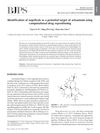
 This study identified neprilysin as a potential target of the pharmacological agent arteannuin, which may guide future research into its clinical applications, although experimental verification is needed.
January 2014 in “Medical Innovation of China” This study investigated androgen receptor expression in the scalp tissue of androgenic alopecia patients, focusing on hair follicles and sebaceous glands, using immunohistochemistry.
January 2013 in “Scholarworks (University of Massachusetts Amherst)” This dissertation reveals that FERONIA, a cell wall-binding receptor kinase, plays a crucial role in regulating plant functions such as sugar signaling, pollen tube reception, and RAC/ROP-mediated auxin signaling.
11 citations
,
May 2012 in “Genesis” This study in mutant mice found that Bmpr2 and Acvr2a are individually redundant, but together essential for normal hair follicle development, with their reduction causing rapid hair cycling and graying.
 1 citations
,
February 2025 in “Scientific Reports”
1 citations
,
February 2025 in “Scientific Reports” In this study, researchers developed a three-dimensional ultrastructural analysis tool using serial block-face scanning electron microscopy to reveal detailed nerve networks and muscle structures in human skin tissues, demonstrating the technique's potential to study structural changes in aging or disease.
 May 2008 in “Hair transplant forum international”
 This abstract provides no results, as it only notes Sharon Keene's professional role and describes a non-blood test for AGA genetics.
 25 citations
,
September 2018 in “Scientific Reports”
25 citations
,
September 2018 in “Scientific Reports” This study found that morroniside enhanced hair follicle growth and transition through the Wnt/β-catenin signaling pathway in a mouse model, suggesting its potential as a treatment for hair loss.
4 citations
,
July 2025 in “International Journal of Molecular Sciences” This review discusses Amphiregulin (AREG) as a potential target for treating fibrotic disorders and cancer, highlighting its role in disease progression and promising results in preclinical studies and early trials.
 November 2022 in “Animal Bioscience”
 This study found that adding methionine to a low-protein diet improved wool production and feed efficiency in Angora rabbits by promoting hair follicle development through mechanisms involving IGF1, KAP, and versican signaling.
13 citations
,
October 2020 in “BMC Genomics” This study revealed specific patterns and potential functions of long non-coding RNAs during the hair follicle cycle of yaks, offering insights into their sequence conservation between yaks and cashmere goats.
August 2026 in “South Asian Journal of Health Sciences” In this case report, a 35-year-old man developed avascular necrosis after receiving intradermal corticosteroid injections for alopecia areata, marking the first documented instance of this side effect from such treatment.
 3 citations
,
July 2019 in “Journal of Cosmetic Dermatology”
3 citations
,
July 2019 in “Journal of Cosmetic Dermatology” This study found that a shampoo with a selective TAAR agonist reduced hair shedding during brushing by 31% in women and contracted the arrector pili muscle.
1 citations
,
January 2020 in “IRIS UNIMORE (University of Modena and Reggio Emilia)” This study found that Aminexil clinical 5 significantly reduced hair loss in men and women with mild alopecia and was well tolerated with high subject satisfaction.
December 2010 in “TSpace” In this study, selective overexpression of androgen receptors in muscle cells increased lean muscle mass and reduced fat mass in transgenic rodents, suggesting a potential target for drug development.
December 2025 in “Pharmaceutics” In this study, araliadiol, a plant-derived compound, exhibited senomorphic effects in three dermal fibroblast senescence models, suggesting its potential as a topical treatment to mitigate skin aging by reducing certain senescence-related markers and increasing procollagen type I content.
 35 citations
,
March 2014 in “British Journal of Dermatology”
35 citations
,
March 2014 in “British Journal of Dermatology” This study found that in androgenic alopecia, the arrector pili muscle degenerates and is replaced by fat, unlike in normal skin or telogen effluvium.
 November 2025 in “SKIN The Journal of Cutaneous Medicine”
 This study aims to assess the real-world effectiveness of baricitinib, a JAK inhibitor, for promoting regrowth of nasal, genital, and beard hair in patients with severe alopecia areata, expanding on findings from the BRAVE-AA clinical trial. Results are not reported.
15 citations
,
October 1999 in “PubMed” This review discusses molecular genetic approaches to understanding and treating hair loss disorders like papular atrichia, highlighting potential future gene-based therapies, but reports no new clinical findings.
 2 citations
,
March 2022 in “Research Square (Research Square)”
2 citations
,
March 2022 in “Research Square (Research Square)” In this study, the expression of certain hair follicle-related genes differed between growth phases in Angora goats, with HOXC13 showing overexpression during the anagen phase, potentially influencing the mohair's shine and texture.
1 citations
,
September 2024 in “Actas Dermo-Sifiliográficas” In this retrospective study from five Colombian cities, researchers detailed the clinical characteristics of 562 alopecia areata patients, noting that multiple plaques and the patchy subtype were common, with steroid injections frequently used as treatment.
 4 citations
,
September 2018 in “Rendiconti lincei. Scienze fisiche e naturali”
4 citations
,
September 2018 in “Rendiconti lincei. Scienze fisiche e naturali” This study concluded that spikenard specimens in Renaissance Italian herbaria are attributed to Nardostachys jatamansi, a plant used in traditional medicine and cosmetics.
 3 citations
,
January 2022 in “Scientific Reports”
3 citations
,
January 2022 in “Scientific Reports” This study found that SAMiRNA-AR68, a nanomedicine targeting androgen receptor mRNA, increased hair counts in androgenetic alopecia patients with no observed side effects.
1 citations
,
August 2019 In this study, a hair tonic formulation with 25% ethanol extract of mangkokan leaves showed effectiveness in promoting hair growth, as measured by significant differences in hair length and weight compared to the control.