 130 citations
,
September 2018 in “Cell Reports”
130 citations
,
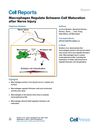
September 2018 in “Cell Reports” This study found that macrophages play a crucial role in nerve regeneration by regulating Schwann cell dynamics and remyelination, with Gas6 identified as a key factor in this process.
 117 citations
,
March 2017 in “Nature Communications”
117 citations
,
March 2017 in “Nature Communications” This study shows that macrophage-induced TNF signaling can activate hair follicle stem cells and promote new hair follicle formation after wounding by regulating AKT/β-catenin pathways.
5 citations
,
September 2023 in “Journal of Cosmetic Dermatology” This study found that c-Maf positive M2 macrophages may promote hypertrophic scar formation by enhancing the proliferation, migration, and extracellular matrix deposition of hypertrophic scar fibroblasts through increased TGF-β1 expression.
 2 citations
,
March 2021 in “Molecular Immunology”
2 citations
,
March 2021 in “Molecular Immunology” This review discusses the role of dermal macrophages in stress-induced hair regeneration and reports no new clinical findings, highlighting the need for further research into macrophage dynamics for potential hair loss therapies.

This study found that supraphysiological and physiological androgen levels inhibited U937 macrophages' phagocytosis of MRSA compared to untreated controls, but AR antagonism reversed this effect, suggesting targeting AR or using 5alpha-reductase inhibitors might aid bacterial clearance in elderly males' chronic wounds.
November 2025 in “Wound Repair and Regeneration” This review highlights single-cell sequencing's role in understanding macrophages' diverse functions and subtypes in skin wound healing, emphasizing macrophages' importance in tissue restoration and identifying key genes involved in the process.
This study showed that in mice, anti-inflammatory macrophages are crucial for hair follicle regeneration in response to skin injury by activating stem cells and promoting hair growth.
July 2024 in “Journal of Investigative Dermatology” In this study of mouse models, researchers found that glutaminolysis is crucial for macrophages to switch from a pro-inflammatory to a pro-resolving state, aiding tissue repair by preventing prolonged inflammation and influencing gene expression.
September 2025 in “e-space (Manchester Metropolitan University)” This study found that testosterone and its metabolite DHT reduced macrophage-mediated phagocytosis of bacteria like MRSA and P. aeruginosa in vitro, and blocking testosterone's conversion to DHT improved bacterial clearance, suggesting potential therapeutic strategies for combating wound infections in the elderly.
29 citations
,
September 2018 in “Journal of the American Heart Association” This study found that EP 2 signaling is crucial for macrophage recruitment and inflammatory regulation in the injured heart, impacting cardiac repair processes.
119 citations
,
November 1969 in “Journal of Ultrastructure Research” Macrophages help break down collagen around hair follicles during hair growth.
July 2025 in “Journal of Investigative Dermatology” Schwann cell and M2 macrophage interactions contribute to keloid growth by increasing matrix deposition.
January 2026 in “Burns & Trauma” This study reported that NLRP3 plays complex roles in wound healing by initially promoting inflammation and delaying repair, but later enhancing structural restoration through distinct signaling pathways, highlighting its potential as a therapeutic target for controlling inflammation and regeneration phases.
This thesis found that inhibiting IL-17 and IL-23 improved chronic wound healing in obese, diabetic mice by promoting a pro-healing macrophage phenotype, while ST2 signaling was also necessary for effective wound healing.
45 citations
,
January 2021 in “Drug Delivery” In this study, researchers developed a biomimetic anti-inflammatory nanosystem (MM-CEP/NLCs) that significantly reduced the severity of acute lung injury in vivo by targeting and accumulating in lung inflammation sites, showcasing its potential for treating inflammation.
This study identified ISPP-Rb, a novel immuno-stimulatory complex from Royoporus badius, that significantly activates murine macrophage cells and induces multiple proinflammatory cytokines.
 April 2023 in “Journal of Investigative Dermatology”
 This study identified a new role for IL-4Ra-induced oxidative metabolism in wound macrophages, essential for balancing inflammatory response and promoting pro-fibrotic repair, suggesting a target for fibrosis prevention.
 6 citations
,
April 2025 in “Plastic and Aesthetic Research”
6 citations
,
April 2025 in “Plastic and Aesthetic Research” This review highlights that biomaterial properties can be designed to modulate macrophage activity, potentially reducing foreign body responses and enhancing tissue healing in regenerative medicine.
 6 citations
,
January 2021 in “Frontiers in Immunology”
6 citations
,
January 2021 in “Frontiers in Immunology” This study found that deficiency in TLR3/TRIF signaling reduced inflammation and protected mice against postoperative ileus, suggesting potential for TLR3 antagonism as a preventive approach in humans.
 September 2025 in “Deleted Journal”
 This study found that in vitro environments simulating testosterone levels in elderly males, testosterone and its metabolite DHT significantly reduced macrophages' ability to phagocytize MRSA and Pseudomonas aeruginosa, suggesting AR manipulation and inhibiting testosterone-DHT conversion might help fight wound infections in the elderly.
 April 2019 in “Journal of Investigative Dermatology”
 This study identifies a mechanism where dsRNA activates TLR3 to induce RA production, promoting hair follicle regeneration in mice and suggesting a potential role in human tissue regeneration.
 4 citations
,
April 2019 in “Cell Stem Cell”
4 citations
,
April 2019 in “Cell Stem Cell” This study found that a specific macrophage subpopulation in the dermis helps maintain hair follicle stem cell quiescence through cytokine-mediated signaling.
2 citations
,
May 2025 in “Frontiers in Immunology” This study explores the regulatory effects of ursolic acid on macrophage function and suggests potential for developing new anti-inflammatory and immunomodulatory drugs, though further research is needed for clinical applications.
April 2026 in “Cytotherapy” This study identifies macrophage-mediated immune signaling as a crucial factor in activating hair follicle stem cells and promoting hair regeneration, offering a new model for testing regenerative therapies for alopecia.
 3 citations
,
August 2024
3 citations
,
August 2024 In this study, researchers using single nuclei RNA-sequencing found that fibroblasts in deeper layers of mouse skin expressed higher levels of pro-inflammatory genes post-wounding compared to other cells, highlighting their significant role in early inflammation and tissue repair processes.
 10 citations
,
November 2015 in “Experimental Dermatology”
10 citations
,
November 2015 in “Experimental Dermatology” The study observed that mRAGE expression is prevalent in keratinocytes of the healthy human epidermis and may regulate inflammation and apoptosis to maintain skin homeostasis rather than responding to aging processes.
 May 2022 in “Journal of Immunology”
 In this study, a TGF-β mimic molecule from Heligmosomoides polygyrus was observed to enhance wound healing in mice, with improved tissue regeneration and specific immune cell recruitment without increased scarring.
9 citations
,
December 2021 in “Journal of Cellular and Molecular Medicine” In this study, researchers found that human adipose tissue-derived mesenchymal stromal cells exhibit significant phagocytic ability against various particles and pathogens, which might enhance strategies for addressing specific local and systemic infections due to their regenerative properties.
45 citations
,
August 2018 in “Haematologica” This study found that iron retention in macrophages impairs hair follicle growth and delays wound healing in mice, highlighting the importance of macrophage iron release for skin health.
39 citations
,
April 2023 in “Science Advances” This study identified that bone marrow-derived CD34+ cells act as fibroblast progenitors to enhance tissue regeneration in ischemic limbs by promoting angiogenesis through interactions with macrophages.