24 citations
,
July 1983 in “Journal of steroid biochemistry/Journal of Steroid Biochemistry” This article reviews the discovery and various physiological effects of cyproterone acetate, reporting its established indications for several androgen-driven conditions but providing no new clinical data.
This study introduced the C-CAT, a new assessment tool for central centrifugal cicatricial alopecia, and found that established treatments improved symptoms in most patients over six months.
September 2019 in “The journal of investigative dermatology/Journal of investigative dermatology” In this study, Mononuclear Cells provided site-specific protection against chemotherapy-induced alopecia in rats treated with Ara-C, but not with CTX or VP-16, while PRP showed no protective effect.
 47 citations
,
March 2018 in “Journal of Pharmaceutical and Biomedical Analysis”
47 citations
,
March 2018 in “Journal of Pharmaceutical and Biomedical Analysis” This study identified 43 compounds in Platycladi Cacumen, including flavonoids, and found significant chemical variation in flavonoid content across different regions and processed products.
30 citations
,
July 2009 in “Experimental and clinical endocrinology & diabetes” This article reviews the use of cyproterone acetate for conditions like prostate cancer and sexual disorders, highlighting its effects on libido but reporting no new specific trial results.
1 citations
,
December 2016 in “Rossijskij žurnal kožnyh i veneričeskih boleznej” This study reported that 80% of patients with non-scarring alopecia showed a clinical cure after treatment with unactivated platelet leukocyte autoplasma.
June 2024 in “Journal of the European Academy of Dermatology and Venereology” This abstract provides information on potential conflicts of interest and acknowledges sources of support for the findings, but does not report specific study results.
20 citations
,
January 2002 in “Laboratory Animals” This study identified a compound heterozygous mutation in a hairless rhesus macaque, which was associated with skin abnormalities similar to those in hairless mice and humans with APL.
March 2026 in “Journal of Investigative Dermatology” Genetic factors, especially PADI3 gene variants, contribute to CCCA in women of African descent.
 January 2017 in “Nasza Dermatologia Online”
 This study found that both new and old formulas of DCP for treating alopecia areata resulted in similar hair regrowth, but tolerance was significantly better with DCP in isopropanol.
2 citations
,
May 2020 in “Journal of the American Academy of Dermatology” Hair shaft changes may be linked to CCCA, but their role is unclear.
 27 citations
,
December 2015 in “Clinical and Experimental Dermatology”
27 citations
,
December 2015 in “Clinical and Experimental Dermatology” This study found that hair regrowth occurred in 72.2% of alopecia areata patients treated with diphencyprone, with disease extent at baseline and duration affecting outcomes.
3 citations
,
July 2023 in “International Journal of Trichology” This study found that treatment with diphenylcyclopropenone led to more than 75% hair regrowth in 33.3% of patients with alopecia totalis or alopecia universalis, despite notable side effects.
26 citations
,
September 2009 in “Clinical genetics” This study identified four novel and one recurrent mutation in the AIRE gene among Arab families with APS1, suggesting these contribute to the disorder.
 1 citations
,
July 2018 in “Journal of The American Academy of Dermatology”
1 citations
,
July 2018 in “Journal of The American Academy of Dermatology” This study observed that sebaceous glands were preserved in some patients with central centrifugal cicatricial alopecia, suggesting early gland loss may not be a key feature of the condition.
 43 citations
,
May 1986 in “Clinics in Endocrinology and Metabolism”
43 citations
,
May 1986 in “Clinics in Endocrinology and Metabolism” This review examines androgen status in male and female obesity and its influence on the metabolic syndrome, but reports no new clinical results.
 January 2025 in “Nature Communications”
 This study discovered that calcium dependent protein kinase 1 (CPK1) directly activates cyclic nucleotide-gated channels 5, 6, and 9, promoting root hair growth in Arabidopsis by regulating Ca²⁺ signaling.
This review discusses central centrifugal cicatricial alopecia and emphasizes the need for more research to understand and manage the disease, while also suggesting initiatives like educating hairstylists for early detection.
36 citations
,
May 2005 in “BMC dermatology” This study found that topical diphenylcyclopropenone was effective in treating severe alopecia areata but had a high relapse rate and was often accompanied by side effects like eczema and lymphadenopathy.
 April 2019 in “The journal of investigative dermatology/Journal of investigative dermatology”
 In this study, researchers found that CCCA in women of African descent is associated with molecular changes, including dysregulation of fatty acid metabolism and fibrosis pathways, suggesting potential targets for new treatments.
August 2023 in “Journal of the American Academy of Dermatology” CCCA affects Black men too, with a genetic link found in the PADI3 gene.
 18 citations
,
October 2012 in “Dermatologic Clinics”
18 citations
,
October 2012 in “Dermatologic Clinics” This article discusses primary cicatricial alopecias, a group of rare inflammatory scalp disorders resulting in permanent hair loss, and reports no new findings.
3 citations
,
April 2025 in “International Journal of Pharmaceutics” Nanocrystals improve alopecia areata treatment by better targeting hair follicles.
 95 citations
,
November 2016 in “Journal of The American Academy of Dermatology”
95 citations
,
November 2016 in “Journal of The American Academy of Dermatology” This article reviews primary cicatricial alopecias, focusing on lymphocytic forms such as chronic cutaneous lupus erythematosus, according to a classification by the North American Hair Research Society, and reports no new clinical results.
2 citations
,
September 2024 in “Journal of the American Academy of Dermatology” CCCA in African Americans may be linked to hair grooming, low vitamin D, and autoimmune factors.
 2 citations
,
December 2020 in “Endocrinology, diabetes & metabolism case reports”
2 citations
,
December 2020 in “Endocrinology, diabetes & metabolism case reports” This case study highlights the complexity of managing autoimmune polyglandular syndrome type 1, emphasizing the need for thorough clinical history, high suspicion for early diagnosis, and continuous long-term follow-up.
 1 citations
,
April 2022 in “The Journal of Family Practice”
1 citations
,
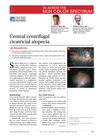
April 2022 in “The Journal of Family Practice” This report describes early and late stages of central centrifugal cicatricial alopecia in two Black women, highlighting progression from a small to a large central patch of hair loss.
 31 citations
,
May 2021 in “Journal of endocrinological investigation”
31 citations
,
May 2021 in “Journal of endocrinological investigation” This study in Italy found that APS-1, a rare disorder, is associated with various AIRE gene mutations and most individuals have autoantibodies such as IFNωAbs, which are markers of the condition.
 23 citations
,
April 2018 in “Journal der Deutschen Dermatologischen Gesellschaft”
23 citations
,
April 2018 in “Journal der Deutschen Dermatologischen Gesellschaft” This review discusses the classification and diagnosis of primary cicatricial alopecias and reports no new clinical results; it highlights the need for effective treatments owing to limited evidence of current therapies' efficacy.
8 citations
,
August 2022 in “Pharmaceutics” This study found that erythrocyte-anchored CPA-encapsulated nanoparticles improved the delivery and accumulation of Cepharanthine in the lungs, enhancing its effectiveness in treating acute lung injury by reducing inflammatory responses.