9 citations
,
July 2024 in “Internal Medicine Journal” This narrative review discusses the initiation and monitoring of gender-affirming hormone therapy in Australia, noting standard testosterone use for trans men and estradiol with anti-androgens for trans women, emphasizing the importance of monitoring cardiovascular and bone health.
60 citations
,
April 1998 in “Baillière s Clinical Endocrinology and Metabolism” This article reviews the genetic mutations causing male pseudohermaphroditism from 17 beta-HSD-3 and 5 alpha-RD-2 deficiencies and reports no new clinical findings.
1 citations
,
March 2005 in “Zentralblatt für Gynäkologie” This case report describes a postmenopausal woman with hirsutism and androgenetic alopecia, where imaging ruled out malignancy and selective venous sampling indicated increased testosterone from the right adrenal vein, leading to a recommendation for right adrenalectomy and oophorectomy.
 9 citations
,
August 1952 in “The Journal of Clinical Endocrinology & Metabolism”
9 citations
,
August 1952 in “The Journal of Clinical Endocrinology & Metabolism” This study describes a method to estimate endogenous hormone production by neutralizing an endogenous hormone with an oppositely acting hormone.
13 citations
,
August 2020 in “Der Hautarzt” This article discusses hyperandrogenism, including its symptoms, causes, and diagnostic approaches, and reports no new clinical results; it emphasizes the role of interdisciplinary care in treatment.
78 citations
,
March 1989 in “The Journal of Clinical Endocrinology & Metabolism” High-dose androgen therapy can help manage certain types of androgen resistance.
April 2019 in “Journal of the Endocrine Society” This case report documents successful virilization, including penile length increase, in a boy with partial androgen insensitivity syndrome using high-dose testosterone combined with anastrozole.
 June 2023 in “Clinical and Experimental Dermatology”
 This systematic review reported that gender-affirming hormone therapy may lead to changes in hair growth patterns, with differing effects for transgender men and women, potentially impacting quality of life.
January 1983 in “Elsevier eBooks” Masculinization in affected individuals occurs gradually after puberty due to hormone changes.
 January 2012 in “Journal für Kardiologie (Krause & Pachernegg GmbH)”
 This article discusses the role of androgens in skin conditions like acne and alopecia, emphasizing combined systemic and topical therapy approaches, but it reports no new clinical outcomes.
15 citations
,
May 2021 in “Climacteric” This review discusses the characteristics, diagnostic challenges, and management options for postmenopausal hyperandrogenism but reports no new clinical results; it highlights the importance of distinguishing potential androgen-producing tumors or hyperandrogenic disorders.
5 citations
,
October 1990 in “Archives of Dermatology” 57 citations
,
August 2018 in “British Journal of Dermatology” This review discusses the pathogenesis and treatment of acne in transgender men on testosterone therapy and reports no new clinical results, emphasizing the need for tailored guidelines.
 October 2022 in “Springer eBooks”
 This review discusses hormonal treatment strategies for both binary and non-binary transgender people, highlighting the need for personalized approaches and the importance of future research on long-term outcomes.
3 citations
,
February 2021 in “JAMA Dermatology” Masculinizing hormone therapy increases the risk of hair loss in transgender and gender-diverse patients.
April 2012 in “Informa Healthcare eBooks” 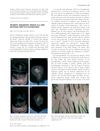 July 2011 in “British Journal of Dermatology”
 Hormone treatment caused hair loss, finasteride helped regrowth.
46 citations
,
December 1992 in “The Journal of Steroid Biochemistry and Molecular Biology” In this study, researchers observed that testicular 17β-hydroxysteroid dehydrogenase deficiency in an inbred Arab population in Israel leads to genital ambiguity at birth and progressive virilization after puberty.
 228 citations
,
February 2003 in “Urology”
228 citations
,
February 2003 in “Urology” This article discusses the side effects of androgen deprivation therapy for nonmetastatic prostate cancer, highlighting the need for clinical trials to systematically study these effects.
84 citations
,
September 2014 in “European journal of endocrinology” This review examines the causes and characteristics of androgen excess in postmenopausal women, but reports no new clinical results; the authors emphasize challenges in diagnosis and potential long-term health impacts.
 September 2024 in “Journal of the American Academy of Dermatology”
 This study aims to evaluate the prevalence of androgenetic alopecia in transgender men undergoing testosterone therapy, noting that such hormone treatment can lead to dermatological issues that significantly affect their quality of life. Results are not reported in the abstract.
 April 2021 in “Journal of Investigative Dermatology”
 This study found that transgender patients on masculinizing hormone therapy had a higher likelihood of developing acne compared to cisgender women, and were more likely to experience AGA compared to cisgender women.
 January 2013 in “Revista Clínica Española”
 This review discusses female hyperandrogenism, detailing diagnostic criteria and treatment options without reporting new study results; it emphasizes improving health and quality of life for affected women.
 17 citations
,
January 1995 in “The American Journal of Medicine”
17 citations
,
January 1995 in “The American Journal of Medicine” This review discusses the management of androgenic disorders in women, highlighting that treatment is generally more effective than recognized, though improvement may take weeks or months to appear.
 23 citations
,
August 2005 in “Expert opinion on pharmacotherapy”
23 citations
,
August 2005 in “Expert opinion on pharmacotherapy” This review examines the benefits and potential risks of androgen replacement therapy for male hypogonadism but reports no new clinical results; the authors highlight the need for careful risk assessment, especially in older men.
January 2026 in “Updates in clinical dermatology”  January 2021 in “Case Reports”
 This case study reports a rare instance of mucinous cystadenoma causing severe virilization in a postmenopausal woman, highlighting a possible link with rapidly progressive hyperandrogenism.
 May 2012 in “Reactions Weekly”
 A man developed hair loss from testosterone treatment but improved with additional medication.
October 2025 in “Contribuciones a las Ciencias Sociales” In this narrative review, the authors discuss the potential impact of hormone therapy on androgenetic alopecia among transgender individuals, especially transgender men using testosterone, and its adverse effects on emotional well-being and body image within a socially stigmatized population.
 November 2017 in “Reactions Weekly”
 Testosterone undecanoate caused hair loss; finasteride improved it but caused stomach issues for one patient.