 1 citations
,
October 2025 in “Nano Research”
1 citations
,
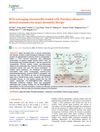
October 2025 in “Nano Research” In this study, researchers developed a dissolvable microneedle patch combining HA-TEMPO and Portulaca oleracea L.-derived nanoparticles, which effectively reduced oxidative stress and inflammation in an atopic dermatitis model while restoring immune balance, suggesting a promising treatment strategy.
 1 citations
,
November 2024 in “Frontiers in Immunology”
1 citations
,
November 2024 in “Frontiers in Immunology” This study provides an analysis of global publications on TLS, offering insights into the role of TLS in immunotherapy and suggesting future research directions.
 1 citations
,
November 2024 in “Romanian Journal of Morphology and Embryology”
1 citations
,
November 2024 in “Romanian Journal of Morphology and Embryology” This overview examines the biology, origin, structure, and function of various cells and structures, such as the blood-retinal barrier and Merkel cells, and discusses their roles in disease pathogenesis, along with recent findings related to the lymph nodes' paracortex.
 1 citations
,
December 2022 in “Middle East Journal of Science”
1 citations
,
December 2022 in “Middle East Journal of Science” This review covers hair dye formulations, their mechanisms, and potential applications, but reports no new findings; the authors highlight the process of oxidative dyeing and repairing damaged hair.
 1 citations
,
March 2020 in “Functional foods in health and disease/Journal of functional foods in health & disease”
1 citations
,
March 2020 in “Functional foods in health and disease/Journal of functional foods in health & disease” This study found that OM-X® supplementation effectively prevented adverse biological changes caused by vitamin C deficiency in SMP30/GNL KO mice, improving energy maintenance, antioxidant capacity, and protein synthesis.
 1 citations
,
January 2016 in “Elsevier eBooks”
1 citations
,
January 2016 in “Elsevier eBooks” This chapter discusses the composition, biocompatibility, and production methods of biomaterials like collagen, chitin, and silk for dermal substitutes, focusing on preclinical and clinical research, but reports no new clinical results.
 1 citations
,
November 2015 in “Indian Journal of Clinical Biochemistry”
1 citations
,
November 2015 in “Indian Journal of Clinical Biochemistry” The conference presented findings on how vitamin D levels, genetic factors, and lifestyle choices like smoking and yoga affect various health conditions and diseases.

This chapter reviews current and future strategies for identifying ligands and functions of orphan G protein-coupled receptors, but it reports no new experimental results.
 1 citations
,
March 1954 in “Archives of dermatology”
1 citations
,
March 1954 in “Archives of dermatology” This article reviews small animal experiments reported from 1932 to 1952 in two dermatology journals and notes the contributions of Farris's book on laboratory animal care.
 April 2026 in “Journal of Pharmaceutical Investigation”
 This review discusses recent advancements in nanotechnology for treating hypertrophic scarring and atopic dermatitis, highlighting the potential of nanotherapeutic platforms in enhancing therapeutic effects by modulating the skin's microenvironment.
 July 2025 in “Journal of medical & health sciences review.”
 This review highlights the potential of ultrasound-assisted gene therapy for tissue regeneration by improving gene delivery efficiency through techniques like microbubble-mediated sonoporation. The authors discuss its applications in musculoskeletal, cardiovascular, and neural regeneration, while addressing future challenges in optimizing this non-invasive approach for clinical applications.
In this study, researchers developed a mathematical model of outer hair cell hair bundles that replicates experimental responses to mechanical stimuli, providing insights into the stimulus-dependent adaptation mechanisms and the functional significance of their three-row stereocilia configuration in mammalian hearing.
 January 2025 in “American Journal of Stem Cells”
 This review discusses the role of melanocyte stem cells in skin pigmentation and potential regenerative therapies, but reports no new clinical results.
 January 2025 in “Bright Sky Publications eBooks”
 This abstract serves as a promotional notice for a book titled "Essentials of Food Science and Nutrition" by several authors, offering it for sale at a low price, but does not report any research results.
 January 2024 in “Regenerative Biomaterials”
 This review introduces the potential of metal-organic framework-based functional composite materials in tissue engineering but reports no new results, emphasizing the need for further innovation in the field.
 October 2023 in “Biomedical science and engineering”
 Innovative methods are reducing animal testing and improving biomedical research.
 September 2023 in “bioRxiv (Cold Spring Harbor Laboratory)”
 This study describes the use of a genetically engineered mouse model, mTurquoise2-Col4a1, to fluorescently label collagen IV and observe basement membrane dynamics during skin development, revealing its stability and pliability during rapid growth phases.
 May 2022 in “Gastroenterology”
 This study investigated the possible role of neutrophil extracellular traps in contributing to fibrosis in stenotic Crohn's disease.
 January 2022 in “Asian journal of Current Research in Clinical Cancer”
 This study reviews the potential of dibenzo derivatives as safer cancer treatments but finds conflicting evidence about their effectiveness, possibly due to structural differences among the compounds, and reports no new results.

This study found that Nubian ibex have developed genetic adaptations in response to their desert environment, including enhanced skin barrier, DNA repair, viral response, and metabolism of toxic compounds.
 May 2017 in “bioRxiv (Cold Spring Harbor Laboratory)”
 This study found that the peach gene CTG134, involved in auxin-ethylene interactions, plays a role in hormonal regulation during root hair formation in Arabidopsis and tobacco.
 January 2008 in “Durham e-Theses (Durham University)”
 This study observed that stem cells from the hair follicle dermis share similarities with bone marrow-derived mesenchymal stem cells and have potential to form neural-like cells under specific conditions.
 January 2006 in “mediaTUM – the media and publications repository of the Technical University Munich (Technical University Munich)”
 This study found that carbon and nitrogen isotope analysis of cattle hair reflects dietary and farm system differences, offering insights into cattle nutritional ecology and agroecosystem characteristics.
 October 2001 in “WORLD SCIENTIFIC eBooks”
 This compilation on contact and occupational dermatology in the Asia-Pacific region discusses various allergens and irritants without reporting new clinical findings.

This dissertation reported that the loss of Ovol2 impairs hair follicle regeneration and wound repair in mice, highlighting its role in regulating directional migration of epithelial cells.
288 citations
,
January 2001 in “Journal of Biological Chemistry” In this study, the disruption of Gh/tissue transglutaminase in mice did not affect viability but reduced thymocyte viability and fibroblast adhesion, suggesting its role in cell stabilization and extracellular matrix interactions.
54 citations
,
March 2024 in “Journal of Medicinal Chemistry” This article summarizes the properties, synthesis, and biomedical applications of molecules with N-oxide functionalities, emphasizing their growing role in healthcare due to their unique properties, such as water solubility and redox reactivity, crucial for drug targeting and cytotoxicity.
4 citations
,
June 2021 in “Frontiers in Pharmacology” This study found that injecting bone marrow-derived mesenchymal stem cells and conditioned medium into mice promoted hair follicle stem cell proliferation and transition to active growth phases, suggesting potential clinical targets for hair loss treatment.
3 citations
,
September 2025 in “ChemMedChem” This review highlights the inadequacy of the "specificity paradigm" in drug design for complex diseases like Alzheimer's and cancer, suggesting a shift toward developing multitarget drugs to improve treatment efficacy by interacting with multiple targets through various mechanisms.

This research reports that transglucosylation significantly improved the water solubility of baicalin through the synthesis of baicalin glucosides, with BG1 and BG2 showing enhanced solubility and potential biological activity similar to baicalin in antioxidant and anti-glycation assays.