7 citations
,
January 2024 in “Regenerative Biomaterials” This study developed a multifunctional core-shell fiber dressing that preserves platelet-rich plasma for 180 days, facilitating sustained growth factor release and improved wound healing.
9 citations
,
October 2015 in “Cutaneous and ocular toxicology” This case report observed vemurafenib-induced pityriasis amiantacea, a scalp scaling reaction, in a patient with metastatic melanoma, which was managed symptomatically without altering vemurafenib treatment.
 4 citations
,
September 2016 in “PubMed”
4 citations
,
September 2016 in “PubMed” In this study, platelet-rich fibrin matrix combined with follicular unit transplantation increased hair follicle numbers in men with androgenetic alopecia on the treated side of the scalp after six months.
 June 2022 in “C&EN global enterprise”
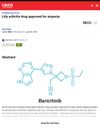
 This source notes that Olumiant (baricitinib), a rheumatoid arthritis drug by Eli Lilly and Company, has been approved as the first systemic treatment for severe alopecia areata.
 January 2025 in “Journal of Materials Chemistry B”
 A new treatment using special microneedles and a nitric oxide-releasing drug could improve hair growth and be more convenient for people with hair loss.
 18 citations
,
February 2025 in “Drug Delivery and Translational Research”
18 citations
,
February 2025 in “Drug Delivery and Translational Research” This study demonstrated that a new topical treatment using ketotifen-loaded microneedles, designed for prolonged release, significantly reduced inflammatory markers in an animal model of allergic conjunctivitis, suggesting enhanced therapeutic delivery and sustained ocular benefits.
February 2025 in “Clinical Medical Reviews and Reports” In this study, autologous platelet-rich plasma was associated with improved burn wound healing in a 45-year-old male, showing potential as an adjunctive therapy, but broader trials are needed to confirm its effectiveness.
 January 2026 in “Journal of Materials Chemistry B”
 In this study, researchers addressed the limitations of adenosine's practical application in treating inflammation, oxidative stress, and tissue repair due to its poor water solubility and low transdermal permeability. Results are not reported in the abstract.
This study demonstrated that the IVL-DrugFluidic® platform is effective for mass-producing finasteride-loaded polymeric microspheres for long-acting injectables, maintaining stable drug release without an initial burst for a month.
March 2021 in “Annals of palliative medicine” This meta-analysis found that plum-blossom needling, as an add-on therapy, provided moderate beneficial effects on hair regrowth in alopecia areata patients compared to conventional treatment alone.
1 citations
,
July 2025 in “Chemosensors” This study developed a closed-loop system for emergency wound care that monitors infection in real-time using biomarkers and delivers amikacin-loaded liposomes for treatment, integrating a conductive hydrogel for environmental protection and antibacterial benefits.
 March 2026 in “Zenodo (CERN European Organization for Nuclear Research)”
 This study reports a novel geometric medicine solution, N‑K GM SERIES, claiming to eliminate aflatoxin, offer a universal cancer cure, and provide numerous health benefits, including increased life expectancy, with deployment focused on the "Aflatoxin Belt" regions like Sudan.
 2 citations
,
December 2020 in “American Journal of Dermatological Research and Reviews”
2 citations
,
December 2020 in “American Journal of Dermatological Research and Reviews” This study found that combining 308-excimer phototherapy with intramuscular triamcinolone acetonide was effective and well tolerated for treating resistant alopecia totalis, showing a 90% overall response rate in the ten patients studied, with the best results observed in younger patients.
 September 2019 in “Journal of Investigative Dermatology”
 This study found that a combination of botanical extracts from jasmine, Longoza, peony, and lily significantly increased a6 and b4 integrin protein expression in human skin cells, suggesting complementary effects that could enhance skin quality.
1 citations
,
March 2023 in “Journal of the American College of Cardiology” 24 citations
,
January 2022 in “Journal of Nanobiotechnology” This study found that quaternary ammonium iminofullerenes (IFQA) can alleviate oxidative stress in maize caused by hydrogen peroxide, promoting root growth by enhancing antioxidant cycles and reducing ROS accumulation.
 19 citations
,
November 2018 in “Nutrients”
19 citations
,
November 2018 in “Nutrients” This study reports that polyphenols from Annurca apples may safely promote hair growth and protect against chemotherapy-induced alopecia without interfering with chemotherapy regimens.

In this study, researchers developed a multifunctional hydrogel for wound healing, incorporating antibacterial and antioxidant properties that demonstrated significant inflammation reduction and tissue regeneration in animal models, with high antibacterial efficacy against E. coli and S. aureus.

This case study documented a 36-year-old woman with postpartum-onset frontal fibrosing alopecia who showed significant improvement in hair regrowth after early combination therapy with dutasteride, tofacitinib, and intralesional triamcinolone acetonide, suggesting potential benefits of multimodal treatment in this typically irreversible condition.
 8 citations
,
December 2008 in “Journal of The American Academy of Dermatology”
8 citations
,
December 2008 in “Journal of The American Academy of Dermatology” This case report describes the first known instance of fixed drug eruption linked to finasteride, confirmed through an oral challenge test that reproduced symptoms at the same skin site.
May 2025 in “Acta Biomaterialia” This study developed microneedles combining insulin-like growth factor-1 and type XVII collagen, showing more effective hair regeneration and reduced inflammation compared to minoxidil in a mouse model of androgenetic alopecia.
July 2024 in “Journal of Controlled Release” In this study, researchers developed topical tofacitinib-loaded cationic lipid nanoparticles, which improved absorption and targeted hair follicles in an ex vivo pig ear model, showing promise in treating alopecia areata by reducing symptoms through the JAK/STAT pathway.
15 citations
,
December 2019 in “European Journal of Dermatology” This study identified new and recurrent missense mutations in the PHGDH and PSAT1 genes, implicating them in the pathogenesis of Neu-Laxova syndrome in Chinese patients.
1 citations
,
January 2023 in “Frontiers in Physiology” This study describes a new method using near infrared femtosecond laser pulses to precisely ablate individual cells in the Drosophila epidermis and peripheral nervous system without damaging surrounding tissues, allowing for detailed observation of cellular responses post-ablation.
 March 2024 in “Clinical, cosmetic and investigational dermatology”
 This study reported that five patients with alopecia areata achieved satisfactory results using 15 mg of Upadacitinib daily after conventional treatments had failed, without experiencing adverse events.
Lightly perming scalp hair can lead to new hair growth, potentially treating baldness.
 November 2022 in “CARDIOMETRY”
 This article discusses the potential benefits of GcMAF and oral MAF, developed by "Saisei Mirai", for cancer and other conditions, but reports no new clinical results.
 January 2025 in “ACS Materials Letters”
 This study developed a GelMA-based hydrogel system that supports all stages of severe burn wound healing by reducing inflammation and enhancing tissue regeneration, including neovascularization and hair follicle growth, potentially improving clinical outcomes for complex wounds with multidrug-resistant bacterial infections.
 November 2025 in “DOAJ (DOAJ: Directory of Open Access Journals)”
 This study observed that the choice between using Belimumab and Anifrolumab for treating active Systemic Lupus Erythematosus was mainly based on clinical phenotype, with Anifrolumab linked to chronic-active disease and Belimumab associated with relapsing-remitting disease.
 1 citations
,
September 2025 in “Clinical Cosmetic and Investigational Dermatology”
1 citations
,
September 2025 in “Clinical Cosmetic and Investigational Dermatology” Upadacitinib is effective and safe for treating severe Alopecia Areata in adolescents.