 1 citations
,
December 1972 in “Journal of Colloid and Interface Science”
1 citations
,
December 1972 in “Journal of Colloid and Interface Science” Ethanol spreads well on hair at low humidity but less so at higher humidity due to water condensation.
 September 2023 in “Biomedicines”
 In this study, researchers found that subjects with clinical alopecia had significantly higher levels of squalene in their hair bulbs compared to controls, suggesting squalene as a potential metabolic and pathogenic marker for certain alopecia conditions.
July 2024 in “Journal of Investigative Dermatology” Reactive lipids from aging cells change the extracellular matrix, affecting cell function and inflammation.
21 citations
,
January 2017 in “MethodsX” This study found that methanol is more effective than isopropanol at removing external cortisol from grizzly bear hair and suggests that the choice of solvent can influence hair cortisol concentration results.
 April 1992 in “Current opinion in therapeutic patents”
 This study reports the development of novel 4-amido-Δ4,6-steroids as potential inhibitors of 5α-reductase, showing promising in vitro results for conditions like acne and benign prostatic cancer.
 23 citations
,
January 2016 in “Contact Dermatitis”
23 citations
,
January 2016 in “Contact Dermatitis” This study found that a small number of patients with essential oil allergies could be missed if only standard fragrance tests are used, suggesting the need for specific testing and careful product inspection.
1 citations
,
April 2022 in “Crystal Growth & Design”  12 citations
,
June 2019 in “Psychoneuroendocrinology”
12 citations
,
June 2019 in “Psychoneuroendocrinology” This study found that in rodent models, the ability of D1 dopamine receptor activation to impair sensory gating is facilitated by 5α-reductase type 1, which produces allopregnanolone.
35 citations
,
May 2008 in “Drug and Alcohol Dependence” Female mice are less affected by certain substances that alter alcohol consumption compared to male mice.
 October 2023 in “Oriental Journal of Chemistry/Oriental journal of chemistry”
 This study focused on the rheology of almond oil at various temperatures and shear rates, using a Brookfield RVDV II I Ultra Rheometer, to evaluate its potential as a biodegradable lubricant.
186 citations
,
December 2011 in “Molecules” This study reported that while no synthesized compounds surpassed finasteride in 5α-reductase inhibitory activity, certain 4-azasteroid-2-oximes exhibited notable inhibition.
![Synthesis of Spiro[cyclohexane-1,2'-[2H]indene] Derivatives as Inhibitors of Steroid 5α-Reductase](/images/assets/d91300a7-4d66-4d2c-90ac-293b0dbc5ff5/small/21048.jpg) 8 citations
,
June 1995 in “Helvetica Chimica Acta”
8 citations
,
June 1995 in “Helvetica Chimica Acta” This article outlines the synthesis of spiro[cyclohexane‐1,2′‐[2 H ]indene] derivatives similar to known steroid 5α‐reductase inhibitors, but it does not report experimental findings.
January 2002 in “Medical archives (Sarajevo, Bosnia and Herzegovina)” This study suggests that the phytochemical characteristics of their extract may help reduce IL-1α levels, potentially offering therapeutic support for addressing certain types of nonscarring hair loss.
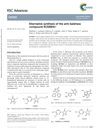 4 citations
,
January 2014 in “RSC Advances”
4 citations
,
January 2014 in “RSC Advances” A new, less toxic and more efficient method to create the anti-baldness compound RU58841 was developed in 2014.
27 citations
,
April 2007 in “European Journal of Pharmacology” Progesterone increases alcohol tolerance and withdrawal anxiety, while DHEAS prevents them.
This study found that elevated serum alarin levels in men with androgenetic alopecia may be linked to the presence of metabolic syndrome, correlating with the condition's severity and duration.
6 citations
,
January 2016 in “Indian Journal of Dermatology Venereology and Leprology” This study found that the majority of "hypoallergenic" hair dyes still triggered allergic reactions in patients sensitive to para-phenylenediamine.
 21 citations
,
January 2010 in “JOURNAL OF HEALTH SCIENCE”
21 citations
,
January 2010 in “JOURNAL OF HEALTH SCIENCE” This study found that abietic acid from pine resin more effectively inhibits testosterone 5α-reductase than several plant extracts, suggesting potential for treating androgen-dependent diseases.
 22 citations
,
January 2001 in “Chemical & Pharmaceutical Bulletin”
22 citations
,
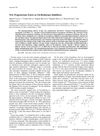
January 2001 in “Chemical & Pharmaceutical Bulletin” This study found that two new progesterone derivatives showed higher antiandrogenic effects and 5α-reductase inhibition than finasteride in hamsters, particularly reducing seminal vesicle weight and flank organ size.
 9 citations
,
January 1992 in “Contact Dermatitis”
9 citations
,
January 1992 in “Contact Dermatitis” Some people using minoxidil for hair loss developed an allergic skin reaction, often related to an ingredient that helps minoxidil work better.
2 citations
,
January 1981 High temperatures and certain chemicals can significantly change the amino acid content in human hair.
 March 2025 in “International Journal For Multidisciplinary Research”
 This article reviews innovative methodologies in drug discovery using computational QSAR studies and layered double hydroxides for alpha-reductase inhibitors, but reports no new experimental results.
27 citations
,
July 2008 in “The Journal of Steroid Biochemistry and Molecular Biology” The new compounds may be more effective and cheaper than current treatments for conditions like baldness.
![Activity of 17β-(N-Alkyl/Arylformamido) and 17β-[(N-Alkyl/Aryl) Alkyl/Arylamido]-4-Methyl-4-Aza-5α-Androstan-3-Ones as 5α-Reductase Inhibitors in the Hamster Flank Organ and Ear](/images/assets/861159f1-7bd4-420c-a16b-4829458efe68/small/15592.jpg) 10 citations
,
August 1998 in “Journal of Investigative Dermatology”
10 citations
,
August 1998 in “Journal of Investigative Dermatology” This study observed that the compound EM-402 reduced 5α-reductase activity and sebaceous gland size in the flank organs and ears of hamsters, indicating potent localized anti-androgenic effects without systemic action.
1 citations
,
August 2013 in “Asian Journal of Pharmaceutical and Clinical Research” This study found that petroleum ether extract of Glycyrrhiza glabra prevented alopecia in testosterone-treated male rats, demonstrating effects comparable to the standard treatment finasteride.
15 citations
,
November 2024 in “Materials” This review discusses the medical and dental applications of polyhydroxyalkanoates (PHAs), highlighting their potential for improving drug delivery and providing biocompatible solutions for medical devices, but reports no new clinical results.
 November 2024 in “Research Journal of Pharmacognosy and Phytochemistry”
 This abstract discusses ayurvedic herbal shampoos containing ingredients like amla and aloe vera, noting that they aim to clean hair and scalp without adverse effects, contrasting with chemical shampoos that can also cause damage.
Linalool in personal care products may worsen frontal fibrosing alopecia by damaging hair follicle stem cells and triggering harmful immune responses.
This paper discusses various toxicological properties of diphenyl cresyl phosphate, highlighting its low acute toxicity, potential neurotoxicity linked to o-cresyl phosphate content, and the lack of data for inhalation exposure, but presents no new experimental findings.
36 citations
,
May 2025 in “Antioxidants” This study found that lipid peroxidation products play a clear role in the pathogenesis of skin diseases like psoriasis, vitiligo, and alopecia, but their role in diseases like melanoma and atopic dermatitis remains unclear.