 12 citations
,
January 2015 in “Indian Journal of Dermatology, Venereology and Leprology”
12 citations
,
January 2015 in “Indian Journal of Dermatology, Venereology and Leprology” This case report describes a 67-year-old woman with frontal fibrosing alopecia and her daughter with lichen planopilaris, noting identical HLA D types which suggest a phenotypical link between these conditions.
194 citations
,
November 2006 in “Science” This study identified a gene mutation in the LIPH gene associated with inherited hair loss and hair growth defects in certain populations, suggesting lipase H plays a role in hair development.
 1 citations
,
February 2009 in “Clinical and Experimental Dermatology”
1 citations
,
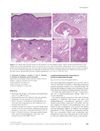
February 2009 in “Clinical and Experimental Dermatology” This study reports an improvement in lymphomatoid papulosis type A in a 52-year-old patient who concurrently used hormone-replacement therapy.
9 citations
,
September 2018 in “JAAD Case Reports” This article describes a unique case of lichen planopilaris with a previously unreported trigger in one of the youngest documented adult patients, without providing new clinical results or data.
35 citations
,
November 2019 in “Journal of the American Academy of Dermatology” This study reviewed 40 patients with scalp symptoms and identified a new variant of diffuse lichen planopilaris in 20 individuals, suggesting these conditions should be considered in similar cases.
48 citations
,
November 2018 in “Journal of dermatological treatment” In a study reviewing 291 patients with lichen planopilaris, findings revealed that women were more commonly affected than men, cyclosporine and methotrexate were most effective in achieving remission, and 5-alpha reductase inhibitors and systemic retinoids were particularly beneficial for frontal fibrosing alopecia.
 1 citations
,
April 2016 in “The American Journal of the Medical Sciences”
1 citations
,
April 2016 in “The American Journal of the Medical Sciences” This article discusses the characteristics of lichen planus pigmentosus and frontal fibrosing alopecia but reports no new clinical findings; the authors review existing knowledge.
January 2025 in “JAAD Case Reports” In this study, researchers noted that while Poly-L-lactic acid dermal fillers boost collagen synthesis to add volume and reduce wrinkles, there is no established link between these fillers and hair loss according to existing literature.
This chapter reviews procedural hair restoration techniques, including platelet-rich plasma and hair transplantation, and reports no new clinical findings.
December 2023 in “Journal of Asia Pacific Aesthetic Sciences” This study found that a novel method of isolating human follicle stem cells from hair follicles via mechanical centrifugation, without culture conditions, promises to improve hair density in patients with Androgenetic Alopecia and some cases of Alopecia Areata.
2 citations
,
June 2016 in “Oral Surgery Oral Medicine Oral Pathology and Oral Radiology” This study reports the first known case of oral lichen planus preceding lichen planopilaris in a patient, highlighting a possible sequential relationship between the conditions.
January 2023 in “Aesthetic Plastic Surgery” This study found that platelet-rich plasma treatments improved quality of life for patients with pattern hair loss, as measured by decreased HAIRDEX scores in several domains over 3-5 months.
11 citations
,
February 2011 in “The Journal of Dermatology” This study observed four consanguineous families with congenital atrichia with papular lesions and identified three novel mutations in the hairless gene, which may contribute to the disorder.
September 2025 in “Indian Journal of Dermatology” In this case report, researchers detailed a 22-year-old Turkish woman diagnosed with autosomal recessive woolly hair/hypotrichosis (ARWH/H), linked to a mutation in the LIPH gene, resulting in sparse, poorly growing, curly hair, highlighting the need for genetic consideration in similar hair conditions.
April 2024 in “International Journal of Women’s Dermatology” This study suggests that lichen planopilaris should be considered as a potential diagnosis in African American women with scarring alopecia, often displaying an "arrowhead" distribution pattern, which may guide treatment strategies.
 September 2017 in “The journal of investigative dermatology/Journal of investigative dermatology”
 This study reports that the loss of Langerhans cells in lichen planopilaris scars may be linked to the downregulation of ITG αvβ6, which is not seen in other scar formation diseases.
 October 2014 in “Journal of the Portuguese Society of Dermatology and Venereology”
 This paper presents a therapeutic approach with excellent results in a case of lichen planopilaris overlapping with dermatomyositis and scleroderma, although broader applicability is not discussed.
 33 citations
,
March 2017 in “Dermatologic Surgery”
33 citations
,
March 2017 in “Dermatologic Surgery” In this clinical study, low-level laser therapy using the HANDI-DOME LASER device increased hair counts by 51% compared to controls, indicating its potential as a safe and effective treatment for androgenetic alopecia in women aged 18 to 60.
9 citations
,
November 2021 in “PubMed” This study found that FDA-approved low-level light/laser therapy devices significantly increased hair density in individuals with pattern hair loss compared to sham devices.
 76 citations
,
June 2008 in “Journal of the American Academy of Dermatology”
76 citations
,
June 2008 in “Journal of the American Academy of Dermatology” In this study, key histologic features such as mucinous perifollicular fibroplasia were identified to aid in the diagnosis of lichen planopilaris.
19 citations
,
March 2011 in “The Journal of Dermatology” This case report in a child suggests that lichen planus pemphigoides may represent a heterogeneous group of disorders, potentially triggered by conditions like varicella.
8 citations
,
April 1997 in “Experimental Dermatology” This study found that hHbl gene expression is localized in the cortical cells of the human hair shaft and is notably high in pilomatricoma cells transitioning to hair shaft keratinocytes.
 1 citations
,
October 2023 in “Skin research and technology”
1 citations
,
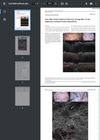
October 2023 in “Skin research and technology” This study found that line-field confocal optical coherence tomography effectively visualized key diagnostic features of classic lichen planopilaris in real time, suggesting its potential as a valuable diagnostic tool.
 3 citations
,
August 2019 in “International Journal of Dermatology”
3 citations
,
August 2019 in “International Journal of Dermatology” In this observational study, dermoscopy was found to be a useful tool in diagnosing lichen planopilaris among patients with primary cicatricial alopecia.
37 citations
,
March 1998 in “Lupus” This case report describes a patient with SLE and APLS who developed basaloid follicular hamartomas, which persisted despite aggressive treatment for SLE, although hair regrowth occurred.
 47 citations
,
June 2014 in “Journal of Dermatological Treatment”
47 citations
,
June 2014 in “Journal of Dermatological Treatment” This retrospective review found that while intralesional corticosteroids provided symptomatic improvement for lichen planopilaris, hydroxychloroquine with topical corticosteroids led to higher remission rates but did not result in visible hair regrowth.
 October 2023 in “Ho Chi Minh City Open University Journal of Science - Engineering and Technology”
 This study established a protocol to isolate and culture dermal papilla cells from human hair follicles, suggesting alkaline phosphatase activity as a key marker to differentiate them from human fibroblasts.
 September 2021 in “Hair transplant forum international”
 In this study, the P&P Hairline Laser, a hands-free laser-assisted device, was found to produce smoother and more symmetrical hairlines compared to traditional handheld laser devices.
1 citations
,
October 2024 in “Indian Dermatology Online Journal” This case report describes a 36-year-old man who developed generalized eruptive histiocytosis on the scalp after undergoing nine platelet-rich plasma treatments for hair loss, likely triggered by injection-related trauma and inflammation.
 5 citations
,
April 2014 in “The American Journal of Dermatopathology”
5 citations
,
April 2014 in “The American Journal of Dermatopathology” This article reports on a typical case of lichen planopilaris with foreign-body granulomas around hair shaft material, suggesting these may be an additional criterion for diagnosing late-stage LPP/FFA.