1 citations
,
October 2024 in “Indian Dermatology Online Journal” This case report describes a 36-year-old man who developed generalized eruptive histiocytosis on the scalp after undergoing nine platelet-rich plasma treatments for hair loss, likely triggered by injection-related trauma and inflammation.
 5 citations
,
April 2014 in “The American Journal of Dermatopathology”
5 citations
,
April 2014 in “The American Journal of Dermatopathology” This article reports on a typical case of lichen planopilaris with foreign-body granulomas around hair shaft material, suggesting these may be an additional criterion for diagnosing late-stage LPP/FFA.
11 citations
,
April 2012 in “Journal of Investigative Dermatology” A specific mutation in PA-PLA1α causes abnormal hair growth.
 5 citations
,
July 2020 in “JAMA Dermatology”
5 citations
,
July 2020 in “JAMA Dermatology” Minoxidil solution applied twice daily improved hair growth in patients with Woolly Hair/Hypotrichosis due to LIPH gene issues, with mild side effects.
 January 2009 in “Elsevier eBooks”
 Low level laser therapy may help with hair loss.
 1 citations
,
September 2013 in “The Journal of Dermatology”
1 citations
,
September 2013 in “The Journal of Dermatology” An 8-year-old girl developed a rare skin condition in a linear pattern on one side of her body after a lung infection, which improved with treatment.
23 citations
,
July 2003 in “Journal of Investigative Dermatology” Genetic testing for hairless gene mutations is crucial to correctly diagnose and treat atrichia with papular lesions.
 6 citations
,
November 2018 in “Photodiagnosis and Photodynamic Therapy”
6 citations
,
November 2018 in “Photodiagnosis and Photodynamic Therapy” This study found that using a wearable low-level light therapy device for photodynamic therapy significantly reduced actinic keratosis lesions and improved quality of life in patients with AK of the scalp.
 4 citations
,
January 2022 in “The journal of investigative dermatology/Journal of investigative dermatology”
4 citations
,
January 2022 in “The journal of investigative dermatology/Journal of investigative dermatology” In this study, researchers found that the KLHL24-ΔN28 protein variant disrupts hair follicle stem cells in a mouse model, leading to premature hair loss by degrading keratin 15.
7 citations
,
February 2011 in “Journal of dermatology” This study identified a specific LIPH gene mutation (736T>A) as common in Japanese patients with autosomal recessive woolly hair/hypotrichosis, potentially indicating its role in the condition's manifestation within this population.
 December 2005 in “Journal of the American Academy of Physician Assistants”
 The woman was diagnosed with lichen planopilaris and can be treated with corticosteroids.
January 2021 in “Hair therapy & transplantation” 253 citations
,
April 2009 in “Journal of Biological Chemistry” This study found that p2y5 functions as a novel LPA receptor involved in the G13-Rho signaling pathway, with implications for human hair growth, and proposes renaming it to LPA6.
September 2016 in “Journal of dermatological science” This study found that hair-follicle-associated-pluripotent (HAP) stem cells can be cryopreserved for future use in nerve and spinal cord repair, with human trials being planned.
November 2016 in “Pediatric dermatology” This article describes the development of a patient handout database by the SPD to provide reliable medical information for use by various healthcare providers; it reports no new clinical results.
January 2016 in “Indian journal of drugs in dermatology” This case report describes a 48-year-old male with severe, itchy hypertrophic lichen planus who showed a 90% improvement in lesions following 4 months of treatment with oral acitretin, with no recurrence 6 months posttreatment.
 16 citations
,
February 2020 in “The Laryngoscope”
16 citations
,
February 2020 in “The Laryngoscope” This study found that hair transplantation is feasible in patients with lichen planopilaris and frontal fibrosing alopecia, but outcomes are generally less favorable compared to other causes and these diseases may also develop after the procedure.
1 citations
,
November 2022 in “Journal of Investigative Dermatology” This study found that ALRN-6924, a clinical-stage dual inhibitor, can selectively protect human scalp hair follicles from paclitaxel-induced toxicity and damage by inducing transient cell cycle arrest in healthy cells without affecting cancer cells, potentially reducing chemotherapy-induced alopecia.

This study found that patients with lichen planopilaris exhibit a higher pro-atherogenic lipid profile and elevated atherogenic indexes, suggesting a need for increased cardiovascular and lipid monitoring in these individuals.
April 2022 in “International Journal of Health Sciences (IJHS)” This study found that combining low-level light therapy with platelet-rich plasma significantly improved hair parameters in men with androgenic alopecia, although most improvements decreased after treatment stopped.
 68 citations
,
July 2011 in “Journal of Biochemistry/The journal of biochemistry”
68 citations
,
July 2011 in “Journal of Biochemistry/The journal of biochemistry” This review discusses newly identified non-Edg family lysophosphatidic acid receptors, detailing their roles in vascular development, platelet activation, and hair growth, and reports no clinical results.
 September 2020 in “International journal of computer science and mobile computing”
 This article discusses the use of low-level laser therapy for hair regrowth in men and women but reports no new clinical results; it reviews types of lasers and evidence from animal and human studies.
 52 citations
,
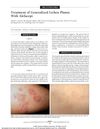
February 2006 in “Archives of Dermatology”
52 citations
,
February 2006 in “Archives of Dermatology” This case report describes a 25-year-old woman with widespread lichen planus who did not respond to multiple systemic treatments, including antihistamines, hydroxychloroquine sulfate, and corticosteroids.
April 2025 in “Health Science Reports” PRP treatment improved skin pigmentation and appearance in facial lichen planus pigmentosus.
January 2005 in “Life sciences” This review discusses the pathophysiologic role of lysophosphatidic acid in the skin and reports no clinical results, suggesting pharmacological inhibition as a potential treatment for various skin disorders.
November 2018 in “Journal of Investigative Dermatology” Lichen Planopilaris causes irreversible hair loss due to immune attacks on hair stem cells, but modulating PPAR-γ might help treat it.
 9 citations
,
February 2018 in “The Journal of Dermatology”
9 citations
,
February 2018 in “The Journal of Dermatology” This study identified a novel splice site mutation in the LIPH gene associated with autosomal recessive woolly hair, contributing to understanding the genetic basis of this condition.
 July 2007 in “Faculty Opinions – Post-Publication Peer Review of the Biomedical Literature”
 This study introduced the BASP classification, a new system for categorizing pattern hair loss in both men and women, and applied it to analyze 2213 Korean subjects.
 September 2024 in “Skin Research and Technology”
 This study used atomic force microscopy to identify significant morphological differences in hair from patients with lichen planopilaris compared to healthy controls, noting more scratches, uneven edges, and pitted scales in affected hair, which may aid future research on the condition.
November 2020 in “Journal of the American Academy of Dermatology” Intense pulsed light with radiofrequency showed mixed results in improving quality of life for hidradenitis suppurativa patients, with no clinical improvements.