 2 citations
,
January 2017 in “Przegla̧d dermatologiczny”
2 citations
,
January 2017 in “Przegla̧d dermatologiczny” This study identified two distinct trichoscopic patterns in the mid-frontal scalp of patients with frontal fibrosing alopecia who also display clinical features of androgenetic alopecia.
 December 2013 in “International Journal of Dermatology”
 The clinical signs of Adams-Oliver syndrome can vary greatly, even among family members.
March 2026 in “Anais Brasileiros de Dermatologia” Lichen planopilaris and frontal fibrosing alopecia are likely distinct diseases with different tissue involvement.
 13 citations
,
January 2018 in “International Journal of Dermatology”
13 citations
,
January 2018 in “International Journal of Dermatology” This clinical study on fibrosing alopecia in a pattern distribution among a Latin American population reports no new results but addresses this specific condition in its demographic context.
7 citations
,
October 2023 in “Journal of Intelligent & Fuzzy Systems” This study proposed and tested an Ensemble Pre-Learned Deep Learning and Optimized Long Short-Term Memory (EPL-OLSTM) model for classifying Alopecia Areata, achieving a 93.1% accuracy in differentiating healthy from varying severity levels of AA scalp hair using specific datasets.
 September 2012 in “The Egyptian Journal of Histology”
 In this study, flutamide at therapeutic doses caused significant histological changes in the testes and epididymis of adult albino rats, reducing androgen receptor immunoreactivity and increasing estrogen receptor immunoreactivity.
2 citations
,
March 2025 in “Journal of Translational Autoimmunity” This study reports that AhR pathway expression is significantly reduced in lymphocytes of alopecia areata patients, suggesting its potential as a diagnostic marker and therapeutic target.
 31 citations
,
September 2012 in “Human Brain Mapping”
31 citations
,
September 2012 in “Human Brain Mapping” In this study, patients with seasonal affective disorder were found to have increased functional connectivity in certain brain networks and higher low-frequency fluctuations compared to healthy controls, which aligns with their attentional and psychomotor symptoms.
 March 2026 in “Zenodo (CERN European Organization for Nuclear Research)”
 In this study, a novel geometric medicine approach, utilizing the N-K Universal Computer, was reported to eliminate aflatoxin contamination and significantly reduce cancer rates across the "Aflatoxin Belt" through precision targeting of harmful fungi while preserving ecological balance, without observed toxicity or resistance.
 February 2026 in “Frontiers in Medicine”
 This study found that fibrosing alopecia in a pattern distribution in Hispanic male patients often resembles androgenetic alopecia, with a tendency for earlier onset compared to European and North American populations.
 2 citations
,
July 2022 in “Frontiers in Medicine”
2 citations
,
July 2022 in “Frontiers in Medicine” This review discusses the current understanding of frontal fibrosing alopecia's pathogenesis, highlighting genetic susceptibility, immune response involvement, and possible links to steroid hormones, but reports no new clinical results.
 January 2026 in “Frontiers in Medicine”
 This article questions whether frontal fibrosing alopecia and fibrosing androgeneic patterned hair loss are overlapping conditions or stages of the same process, calling for further research to clarify their underlying factors.
 March 2026 in “Zenodo (CERN European Organization for Nuclear Research)”
 This study reports a novel geometric medicine solution, N‑K GM SERIES, claiming to eliminate aflatoxin, offer a universal cancer cure, and provide numerous health benefits, including increased life expectancy, with deployment focused on the "Aflatoxin Belt" regions like Sudan.
 November 2025 in “DOAJ (DOAJ: Directory of Open Access Journals)”
 This study observed that the choice between using Belimumab and Anifrolumab for treating active Systemic Lupus Erythematosus was mainly based on clinical phenotype, with Anifrolumab linked to chronic-active disease and Belimumab associated with relapsing-remitting disease.
 November 2025 in “Reumatismo”
 In this study, the choice between Belimumab and Anifrolumab for treating Systemic Lupus Erythematosus was mainly influenced by the clinical features of the disease, such as chronic-active or relapsing-remitting courses and specific manifestations like cutaneous involvement or arthritis.
4 citations
,
April 2019 in “DOAJ (DOAJ: Directory of Open Access Journals)” This review highlights available treatments for frontal fibrosing alopecia, noting that 5-alpha reductase inhibitors, intralesional steroids, and hydroxychloroquine currently have the most evidence supporting their use, while other treatments show variable results and require further study.
August 2018 in “Journal of the American Academy of Dermatology” 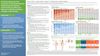 March 2026 in “SKIN The Journal of Cutaneous Medicine”
 This study demonstrated that litifilimab significantly reduced disease activity in cutaneous lupus erythematosus by Week 16, with improvements most notable in sunlight-exposed skin areas.
 6 citations
,
December 2004 in “Anais Brasileiros de Dermatologia”
6 citations
,
December 2004 in “Anais Brasileiros de Dermatologia” This study describes a family with loose anagen hair syndrome associated with macular dystrophy, suggesting this combination may represent a new disease entity among ectodermal dysplasias.
 1 citations
,
December 2024 in “Dermatology and Therapy”
1 citations
,
December 2024 in “Dermatology and Therapy” This study found that the STRIAA scoring tool provides a rapid and highly reliable assessment of alopecia areata severity, showing a significant correlation with the traditional SALT score, thus enhancing clinical evaluation in patients with this condition.
 2 citations
,
March 2016 in “The Journal of Dermatology”
2 citations
,
March 2016 in “The Journal of Dermatology” The researchers reported that the facial Psoriasis Log-based Area and Severity Index (fPLASI) more reliably and sensitively captured clinical improvement in facial psoriasis than the existing facial Psoriasis Area and Severity Index (fPASI).
 20 citations
,
January 2016 in “Intractable & Rare Diseases Research”
20 citations
,
January 2016 in “Intractable & Rare Diseases Research” In this clinical experience, treating frontal fibrosing alopecia with oral finasteride, hydroxychloroquine, tacrolimus, and excimer laser was associated with optimal results in patients with active inflammation.
 6 citations
,
January 2019 in “The American Journal of Dermatopathology”
6 citations
,
January 2019 in “The American Journal of Dermatopathology” This study discovered that adipose tissue infiltration at the isthmus level appears significantly more often in frontal fibrosing alopecia cases compared to controls, suggesting a potential role in the condition's pathology.
 61 citations
,
January 2019 in “American Journal of Clinical Dermatology”
61 citations
,
January 2019 in “American Journal of Clinical Dermatology” This review discusses the potential causes and treatments for frontal fibrosing alopecia but reports no new clinical findings, highlighting the need for further research to understand its pathogenesis and develop validated treatments.
January 2022 in “Essentials in ophthalmology” This review discusses risk factors for intraoperative floppy iris syndrome, emphasizing tamsulosin and other α1 blockers, and underscores the importance of preoperative screening to mitigate surgical complications, but it reports no new results.
8 citations
,
August 2023 in “Lasers in Surgery and Medicine” This study observed that treating acne scars with fractional ablative laser concurrently with isotretinoin improved outcomes more effectively compared to applying the laser 6 months after isotretinoin treatment ended, as measured by the Quantitative Global Acne Scarring Grading System.
February 2025 in “Journal of the European Academy of Dermatology and Venereology” This study found that ultraviolet-induced fluorescence dermoscopy enhanced the identification of follicular openings in alopecia areata, potentially aiding in the assessment of disease severity and treatment strategies.
 July 2022 in “JEADV Clinical Practice”
 This review discusses the classification of lichen planopilaris and its subtypes under the proposed term "lichenoid alopecias," suggesting they exist along a clinical and histological spectrum.
 November 2023 in “Deleted Journal”
 In this study, the researchers found no superiority of combining 308-nm excimer laser with intralesional corticosteroid over corticosteroid alone for treating frontal fibrosing alopecia, and reported side effects such as erythema and postinflammatory hyperpigmentation in both treatment groups.
 1 citations
,
July 2019 in “Clinical Rheumatology”
1 citations
,
July 2019 in “Clinical Rheumatology” Leflunomide is more likely to help treat alopecia areata than cause it.