 506 citations
,
January 2012 in “Molecular and Cellular Endocrinology”
506 citations
,
January 2012 in “Molecular and Cellular Endocrinology” This review details the expression and diverse functions of melatonin receptors in non-neural tissues and reports no new clinical findings, emphasizing their potential as therapeutic targets across various physiological and pathological processes.
 151 citations
,
December 2004 in “Annals of the New York Academy of Sciences”
151 citations
,
December 2004 in “Annals of the New York Academy of Sciences” This review discusses nonclassical 21-hydroxylase deficiency as the most common autosomal recessive disorder in humans and highlights the effectiveness of glucocorticoid treatment in reversing related symptoms.
 97 citations
,
September 2016 in “Reviews in Endocrine and Metabolic Disorders”
97 citations
,
September 2016 in “Reviews in Endocrine and Metabolic Disorders” This review summarizes recent multidisciplinary advances in sebaceous gland research and highlights potential novel therapeutic strategies for skin diseases, but it reports no new clinical results.
 87 citations
,
July 2018 in “Biochimica et Biophysica Acta (BBA) - Molecular Cell Research”
87 citations
,
July 2018 in “Biochimica et Biophysica Acta (BBA) - Molecular Cell Research” This review discusses the essential roles and complex regulation of PP2A in various physiological processes and reports no clinical results; the authors highlight the need for further mouse model research to explore PP2A's therapeutic potential.
 56 citations
,
July 2008 in “European journal of endocrinology”
56 citations
,
July 2008 in “European journal of endocrinology” This study found that a 6-month treatment with either metformin or rosiglitazone significantly improved endothelial function in young women with PCOS without any one drug being superior.
 55 citations
,
August 2008 in “Reviews in endocrine and metabolic disorders”
55 citations
,
August 2008 in “Reviews in endocrine and metabolic disorders” This review discusses clinical, hormonal, and genetic aspects of nonclassic adrenal hyperplasia and reports no new findings; the condition is highlighted as a potential cause of premature adrenarche and other symptoms in young people.
 52 citations
,
October 2004 in “Veterinary dermatology”
52 citations
,
October 2004 in “Veterinary dermatology” This study found that 62% of neutered dogs with hair cycle arrest experienced partial to complete hair re-growth after melatonin treatment, but hair re-growth was not consistently linked to normal sex hormone levels.
 50 citations
,
March 2011 in “European Journal of Endocrinology”
50 citations
,
March 2011 in “European Journal of Endocrinology” This study found that spironolactone treatment can normalize endothelial function and improve cholesterol levels in non-obese patients with polycystic ovary syndrome.
 42 citations
,
April 2013 in “Steroids”
42 citations
,
April 2013 in “Steroids” This review discusses the pathophysiology, molecular genetics, and management of non-classic congenital adrenal hyperplasia due to 21-hydroxylase deficiency, with no new clinical findings reported.
 32 citations
,
April 1994 in “Journal of the American Academy of Dermatology”
32 citations
,
April 1994 in “Journal of the American Academy of Dermatology” This report presents the second known case of erythema nodosum without typical associated conditions, which could be linked to mycoplasma infection, although no testing was conducted to confirm this in the patient.
 30 citations
,
June 2012 in “Current Opinion in Endocrinology, Diabetes and Obesity”
30 citations
,
June 2012 in “Current Opinion in Endocrinology, Diabetes and Obesity” This review discusses the pathophysiology, genetics, and management of nonclassic congenital adrenal hyperplasia, noting subfertility and hormonal issues without providing new clinical results.
 20 citations
,
December 2000 in “Fertility and Sterility”
20 citations
,
December 2000 in “Fertility and Sterility” This study found that the N363S variant of the glucocorticoid receptor was rare among women with PCOS and did not significantly contribute to genetic risk for PCOS or adrenal androgen excess.
 16 citations
,
July 1992 in “The journal of experimental zoology/Journal of experimental zoology”
16 citations
,
July 1992 in “The journal of experimental zoology/Journal of experimental zoology” This study found that adrenal hormones appear to inhibit winter fur growth onset in mink and may affect the duration of inactivity between fur growth periods.
 14 citations
,
January 2013 in “Indian Journal of Endocrinology and Metabolism”
14 citations
,
January 2013 in “Indian Journal of Endocrinology and Metabolism” This review discusses the fertility and pregnancy challenges faced by women with congenital adrenal hyperplasia due to 21-hydroxylase deficiency and reports no new research findings.
 10 citations
,
February 2020 in “Endocrine”
10 citations
,
February 2020 in “Endocrine” This study found that finasteride treatment in males with androgenetic alopecia was linked to significant changes in sperm parameters and increased testosterone levels, but no sexual dysfunction was observed, and sperm parameters returned to baseline after treatment stopped.
 7 citations
,
January 2025 in “Archives of Gynecology and Obstetrics”
7 citations
,
January 2025 in “Archives of Gynecology and Obstetrics” In this review, the authors aim to improve the differential diagnosis between hyperandrogenic PCOS and NCAH, which could lead to more personalized treatment strategies for patients experiencing hyperandrogenism.
 3 citations
,
May 1990 in “Journal of Steroid Biochemistry”
3 citations
,
May 1990 in “Journal of Steroid Biochemistry” This study found that diagnosing non-classical 3 beta-hydroxysteroid dehydrogenase deficiency solely based on elevated serum or urinary 5-ene-steroids may not be reliable.
 1 citations
,
July 2015 in “AACE clinical case reports”
1 citations
,
July 2015 in “AACE clinical case reports” This case report details a postmenopausal woman with hyperandrogenism due to both adrenal adenoma and ovarian hyperthecosis, highlighting the effectiveness of hormonal suppression and venous sampling for diagnosis.
 1 citations
,
January 2019 in “Medical principles and practice”
1 citations
,
January 2019 in “Medical principles and practice” This case report describes a 17-year-old boy with alopecia areata who had vitamin D deficiency and an incidentally discovered adrenal ganglioneuroma, with alopecia receding after vitamin D supplementation but later recurring despite normalized vitamin D and no tumor return.
 January 2026 in “Frontiers in Oncology”
 This case report highlights that in postmenopausal women with severe hyperandrogenism, thorough adrenal and pelvic evaluations, hormonal profiling, and permanent pathology are essential for accurate diagnosis and management of androgen-secreting tumors, such as AGCTs, to prevent misdiagnosis and ensure effective treatment.

This chapter explores the potential of phytochemicals in modulating human endocrine function, emphasizing the growing interest in plant-derived alternatives to synthetic medications for managing metabolic and hormonal disorders often linked to chemical exposures and lifestyle factors.
 June 2025 in “Journal of Endocrinological Investigation”
 This review identifies and discusses various endocrine-related causes of hypertension in children and adolescents, emphasizing the role of genetic predispositions and highlighting the need for systematic diagnostic guidelines and genetic sequencing referrals to improve diagnosis and treatment strategies.
 May 2025 in “The Journal of Rheumatology”
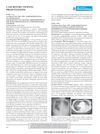
 This case report details a rare instance of primary adrenal insufficiency as a manifestation of antiphospholipid syndrome, with the patient successfully managed through glucocorticoids, warfarin, and hydroxychloroquine.

This report describes a complex case of postmenopausal hyperandrogenism with virilization and concurrent rare ovarian tumors, highlighting the critical role of interdisciplinary collaboration in diagnosing and managing such challenging scenarios.
 May 2021 in “Journal of the Endocrine Society”
 This case study reports a patient with ACTH-driven cortisol secretion 14 years after adrenalectomy, suggesting possible residual adrenal tissue or extra-adrenal steroid synthesis, challenging the need for lifelong steroid replacement.
This study found that PRL-1-overexpressing PD-MSCs reduced adipogenesis in orbital fibroblasts from Graves' ophthalmopathy patients by secreting IGFBPs and modulating the FAK pathway.
 April 2020 in “Journal of the Endocrine Society”
 This case report describes a rare occurrence of giant bilateral adrenal myelolipomas in a 28-year-old female with CAH, emphasizing that large, hormonally active, or painful myelolipomas should be surgically removed.
 157 citations
,
May 2021 in “Endocrine Reviews”
157 citations
,
May 2021 in “Endocrine Reviews” This review discusses recent advancements in understanding and managing congenital adrenal hyperplasia, including improvements in screening, diagnostics, and potential genetic and cell-based treatments, but reports no new clinical findings.
 42 citations
,
September 2007 in “The Journal of Clinical Endocrinology and Metabolism”
42 citations
,
September 2007 in “The Journal of Clinical Endocrinology and Metabolism” This study found that women with PCOS who have an exaggerated 17-hydroxyprogesterone response to buserelin exhibit more severe hyperandrogenemia, increased insulin secretion, and reduced insulin sensitivity.
 5 citations
,
May 2017 in “Journal of the European Academy of Dermatology and Venereology”
5 citations
,
May 2017 in “Journal of the European Academy of Dermatology and Venereology” In this study, plasma levels of MSH and cortisol in patients with alopecia areata did not show significant changes compared to healthy controls.