27 citations
,
March 2006 in “Dermatologic surgery” This review discusses the widespread acceptance of micropigmentation for cosmetic purposes and its various medical applications, but reports no new clinical findings.
 October 2012 in “Humana Press eBooks”
 This article discusses the historical and current uses of grape seeds in various industries but reports no new research findings.
17 citations
,
February 2025 in “Smart Medicine” In this study, a multifunctional microneedle patch made from silk fibroin-methacryloyl and gelatin methacryloyl was reported to significantly prevent bacterial infection and promote wound healing in vivo due to its antimicrobial silver nanoparticles and VEGF-loaded tips.
March 2019 in “Dermatologic Surgery” This journal overview describes the Dermatologic Surgery publication's focus on a wide range of skin surgery topics and reports no specific research findings.
 1 citations
,
January 2018 in “Acta dermato-venereologica”
1 citations
,
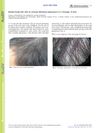
January 2018 in “Acta dermato-venereologica” A teenager's hair with alternating white and dark bands, known as Pili annulati, is a genetic condition that is usually harmless and often considered attractive.
 March 2022 in “Journal of Survey in Fisheries Sciences”
 This review discusses the diverse phytochemical constituents and medicinal applications of Asteraceae family plants, noting their significance in traditional and modern medicine, but provides no new clinical results.
11 citations
,
June 2025 in “Advanced Functional Materials” This study reports that a pH-responsive nanosilver platform improved wound healing in mouse and rabbit models by targeting bacteria and supporting tissue repair more effectively than traditional silver nanoparticles.
 2 citations
,
August 2023 in “Development”
2 citations
,
August 2023 in “Development” In this study, researchers explored how hair follicle orientation is affected in the rosette fancy mouse and found that a mutation in the PCP gene Fzd6 caused reversed hair orientations in the posterior region, leading to the formation of unique whorls.
January 2026 in “International Journal of Cosmetic Science” This study observed that eco-friendly PALF forms a protective physical barrier on the skin, helping limit the impact of environmental pollutants and offering additional benefits for skin and hair in various cosmetic formulations.
 December 2015 in “Vascular Pharmacology”
 Prasugrel is better than clopidogrel at preventing heart damage and improving blood flow in small heart vessels during heart artery procedures.
 January 1997 in “Medical Journal Armed Forces India”
 This study found that RADA-PRG hydrogels enhanced skin-derived precursor cell proliferation and improved hair follicle neogenesis in mice, suggesting potential use as a scaffold material in tissue engineering.
161 citations
,
April 2006 in “Journal of Investigative Dermatology” Liposomes with certain properties can effectively deliver drugs deep into hair follicles.
 June 2026 in “bioRxiv (Cold Spring Harbor Laboratory)”
 This study evaluated petroleum jelly-based bioactive glass ointments with varying copper concentrations for wound healing in chronic wound models, finding that the 3 wt% copper formulation significantly improved healing by enhancing tissue regeneration, vascularization, and antibacterial protection compared to controls.
 December 2025 in “GARI International Journal of Multidisciplinary Research”
 This study examines Ayurvedic approaches to managing premature hair greying, highlighting the potential of herbal formulations, lifestyle interventions, and rejuvenative therapies as safe, sustainable alternatives, though more rigorous clinical trials are needed to validate these methods.
 April 2008 in “Expert review of dermatology”
 Mutations in the P2RY5 gene cause hereditary woolly hair.
27 citations
,
January 2017 in “Journal of clinical and diagnostic research” This case report details a 23-year-old woman who was poisoned with thallium by a colleague and treated with activated charcoal and Prussian blue.
 9 citations
,
October 2011 in “Journal of proteomics”
9 citations
,
October 2011 in “Journal of proteomics” This study found that taxol induces apoptosis in dermal papilla cells, affecting protein expression related to biological processes and potentially contributing to taxol-induced alopecia.
 January 2023 in “International journal of advances in scientific research and engineering”
 This review explores the potential of anthocyanins, a type of flavonoid with antioxidant and anticancer properties, to reduce colorectal cancer risk without side effects, focusing on their impact on molecular mechanisms, cancer cell proliferation, and apoptosis.
1 citations
,
June 2023 in “Journal of Patchouli and Essential Oil Products” This literature review suggests that patchouli essential oil may help reduce eczema symptoms in infants and young children due to its anti-inflammatory, antimicrobial, and antioxidant properties, though it highlights the need for further standardized studies to confirm optimal use and safety.
9 citations
,
September 2022 in “Pharmaceutics” This study found that porcine-placenta-extract-loaded nanoformulated serum improved skin hydration and promoted hair growth, as well as reduced intracellular ROS and inflammation without cytotoxicity in human subjects.
This abstract recounts the unusual encounter between an English engineer and Maung Po Set, a Burmese man with a rare pattern of hair growth, on a steamer in 1886, illustrating a cultural exchange made possible by Maung Po Set's rapid acquisition of English.
 4 citations
,
October 2022 in “International Journal of Molecular Sciences”
4 citations
,
October 2022 in “International Journal of Molecular Sciences” In this study, Thy-1 was observed to play a critical role in wound healing in mice, particularly influencing vascular dynamics and blood perfusion during the healing process.
 October 2025 in “Journal of the Korean Society of Cosmetology”
 This study found that applying a hair mist with dandelion extract before heat perming improved wave efficiency, tensile strength, and hair cuticle condition compared to a base mist or no pretreatment, demonstrating the extract's protective effects against heat damage.
November 2024 in “DELOS Desarrollo Local Sostenible” In this study, researchers observed that Thunbergia grandiflora and Russelia equisetiformis exhibited mutual aid by altering their phenotypic characteristics to facilitate intertwining, suggesting a form of solidarity without apparent external threats.
 March 2024 in “Journal of medicinal plants studies”
 This review comprehensively examines the Hibiscus rosa-sinensis plant, detailing its distribution, physical and chemical properties, bioactive compounds, ethnomedicinal uses, and potential toxicity, providing a broad understanding of its characteristics and health implications.

This study developed a silk fibroin/poly(vinyl alcohol) microneedle loaded with α-aminoxyacetate and HfO2 nanoparticles for vitiligo treatment, which protected against ROS damage and modulated immune responses, leading to improved melanogenesis and skin repigmentation.
2 citations
,
December 2017 in “PubMed” In this case report, a 58-year-old man's 30-year undiagnosed pruritic rash in the pubic area was successfully treated with topical ketoconazole after being identified as white piedra using a Wood lamp.
13 citations
,
February 2024 in “Clinical Cosmetic and Investigational Dermatology” This study demonstrated that intradermal treatment with a medical device using Polynucleotides High Purification Technology (PN HPT) significantly improved skin surface, firmness, pigmentation, and radiance in 30 Asian subjects, with benefits lasting up to six months and no adverse events reported.
11 citations
,
August 1995 in “Journal of Investigative Dermatology” June 2009 in “Mayo Clinic Proceedings” This report describes a 66-year-old woman's diagnosis of porphyria cutanea tarda, suggested by her painless blisters on sun-exposed areas, pink urine, and elevated urinary porphyrins.