February 2026 in “Small Ruminant Research” This study found that specific genetic variations in the IRF2BP2 gene influence fleece structure in sheep, with one variant completely determining coat type and another significantly modifying fiber characteristics, providing valuable insights for improving fleece quality through selective breeding.
 February 2025 in “Archives animal breeding/Archiv für Tierzucht”
 This study found that certain gene polymorphisms in keratin 27 and ELOVL4 are linked to improved cashmere fineness and production traits in Liaoning cashmere goats.
 67 citations
,
October 1997 in “Dermatologic Surgery”
67 citations
,
October 1997 in “Dermatologic Surgery” This study found that the EpiLight Hair Removal System achieved approximately 60% hair removal after 12 weeks following a single treatment, indicating effectiveness and safety for long-term hair reduction.
 February 2023 in “Cosmoderma”
 This study found that combining red light therapy with oral beta-carotene significantly improved photoaging treatment outcomes compared to red light therapy alone, with Group A showing a 56.12% reduction in photoaging scores over 12 weeks versus 44.78% in Group B.
 January 2025 in “ARC Journal of Dermatology”
 In this study, exposure to e-cigarette vapor was reported to trigger the release of proinflammatory cytokines IL-6, IL-8, and IL-10, which could contribute to dermatological issues.
2 citations
,
January 1985 in “Theriogenology” Hormonal treatments affect cow fertility and early embryo development.
 8 citations
,
April 2015 in “Transboundary and Emerging Diseases”
8 citations
,
April 2015 in “Transboundary and Emerging Diseases” This report describes an outbreak of catheter-related infections by ESBL-producing E. coli in calves at an animal teaching hospital, highlighting the risk of these strains becoming nosocomial and increasing mortality and antibiotic use.
October 2022 in “Hair Transplantation” This chapter reviews four innovative devices for follicular unit excision in hair restoration surgery, but it does not report new clinical results or outcomes.
June 2025 in “ACS Materials Letters” 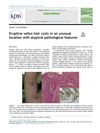 January 2018 in “The Kaohsiung journal of medical sciences”
 This case report describes an atypical presentation of eruptive vellus hair cysts on the elbows, where standard diagnostic techniques were unreliable due to the loss of cystic structural integrity.
5 citations
,
April 2017 in “The journal of investigative dermatology/Journal of investigative dermatology” This study reports on an ongoing Phase I/IIa clinical trial of ex vivo gene therapy for treating severe Recessive Dystrophic Epidermolysis Bullosa, involving six adult participants with COL7A1 mutations resulting in deficient type VII collagen production.
147 citations
,
November 2021 in “Environmental Science and Pollution Research” This review discusses the growth potential and business opportunities in biocosmetics, emphasizing the replacement of fossil-based ingredients with bio-based alternatives, but reports no new experimental findings.
 June 2024 in “ESMO Gastrointestinal Oncology”
 The BAYONET trial is a phase II study designed to assess the efficacy and safety of combining encorafenib, binimetinib, and cetuximab for patients with BRAF V600E-mutant metastatic colorectal cancer that is resistant to encorafenib plus cetuximab; results are not yet reported.
April 2023 in “Journal of Investigative Dermatology” HA-iMSC-EVs can improve skin aging by boosting cell growth and restoring collagen and elastin.
 April 2026 in “Research Square”
 E13 fetal mouse fibroblast vesicles may help reduce scarring.
7 citations
,
January 2020 in “Dermatology online journal” In this case report, adult-onset porokeratotic eccrine ostial and dermal duct nevus improved with topical tazarotene treatment, as evidenced by dermatoscopic images.
2 citations
,
September 2023 in “Foods” In this study, researchers developed microcapsules and effervescent tablets containing policosanol from insect wax, achieving high encapsulation efficiency and rapid water dispersion, effectively addressing the challenges of solubility and psychological acceptance in consuming insect-based lipids.
 113 citations
,
November 2017 in “Scientific Reports”
113 citations
,
November 2017 in “Scientific Reports” This study found that treatment with mesenchymal stem cell extracellular vesicles enhanced hair growth in mice and stimulated dermal papilla cell activity and growth factor production in vitro.
 13 citations
,
July 2022 in “Frontiers in cell and developmental biology”
13 citations
,
July 2022 in “Frontiers in cell and developmental biology” This review discusses the potential of cell-derived nanovesicles as innovative treatment strategies for hair growth and provides no new clinical results; the authors emphasize the need for further understanding of their mechanisms.
 40 citations
,
June 2013 in “Molecular Pharmaceutics”
40 citations
,
June 2013 in “Molecular Pharmaceutics” This study demonstrates that transfected epidermal stem cells using a novel 3D transfection system significantly enhanced wound healing and may serve as an effective therapeutic agent and gene delivery method for wound treatment.
 February 2025 in “Applied Sciences”
 This study found that extracts from heterotropic cultures of Scenedesmus deserticola JD052 enhanced hair-inductive properties in human dermal papilla cells more effectively than photoautotrophic extracts, likely through activation of AKT/β-catenin signaling, despite similar loliolide content.
January 2008 in “农业科学与技术(英文版)” In this study, estradiol at higher concentrations inhibited the growth of cashmere goat hair follicles, suggesting a dose-dependent effect on follicle morphology and growth.
 April 2018 in “The journal of investigative dermatology/Journal of investigative dermatology”
 This study describes a new method for isolating intact human eccrine glands from scalp follicular units, potentially advancing research on sweat gland physiology.
 June 2025 in “Jundishapur Journal of Natural Pharmaceutical Products”
 This study optimized the extraction process and established quality standards for Pomelo peel essential oil from Vinh Long, Vietnam, identifying specific conditions that improved extraction yield and validating a high-precision method for limonene quantification.
December 2019 in “Reproduction Fertility and Development” This study found that mouse embryonic fibroblasts better supported the growth and maintenance of LGR5+ epidermal stem cells compared to porcine fetal fibroblasts, under various culture conditions.
18 citations
,
January 2023 in “Nano Research” This study found that red OLED irradiation can significantly promote hair regrowth in mice, increasing hair length by 1.5 times and hair regrowth area by over 3 times after 20 days of treatment.
 1 citations
,
April 2025 in “JOJ Dermatology & Cosmetics”
1 citations
,
April 2025 in “JOJ Dermatology & Cosmetics” In this study, researchers evaluated the efficacy of a collagen booster used alongside CO2 fractional laser treatment for skin aging, finding that the combination treatment affected the vascularization and healing process of the skin on a healthy adult's forearm.
 9 citations
,
November 2012 in “Biomolecules & therapeutics”
9 citations
,
November 2012 in “Biomolecules & therapeutics” This study found that diphlorethohydroxycarmalol significantly increased prostaglandin $E_2$ synthesis in HaCaT human keratinocytes by upregulating COX-1 and COX-2 expression, suggesting potential benefits from elevated $PGE_2$ production.
 128 citations
,
July 2009 in “International Journal of Pharmaceutics”
128 citations
,
July 2009 in “International Journal of Pharmaceutics” This study found that penetration enhancer-containing vesicles significantly improved minoxidil delivery to the skin compared to traditional liposomes and penetration enhancer-containing ethanolic solutions, with deformability linked to enhanced deposition.
 5 citations
,
January 2023 in “Cell proliferation”
5 citations
,
January 2023 in “Cell proliferation” This study reported that supplementing rat hair follicle stem cells with chick embryo extract enhanced their migration and proliferation, possibly promoting differentiation toward Schwann cells.