80 citations
,
April 2018 in “Trends in Molecular Medicine”
80 citations
,
April 2018 in “Trends in Molecular Medicine” This review discusses the roles of interferon-γ and PPAR-γ-mediated signalling in scarring alopecia, suggesting these pathways as potential therapeutic targets, but it reports no new empirical results.
 21 citations
,
November 2017 in “Scientific Reports”
21 citations
,
November 2017 in “Scientific Reports” This study found that prostaglandin D2 reduced proliferation in bulge resident K15+ stem cells but not in other K15+ progenitor cells, suggesting differential impacts on hair follicle stem cell niches.
71 citations
,
October 2017 in “Journal of Investigative Dermatology” PPAR-γ agonists like pioglitazone may help manage lichen planopilaris but don't fully reverse scarring.
 13 citations
,
September 2017 in “Skin appendage disorders”
13 citations
,
September 2017 in “Skin appendage disorders” Some women with Frontal Fibrosing Alopecia also have Lichen Planopilaris, which can lead to more symptoms and affect hair outside the scalp.
 15 citations
,
November 2016 in “Journal of The American Academy of Dermatology”
15 citations
,
November 2016 in “Journal of The American Academy of Dermatology” This article discusses the potential of trichoscopy in diagnosing and treating dissecting cellulitis of the scalp and emphasizes the need for early diagnosis to prevent progression but reports no new clinical results.
 41 citations
,
July 2015 in “Clinical and Experimental Dermatology”
41 citations
,
July 2015 in “Clinical and Experimental Dermatology” This review explores the connection between psoriasis and hair loss, noting that both the disease and its treatments can contribute to alopecia, and reports no new clinical results.
 40 citations
,
December 2014 in “Indian Journal of Dermatology”
40 citations
,
December 2014 in “Indian Journal of Dermatology” This study found that trichoscopy can effectively differentiate scalp psoriasis from seborrheic dermatitis by identifying specific trichoscopic patterns such as hidden hairs, signet ring vessels, and comma vessels.
 15 citations
,
September 2014 in “Journal of The American Academy of Dermatology”
15 citations
,
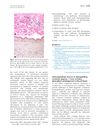
September 2014 in “Journal of The American Academy of Dermatology” This study found that seven cases of cicatricial alopecia initially diagnosed as discoid lupus erythematosus were more consistent with lichen planopilaris based on histopathology.
 47 citations
,
June 2014 in “Journal of Dermatological Treatment”
47 citations
,
June 2014 in “Journal of Dermatological Treatment” This retrospective review found that while intralesional corticosteroids provided symptomatic improvement for lichen planopilaris, hydroxychloroquine with topical corticosteroids led to higher remission rates but did not result in visible hair regrowth.
 106 citations
,
March 2014 in “BioEssays”
106 citations
,
March 2014 in “BioEssays” This review examines current knowledge on human epithelial hair follicle stem cells, their markers, and outlines challenges in translating findings from murine studies to human research, but does not report new experimental results.
220 citations
,
June 2013 in “The Journal of Pathology” This study found that immune privilege collapse in the hair follicle bulge and associated immune responses may contribute significantly to the pathogenesis of lichen planopilaris, suggesting a potential autoimmune basis for the disease.
 12 citations
,
June 2013 in “The American Journal of Dermatopathology”
12 citations
,
June 2013 in “The American Journal of Dermatopathology” This study reported that using photomnemonics facilitated accurate histopathologic interpretation of horizontal scalp sections in distinguishing between nonscarring and scarring alopecias by dermatopathologists and residents in a validation test.
 68 citations
,
August 2012 in “Journal of the American Academy of Dermatology”
68 citations
,
August 2012 in “Journal of the American Academy of Dermatology” This paper discusses the use of dermatoscopy as a fast, noninvasive technique for diagnosing hair shaft disorders and reports no new results; the authors highlight its advantages over traditional microscopy methods.
 160 citations
,
March 2009 in “Seminars in Cutaneous Medicine and Surgery”
160 citations
,
March 2009 in “Seminars in Cutaneous Medicine and Surgery” This article reviews lichen planopilaris, its presentation, and treatment challenges, and emphasizes the need for more research into its pathogenesis and therapy efficacy; it reports no new findings.
 90 citations
,
July 2008 in “Dermatologic therapy”
90 citations
,
July 2008 in “Dermatologic therapy” This article reviews lichen planopilaris, a chronic scarring alopecia, and explores recent treatment developments, but it reports no new clinical results.