In this study, researchers found that acne, melasma, vitiligo, and atopic dermatitis significantly impact anxiety, depression, loneliness, and quality of life, while alopecia does not have a significant effect.
34 citations
,
August 2015 in “Frontiers in Behavioral Neuroscience” This study found that augmenting or reducing allopregnanolone activity in the BNST affected contextual fear expression in rats, suggesting sex differences in anxiety may be linked to neuroactive steroid regulation.
1 citations
,
December 2005 in “The Journal of Urology” This editorial comment reports no new clinical findings, instead discussing a study on the effectiveness of combination therapy with doxazosin and finasteride in patients with benign prostatic hyperplasia.
16 citations
,
April 2006 in “Pediatrics International” This study reported that high-dose mizoribin therapy may be effective and safe for managing steroid-dependent pediatric systemic lupus erythematosus but requires monitoring of serum uric acid levels due to potential side effects.
 8 citations
,
July 2011 in “Critical reviews in analytical chemistry”
8 citations
,
July 2011 in “Critical reviews in analytical chemistry” This article discusses fluconazole's pharmacological and physicochemical properties and methods for its analysis, but reports no new clinical results.
 January 2012 in “Yearbook of Dermatology and Dermatologic Surgery”
 Acne treatment, including isotretinoin, improves quality of life and does not worsen depression.
27 citations
,
January 2001 in “Hormone Research in Paediatrics” This study found that a lower maintenance dose of flutamide (125 mg/day) effectively maintained the reduction in hirsutism achieved with an initial higher dose (250 mg/day) in women, without additional side effects.
 September 2024 in “Advanced medical journal”
 In this study, spironolactone was found to be a safe and effective treatment for acne in women over 25 with abnormal hormone levels, while younger women with normal hormone levels showed less response.
 December 2015 in “Faculty Opinions – Post-Publication Peer Review of the Biomedical Literature”
 Finasteride, a hair loss treatment, may cause long-term sexual dysfunction and depression.
43 citations
,
November 2009 in “Archives of dermatology” This study found that alefacept showed no significant improvement in treating severe alopecia areata compared to placebo over a 24-week period.
This study found that neonatal administration of Allopregnanolone may mitigate some behavioral effects of early maternal separation in adolescence, but also lead to similar adverse effects as the separation in adulthood.
62 citations
,
April 2002 in “Journal of the American Academy of Dermatology” In this study, sulfasalazine treatment resulted in cosmetically acceptable hair regrowth in 23% of patients with severe alopecia areata in whom a response could be determined.
 January 2010 in “CNR Solar (Scientific Open-access Literature Archive and Repository) (Consiglio Nazionale delle Ricerche)”
 This study found that combining metformin and clomifene citrate improved pregnancy outcomes and reduced miscarriage rates in women with PCOS and infertility undergoing intrauterine insemination.
March 2005 in “The Nurse Practitioner” This update provides information on new drug approvals but does not offer new clinical research findings.
 44 citations
,
June 1985 in “Fertility and sterility”
44 citations
,
June 1985 in “Fertility and sterility” This study suggests that combination drug therapy with spironolactone and either oral contraceptives or dexamethasone effectively manages unresponsive hirsutism, with eight of nine patients achieving satisfactory clinical responses.
 November 2025 in “Preprints.org”
 In a rodent study, researchers found that oral phenytoin and spironolactone significantly mitigated 5-fluorouracil-induced hair loss and oxidative stress, suggesting potential therapeutic benefits for chemotherapy-induced alopecia and enhanced recovery.
 42 citations
,
June 2015 in “Gynecological Endocrinology”
42 citations
,
June 2015 in “Gynecological Endocrinology” This article reviews the psychological, social, and biological impacts of polycystic ovary syndrome on women of reproductive age and reports no new experimental results.
In this study, finasteride reduced the severity of dopaminergic behavior manifestations in rats without causing extrapyramidal side effects, unlike other antidopaminergic agents.
 February 2026 in “Zenodo (CERN European Organization for Nuclear Research)”
 This study reports that spironolactone has shown effectiveness in improving hair density and reducing shedding in female pattern hair loss, particularly for women with hyperandrogenism, though benefits often diminish after stopping treatment.
 June 2026 in “International Journal of Innovative Technologies in Social Science”
 This source describes clascoterone, a new topical treatment for acne vulgaris that blocks androgen receptors to reduce sebaceous gland activity and inflammation, offering a lower risk of systemic side effects compared to oral treatments.
19 citations
,
March 1999 in “PubMed” This review discusses trichotillomania, its prevalence, and treatment options, emphasizing that many sufferers experience delays in treatment due to secrecy and shame, but reports no new research findings.
6 citations
,
July 2016 in “Doklady Biochemistry and Biophysics” This study found that GD-23, a dipeptide ligand of TSPO, exhibited an anxiolytic effect in the elevated plus maze test, which was inhibited by selective neurosteroid synthesis inhibitors, suggesting a neurosteroidogenic mechanism.
 June 2021 in “Research Square (Research Square)”
 This meta-analysis reported that statins significantly reduced androgen levels and improved skin symptoms in women with polycystic ovary syndrome compared to control treatments.
 June 2006 in “Almustansiriya journal of pharmaceutical sciences/Al-Mustansiriyah journal of pharmaceutical sciences”
 This study found that melatonin may reduce the dose of prednisone needed for treating alopecia areata and its associated side effects by attenuating free radical damage on the immune system.
April 2008 in “Sexologies” In this study, patients who were informed about finasteride's sexual side effects reported them significantly more often than those who were not, highlighting a potential nocebo effect.
1 citations
,
December 1971 in “PubMed”  November 1998 in “Hair transplant forum international”
 This article discusses finasteride's use for male pattern alopecia and highlights the positive experiences and observations by hair restoration surgeons but reports no new clinical results.
 5 citations
,
March 2012 in “Clinical and Experimental Dermatology”
5 citations
,
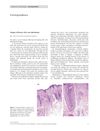
March 2012 in “Clinical and Experimental Dermatology” A woman experienced temporary hair loss after taking albendazole, which resolved on its own within 3 months.
 July 2018 in “Reactions Weekly”
 Lower finasteride doses had more side effects; dutasteride caused back pain; more research needed on post-finasteride syndrome.
 1 citations
,
January 2013 in “Advanced Biomedical Research”
1 citations
,
January 2013 in “Advanced Biomedical Research” This study suggests that greater sensitivity to androgens, as indicated by higher than grade 2 androgenic alopecia, may reduce the risk of schizophrenia by 8.62 times.